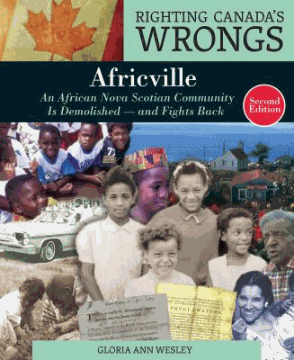
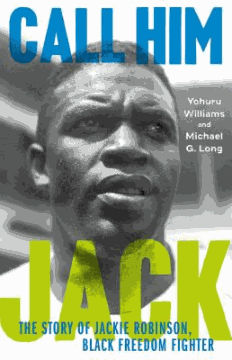
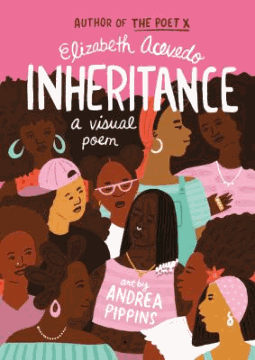
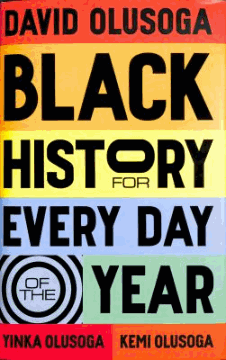
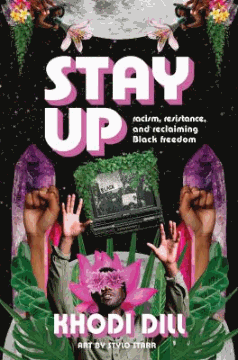
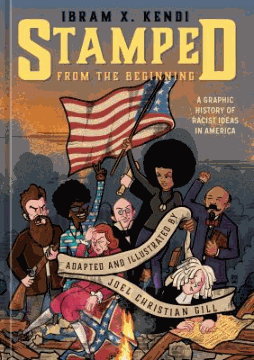
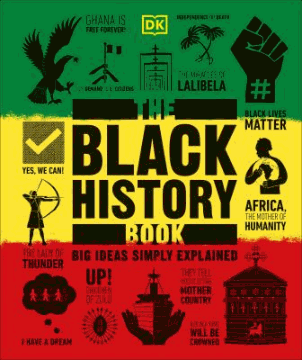
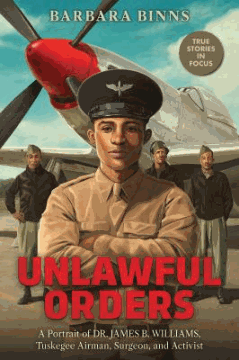
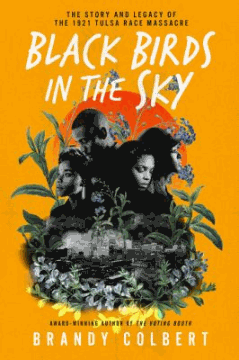
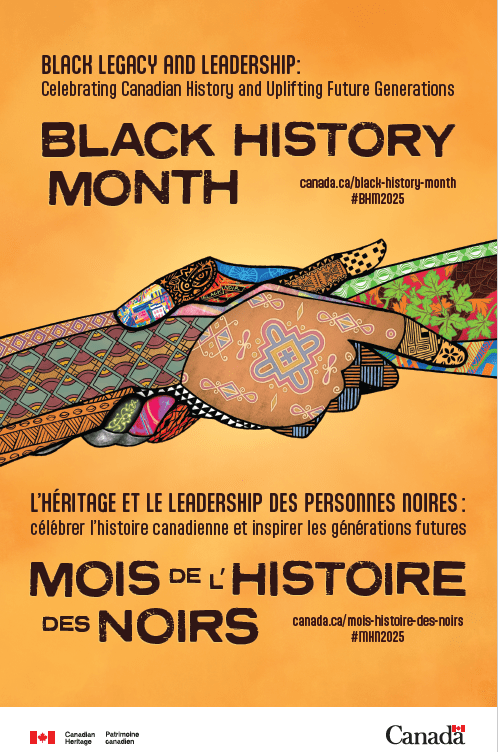
February is Black History Month in Canada. Come down to your school library to learn more about black history in Canada, the African-American experience in the US, and the African Diaspora around the world.


February is Black History Month in Canada. Come down to your school library to learn more about black history in Canada, the African-American experience in the US, and the African Diaspora around the world.


Reggae legend Bob Marley was born on this day in 1945 in Nine Miles, Jamaica. Sadly, he died far too young, at only 36 years old, in 1981. Marley was an international music superstar who helped catapult the Reggae sounds of Jamaica into the global consciousness. Marley was a revered symbol of the African Diaspora and was a strong voice for anti-racism and democratic rights. For more on the life of this amazing artist, take a look at some of the many books we have here in the school library.


Online you can also check out:

Come down to visit us in person at your School Library– and check back on this site– for more information about Black History in Canada.
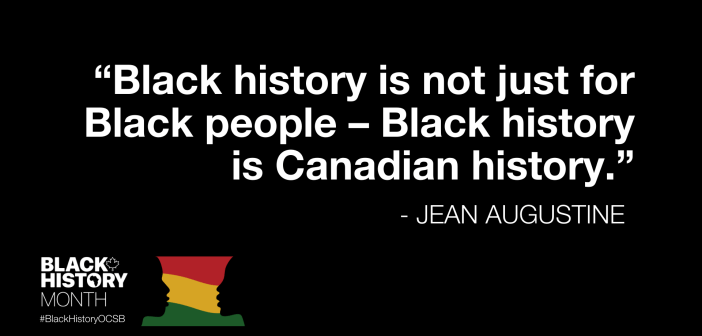
February is Black History Month in Canada. As February comes to a close, it is important to remember that while we make a point of emphasizing Black History this month, we know that Black History is Canadian History, and as such it is something to learn and celebrate every month of the year.

Here are some more online resources to help you continue to explore Black History in Canada:
BC Black History Awareness Society
A Black People’s History of Canada
29 Black History Month Facts You Should Know
Canadian Museum for Human Rights: Black History
CBC: 23 Historical Black Canadians You Should Know
Black History in Canada: 1960 to Present
19 Canadian books to check out during Black History Month 2024
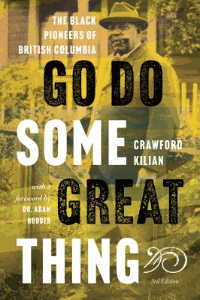
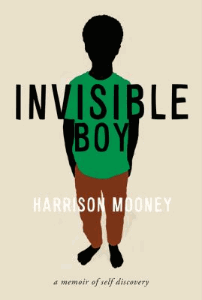
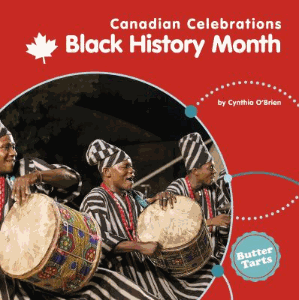
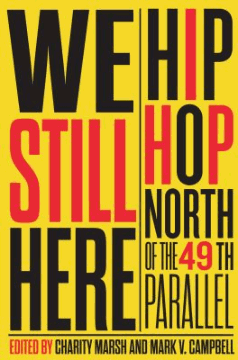
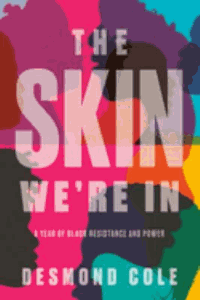
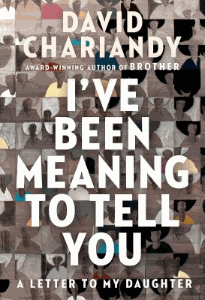
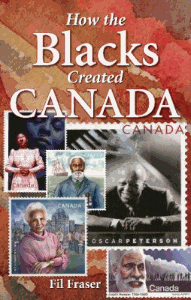
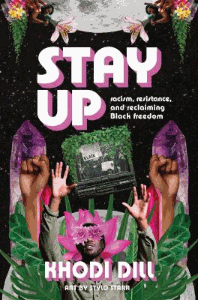
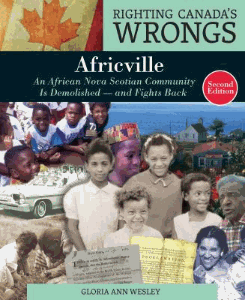
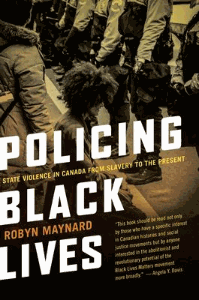
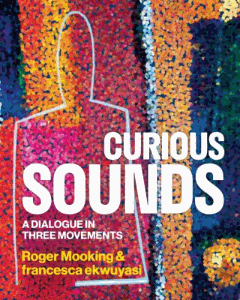
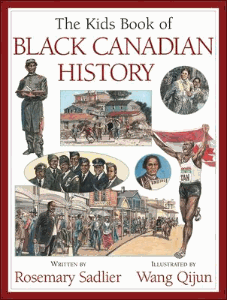
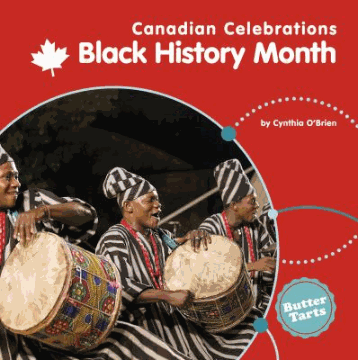
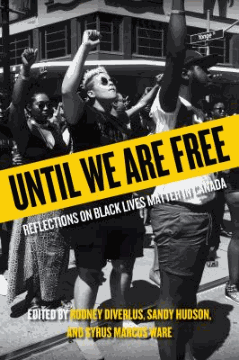
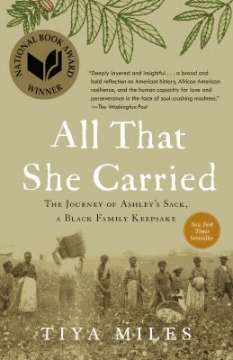
Come down to the School Library to check out these books for Black History Month in Canada.


From Canada.ca, here are introductions to just a few noteworthy Black Canadians that perhaps you haven’t learned about yet. “Read the biographies of some notable Black people in Canada who have helped shape Canadian heritage and identity, and who have made and continue to make enormous contributions to the wellbeing, and prosperity of our country.” Read the entire post at Black History Month: Noteworthy Figures
February is Black History Month. Find out more by visiting us in person, or online at tweedsmuirlibrary.ca
American scholar and leading civil rights activist W.E.B. Du Bois was born on this day in 1868. Du Bois was the first African American to earn a doctorate from Harvard University. Du Bois was a great thinker and researcher in many fields, including Sociology and History, and was leading Civil Rights advocate and opponent of Jim Crow throughout his adult life. He was the author of numerous works, including The Souls of Black Folk (1903) and Black Reconstruction in America (1935). Du Bois was a founding member of the NAACP in 1910, and its journal, “The Crisis.”

Find out more:
February is Black History Month. Find out more by visiting us in person, or online at tweedsmuirlibrary.ca
Come down to the School Library to check out these books for Black History Month in Canada.



Reggae legend Bob Marley was born on this day in 1945 in Nine Miles, Jamaica. Sadly, he died far too young, at only 36 years old, in 1981. Marley was an international music superstar who helped catapult the Reggae sounds of Jamaica into the global consciousness. Marley was a revered symbol of the African Diaspora and was a strong voice for anti-racism and democratic rights. For more on the life of this amazing artist, take a look at some of the many books we have here in the school library.


Online you can also check out:
February is Black History Month. Join us in the School Library as we explore, acknowledge and celebrate Black History, with an emphasis on the experience of Canadians of African descent, African-Americans, and other peoples in the world-wide African diaspora.

February is Black History Month. Join us in the School Library as we explore, acknowledge and celebrate Black History, with an emphasis on the experience of Canadians of African descent, African-Americans, and other peoples in the world-wide African diaspora.

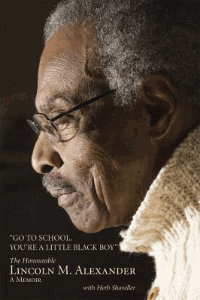
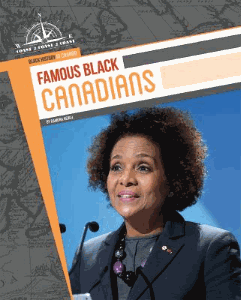
Come down to see featured displays of books and other library materials for Black History Month. And throughout February, look here for more online content, including more about Black Canadians such as Fergie Jenkins, Rosemary Brown, Willie O’Ree, Michaëlle Jean, Lincoln Alexander, Viola Davis Desmond, and Drake.
Black History Month comes to a conclusion today. However, the teaching and learning of Black History cannot be limited to the month of February. Black History Month is a time to celebrate the lives of people of African heritage who have built Canada, the U.S., and the world as we know it. It is also a time to focus on making sure that the history of the people of the African Diaspora is not lost in the “white-washing” that can happen when some groups tell the story of history, leaving out other groups.

To some the very notion of Black History Month is controversial. Some very prominent people, such as the esteemed African-American actor Morgan Freeman, argue against having a Black History Month. “You’re going to relegate my history to a month?” Freeman asked. He has a point. Black History cannot be meaningfully limited to one month a year, nor can it be separated from American history, our Canadian history, or World history. Black History is History.

For much too long, history has been taught only from the perspective of the dominant groups in society. In Canada that has meant that history was taught only as the story of men. Of whites, (mainly English and Scottish). Of the rich. Of the powerful.
We have taken great strides in identifying that such history is not only overwhelmingly incomplete, it is also profoundly unjust. Yet we still have much to do. Moreover, not only is that journey incomplete, in many places it is going the wrong way. The most obvious examples of this come from the United States, where a radical agenda of curriculum revision and book banning, all in the name of “patriotic education,” is in fact a naked attempt at denying the racist history of that nation, and the ways that racism is still alive in the institutions of today.
This suggests that Black History Month is still very relevant indeed.
On a person’s birthday we take the day to celebrate that person in a special way. Yet that does not mean we ignore them the other 364 days of the year. Let’s commit considering how that approach may apply to Black History Month.
Find out more: