Autumn Equinox

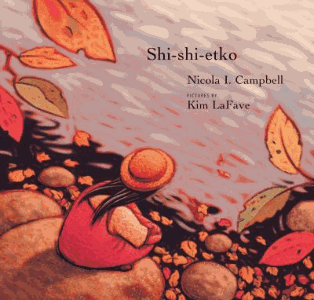
The Autumnal Equinox will occur on Tuesday, September 22 at 5:04 PM Pacific. This day marks the beginnng of Autumn (or Fall) in the Northern Hemishpere. The tilted earth makes its way around the sun through the solar year. On this date the sun will appear to be directly overhead the equator at noon. The sun will continue to appear to travel south in our skies, towards the Tropic of Capricorn and the start of winter, before returning for the spring and summer. Many cultures and belief systems are deeply in tune with the cycles of the seasons. The Celtic calendar observes mid-autumn at this time, which in recent years has become known popularly as Mabon.

source: Colivine, CC0, via Wikimedia Commons

Yom Kippur

Yom Kippur, or the “Day of Atonement”, is the holiest day on the Jewish Calendar. For devout Jews in Canada and around the world, Yom Kippur is the most important Holiday, beyond Hanukkah or even the Passover. Many Jews will spend the entire day in fasting, praying and other observances.

In 2026 Yom Kippur begins at sundown on September 20, and ends at nightfall on September 21. (This is according to the Gregorian Calendar, while the Jewish Calendar is at year 5787.)

Find out more:

What is Yom Kippur? (Chabad.org)

My Jewish Learning

History.com

National Geographic

CBC Kids


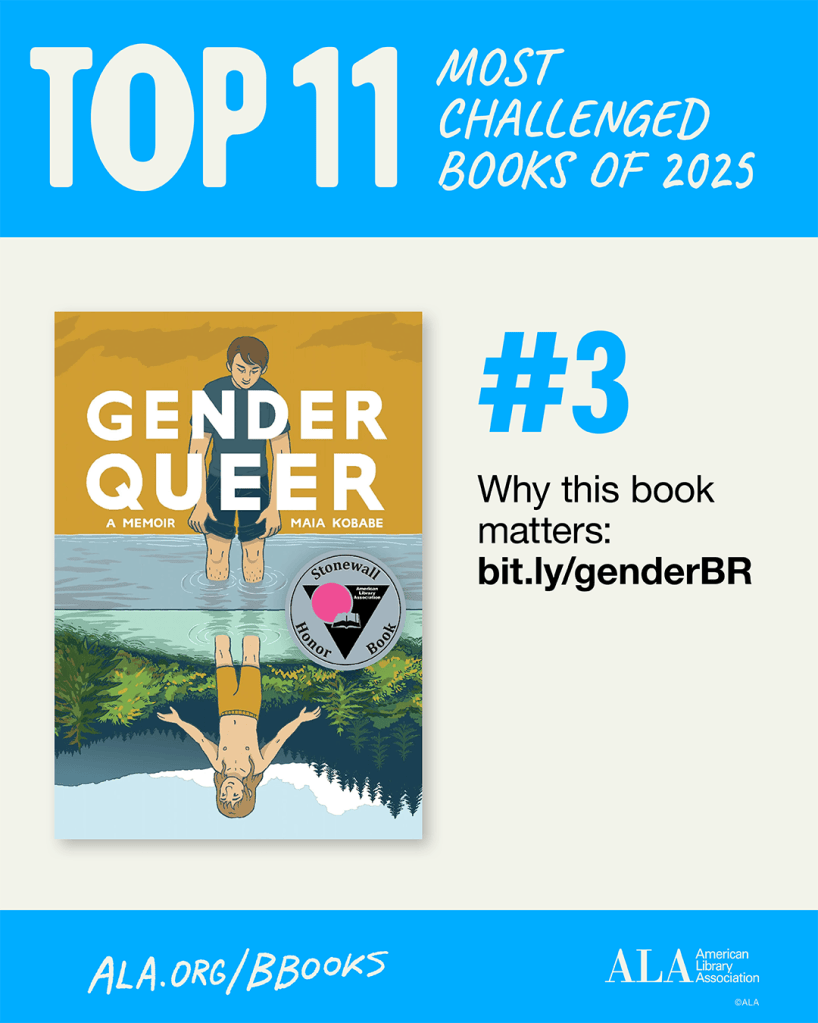
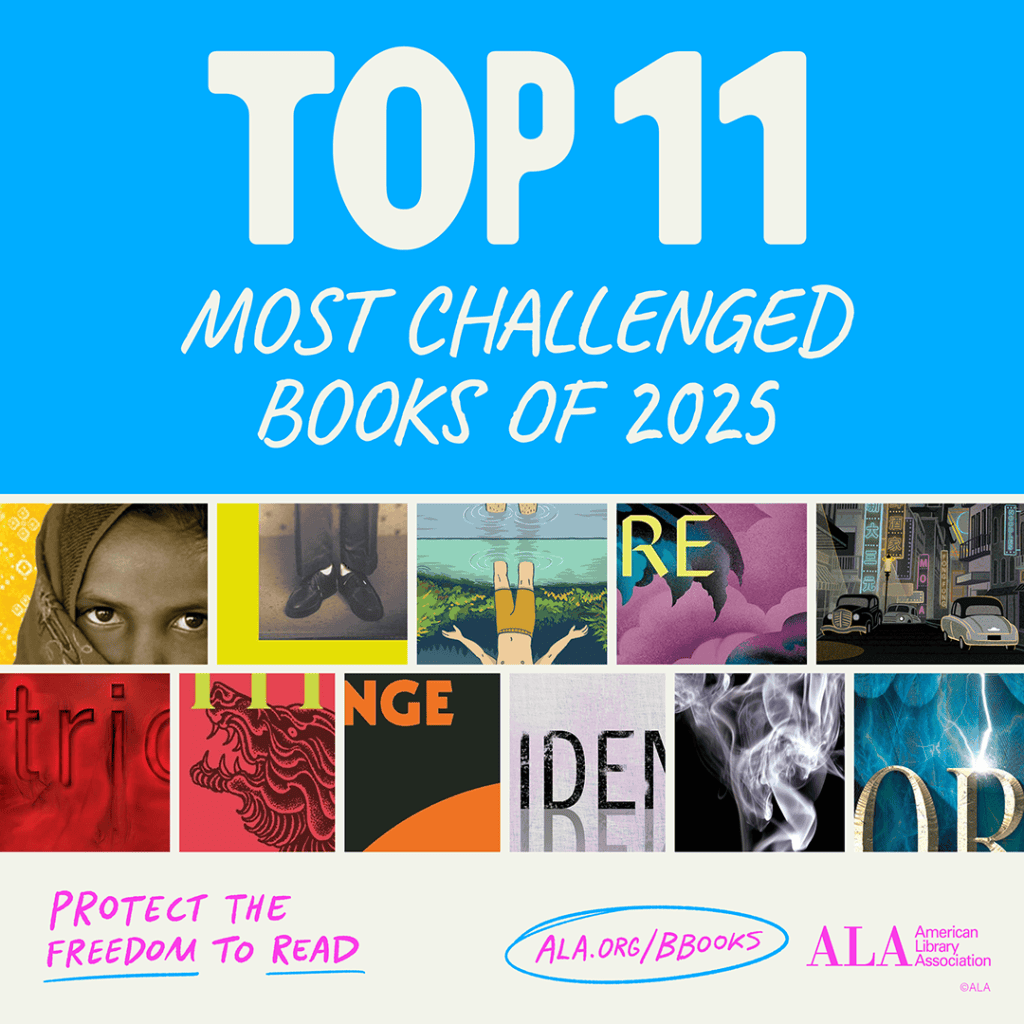
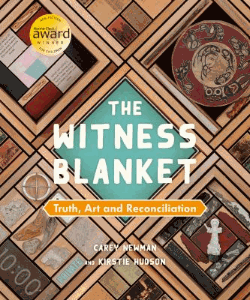
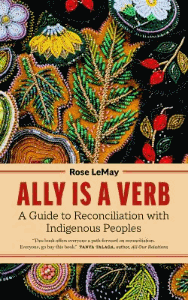
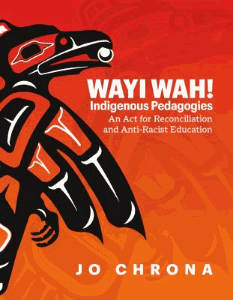
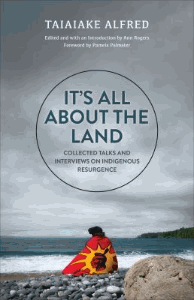
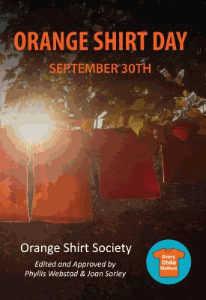
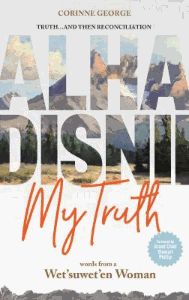
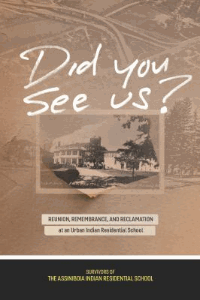
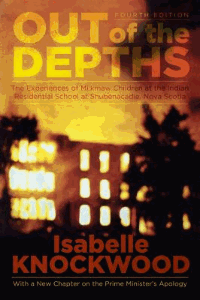
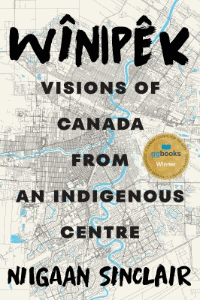
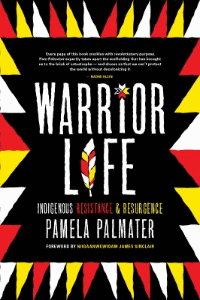
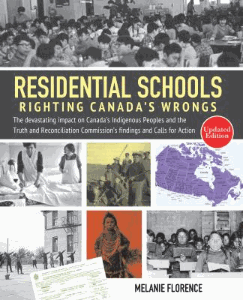
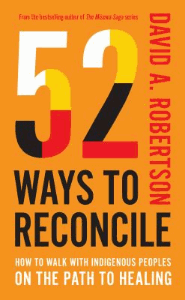
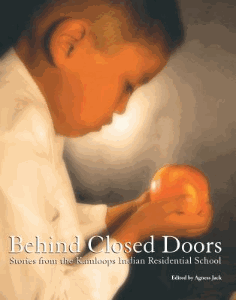
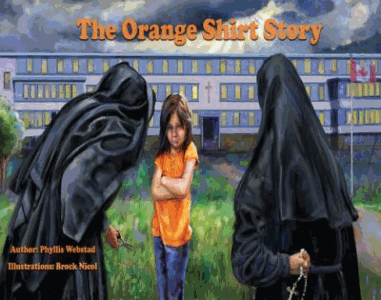
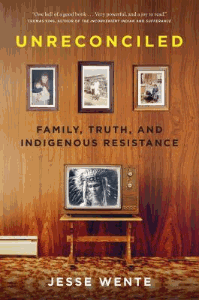
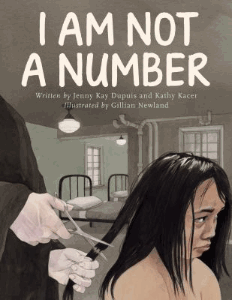
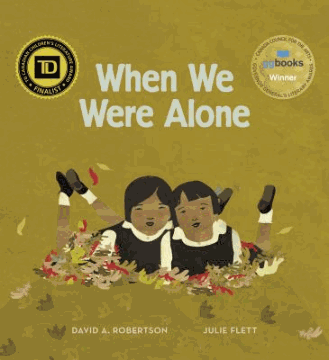
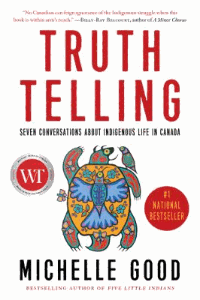
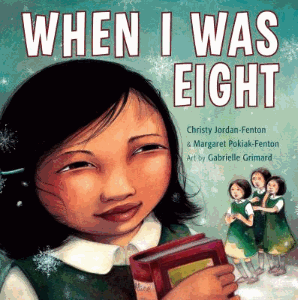
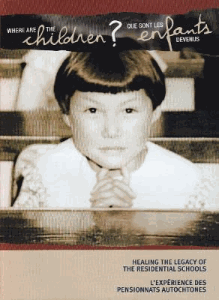
Check out these books at YOUR School Library:

Democracy

Today is International Day of Democracy. Celebrate democracy. Learn more about democracy. Most importantly, stand up for democracy.

Check out the books above, and many others in our school library, to learn more about democratic citizenship, and why the fight for democracy is an ongoing struggle that rages not just in “other parts of the world” but here at home in our neighbourhoods, cities and nation.

Find out more:

United Nations

The Rule of Law

BBC: What is Democracy?

Five actions to boost women’s political participation

The Carter Center

Canadian Civil Liberties Association

Shanah Tovah!


Rosh Hashanah is the Jewish New Year feast and celebration. It is the first of the “High Holy Days” of Judaism, and is followed closely by Yom Kippur.

source: CC BY 2.0 via Wikimedia Commons

The Jewish Calendar is a lunar calendar, therefor the dates of Rosh Hashanah and other Jewish holidays will vary according to the Gregorian Calendar (the standard calendar used in most of the world for politics, business and daily life.)  In 2026 Rosh Hashanah begins at Sundown on September 11 and ends at nightfall of September 13. According to the Jewish calendar, the new year is 5787 AM (Anno Mundi).

Shanah Tovah!


Find out more:

Rosh Hashanah 101

Chabad.org

History.com


Beltane


Beltane is the ancient Celtic festival marking the beginning of summer. Bealtaine, (or various other spellings) is old Irish for “bright fire” or “mouth of fire.” On Beltane great bonfires may be lit, so it also known as the Fire Festival. Beltane takes place on May 1st, although celebrations may take place in the days leading up to and following that. Beltane is celebrated in Ireland, Scotland and in other places where people have tried to revive Celtic festivals and observances. Remnants of Beltane traditions can be seen in many May Day festivals. Beltane traditions can be found in many parts of Canada, especially where there are large populations of Irish immigrants, such as Newfoundland.

source: uisneach.ie

Find out more:

RTE (Irish Radio & Television)

Uisneach

Newgrange: Beltane

Irish Culture and Customs

The Irish Independent

Your Irish Culture: Bealtaine


Sikh Heritage Month

April is Sikh Heritage Month in Canada. In your School Library we take the month to learn more about Sikhs and their contributions to the history and current affairs of Canada. April also brings a special focus on celebration of Vaisakhi. Sometimes known as Khalsa Day, Vaisakhi is observed by Sikhs in celebration the establishment of the Khalsa by Guru Gobind Singh in 1699. The Khalsa refers to the millions of followers of Sikhism around the world. Vaisakhi celebrations in Canada include some of the largest in the world, such as those in Vancouver and in Surrey.

Find out more:


Surrey’s Khalsa Day Parade

World Sikh Organization

CBC: Vancouver Parade

Vaisakhi– Sikh.net

source: Joel FriesenCC BY 2.0, via Wikimedia Commons

Why IWD?

International Women’s Day is March 8. Join us as we celebrate all month long, learning more about the ongoing struggle for women’s rights around the world.

IWD has been celebrated in various forms for well over a century. According to internationalwomensday.com, IWD “is a global day celebrating the social, economic, cultural, and political achievements of women. The day also marks a call to action for advancing gender equality.” While many gains have been made in some parts of the world since the early 20th Century, the struggle is far from over.

source: canada.ca; United Nations

Canadian law protects women’s rights better than in most parts of the world, yet even here the work is not done. The Government of Canada says that IWD is “a time to celebrate the progress made in advancing women’s rights and highlight the ongoing efforts needed to ensure their full participation in all aspects of society.”

source: unwomen.org

The United Nations IWD “calls for action to dismantle all barriers to equal justice: discriminatory laws, weak legal protections, and harmful practices and social norms that erode the rights of women and girls.


source: unwomen.org

Celebrate International Women’s Day on March, learn more all month long in your School Library, and remember that the struggle for equality will continue every day of the year.

The Year of the Horse

Happy Lunar New Year!

In 2026 the Lunar New Year, also known as , the Spring Festival, Chinese New Year, and many other names, begins on February 17 and celebrations will continue for several weeks all over the globe. Canadians join with many millions of people in Asia, and millions more of Asian Heritage around the world, to celebrate the Year of the Horse.


The celebrations around this event include many different local practices and are known by many names around the world, including Tet (Vietnam); Seollal (Korea); Koshogatsu or “Little New Year” (Japan).  Multiday, and even multiweek festivals will take place around the world on the days and weeks of late January and early February. The Lantern Festival is an example of an associated event that takes place several weeks into the new year.

In North America it is often called Chinese New Year, although the Chinese themselves are more likely to refer to it as the Spring Festival. Moreover, the term “Lunar New Year” is more reflective of the multi-ethnic and multicultural nature of the celebrations. In Canada this is especially important, as many Canadians trace their roots to many different parts of the world, including China, but also to many other places in East Asia such as Korea, the Philippines, Vietnam and Japan.

Find out more:

LunarFest Vancouver

The Lunar New Year in Canada

Korean New Year

Chinese New Year

Tet

BBC Lunar New Year