MLK Day

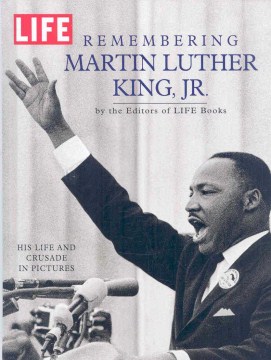
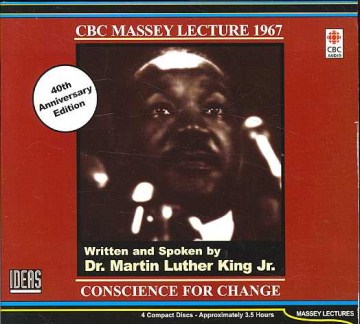
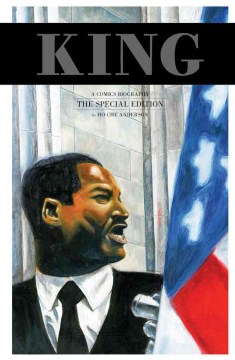
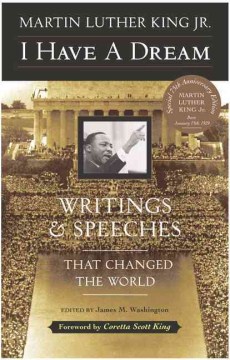
Martin Luther King Jr. Day is observed on the 3rd Monday of January as a Federal Holiday in the United States. The day is observed in celebration of Dr. King’s birthday, January 15, 1929. In 2026 MLK Day is observed on Monday, January 21.

As we witness the alarming and horrifying events currently unfolding in the United States, and throughout the world, we are reminded to take inspiration from Dr. King and to cling to hope in his message of transformative non-violent resistance. Those who believe in a world of justice, equality, freedom, and peace, must stand up and demand it.


Martin Luther King Jr. was the leading figure of the Civil Rights Movement of the 1950’s and 1960’s in the USA. In life Dr. King was at the forefront of the fight against segregation, discrimination and other forms of racism, especially as entrenched in state and federal law. Tragically assassinated in 1967, the legacy of King has continued to inspire those who fight against racism and other forms of social injustice.

Martin Luther King Jr. was committed to the principles of non-violence. King was convinced that the only way to fight against the hate and violence and injustice of racsim was to counter it with peaceful resistance and non-violent protest. Perhaps more than anything else, this is why Dr. King is a hero to millions of people in the US, in Canada, and around the world.
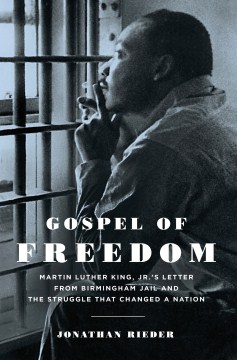


Find out more:

The King Center

12 Historic Facts About Martin Luther King Jr.

Nobel Peace Prize: MLK

NAACP: Dr. King

Stanford University: King Institute


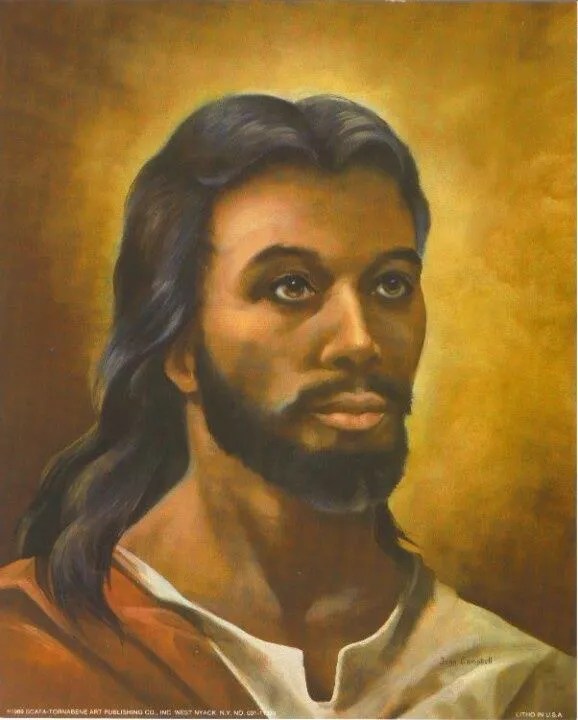
Image Source: editor Eugenio Hansen, OFS, CC BY-SA 4.0 OTFW, editor Eugenio Hansen, OFS, CC BY-SA 4.0, via wikimedia

Raoul Wallenberg Day

Since 2001, January 15 is Raoul Wallenberg Day in Canada. Mr. Wallenberg was a hero who courageously used his position to save thousands of Jews in Hungary during the Nazi Holocaust. Wallenberg was a Swedish diplomat working in Budapest during the Second World War. Wallenberg, with the help of some colleagues, using Swedish passports, letters of protection, and other diplomatic tools, was able to help thousands of Jews to escape from Hungary and to survive through to the end of the war.

Wallenberg 1944
(Source: ushmm.org)

Tragically, Raoul Wallenberg disappeared after the Soviet conquest of Hungary from the Germans in 1945. Some reports suggest he died in a Soviet prison in 1947, but his fate is officially uncertain.

Raoul Wallenberg as a young man.
(Source: https://www.raoulwallenbergcentre.org)

Raoul Wallenberg is considered one of the “Righteous Among the Nations” by Yad Vashem in Israel, and was made an Honorary Citizen of Canada in 1985.


Find out more:


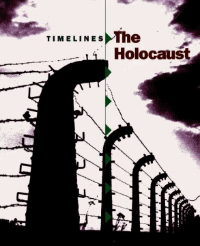
In January we recognize Raoul Wallenberg Day in Canada, as well as International Holocaust Remembrance Day on January 27. Come down to the School Library this month, in person, and continue to visit us online, for more information on the horrific and tragic history of the Holocaust.

The Power of Objects: An Introduction to the Holocaust

The LTSS Social Studies Department and the School Library are very pleased to welcome the Vancouver Holocaust Education Centre for a guest presentation for Grade 10 and 11 Socials classes, all day today in the School Library.

Today’s presentation is entitled “The Power of Objects: An Introduction to the Holocaust.” Students will be introduced to the study of the Holocaust, with an emphasis on learning about primary sources and their vital role in the study of history. From the VHEC:

This workshop offers students a powerful introduction to the Holocaust through an ordinary object from the VHEC’s collection: a small shoe. As they are guided through a close examination of this simple artefact, students make observations about the evidence, draw inferences, and test their ideas against other primary sources — photographs, documents, and survivor testimony. This inquiry-based approach sparks curiosity, develops historical thinking skills, and deepens understanding of the Holocaust. Along the way, students are encouraged to ask their own questions, grapple with the complexity of the past and reflect on the ethical dimensions of the Holocaust.

Find out more at vhec.org

Science Fiction

Come down to your School Library this month to check out our theme for January: Science Fiction. We have a huge selection of Sci-Fi novels for your enjoyment. On top of that we have Sci-Fi graphic novels, Sci-Fi themed magazines and Sci-Fi Short Story collections. We even have a large selection of non-fiction books that examine Science Fiction in all its forms, including novels, television, games, and movies. Be sure to come down and see what we have to offer. 

Christmas Day

Christmas Day is December 25

On December 25, Christians in Canada and around the world celebrate the Nativity, the birth of the Christ. Christians believe that a Jewish Rabbi named Yeshua, known to most today as Jesus, who was born in Bethlehem, in Roman occupied Israel, roughly 2000 years ago, was the Messiah, the long awaited saviour promised by God. The Hebrew word Messiah translates to Greek as χριστός, romanized as Khristos, from which we get the anglicized form, Christ. Christians believe that God became one of us in the person of Jesus, or Emanuel, literally “God With Us.”

As Christianity spread from the Holy Land into the Roman Empire and to the Celtic peoples of the north, traditional pagan winter festivals such as Yule were taken over as Christian festivals and Christmas became a winter celebration.

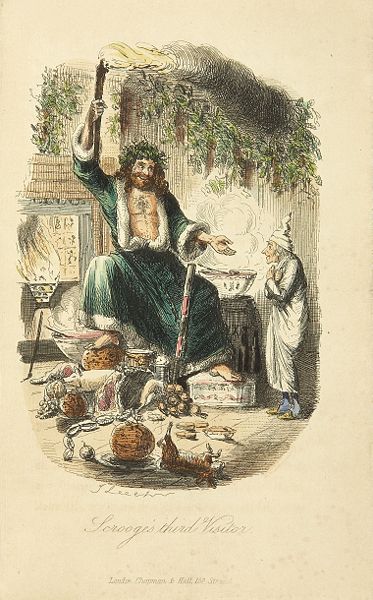
Over the course of the last century, Christmas has grown from a strictly Christian religious festival to become a secular holiday celebrated by people of many different religions, cultures and worldviews from all over the planet. For some, Santa Claus, stockings and gift-giving are central to Christmas. To others, it is a much needed time of rest and merry-making at the coldest and darkest time of year. Some may agree with the Grinch, who simply hated Christmas, or with Ebenezer Scrooge when he said it was a “Humbug” — although both of them changed their positions in the end!

scroogechristmas
source: public domain

Whether you are celebrating the birth of the Christ, or observe Christmas as a strictly secular event, we wish you and your family a very Merry Christmas!

Festivus

Festivus is celebrated annually on December 23


“I’ve got a lot of problems with you people!”

With heart warming traditions such as the “Airing of Grievances” and “Feats of Strength,” Festivus is a holiday which owes its popularity to the sitcom “Seinfeld.”  

Do you have your Festivus Pole up yet?

FestivusPole
Festivus Pole. source: anonymous

What was once fictional has become a real holiday for many people, celebrated every year on December 23.


For more on this secular anti-celebration:


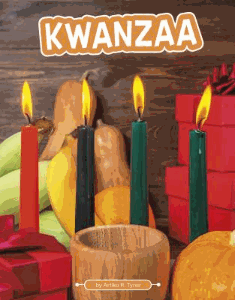
Kwanzaa

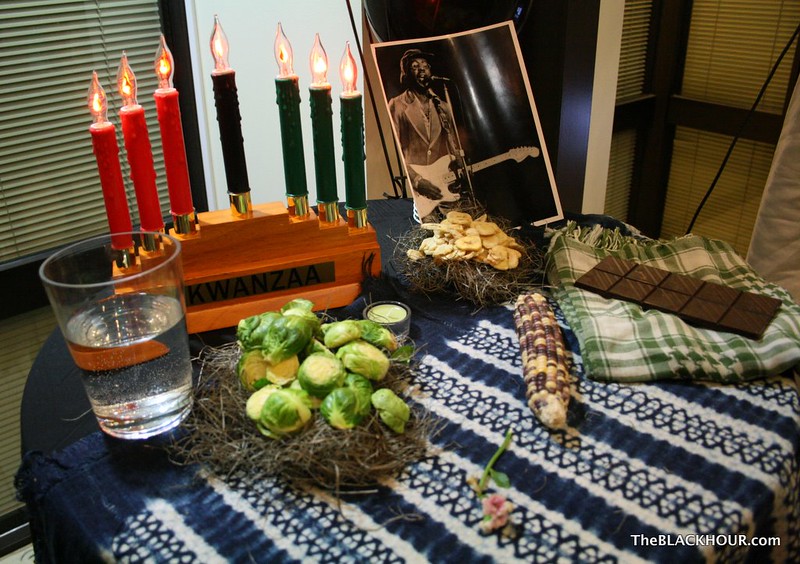
Kwanzaa takes place every year from December 26 to January 1


source: CC BY-NC 2.0 Reginald James/TheBlackHour.com

From the Official Kwanzaa Website:

“Kwanzaa is an African American and Pan-African holiday which celebrates family, community and culture. Celebrated from 26 December thru 1 January, its origins are in the first harvest celebrations of Africa from which it takes its name. The name Kwanzaa is derived from the phrase “matunda ya kwanza” which means “first fruits” in Swahili, a Pan-African language which is the most widely spoken African language.”

Find out more:

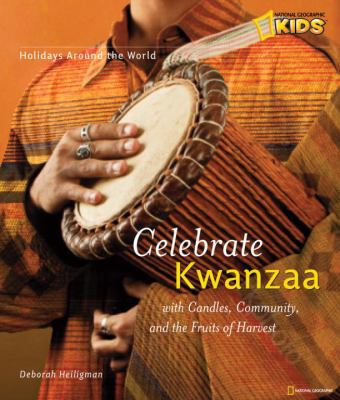
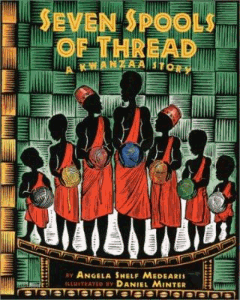
And check out these books from our display, “Holidays and Holy Days” :

Simbang Gabi

Simbang Gabi: December 16-24

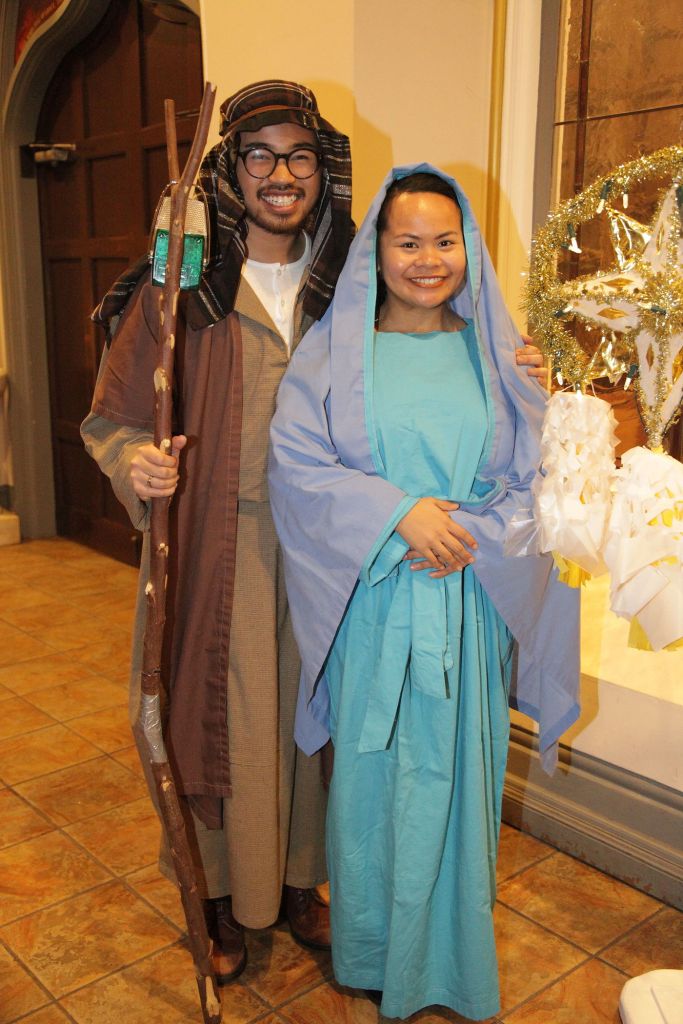
Simbang Gabi is a Filipino Christmas celebration that takes place from December 16 to December 24, concluding with Misa de Gallo at the Midnight Mass.  Simbang Gabi is a Novena, or a nine-day festival, similar to the Mexican Las Posadas and other Navidad celebrations in the Spanish speaking world.

Dating back hundreds of years to the  beginning of Spanish rule over the Philippines, Simbang Gabi emerged as a distinctly Filipino celebration of Christmas.  One of the features that developed in response to the agricultural practices of Filipino farmers is that the services are carried out in the very early morning, sometimes as early as 3:00 AM.

source: Simbang Gabi at BC Catholic

Many Canadians trace their roots to the Philippines, including many students here at Lord Tweedsmuir.  Ask some of your fellow students about Simbang Gabi!  You can also find out more here:


source: bccatholic.ca

Check out your School Library’s current display of books: “Holidays & Holy Days.”