We hope that you have a relaxing and refreshing summer holiday filled with fun and good times with family and friends.

Look for the occasional online update, otherwise, we will see you again in person at your School Library in 2023-2024.
We hope that you have a relaxing and refreshing summer holiday filled with fun and good times with family and friends.

Look for the occasional online update, otherwise, we will see you again in person at your School Library in 2023-2024.

From the Government of Canada:
“June 21 is National Indigenous Peoples Day. This is a day for all Canadians to recognize and celebrate the unique heritage, diverse cultures and outstanding contributions of First Nations, Inuit and Métis peoples. The Canadian Constitution recognizes these three groups as Aboriginal peoples, also known as Indigenous peoples.
Although these groups share many similarities, they each have their own distinct heritage, language, cultural practices and spiritual beliefs.
In cooperation with Indigenous organizations, the Government of Canada chose June 21, the summer solstice, for National Aboriginal Day, now known as National Indigenous Peoples Day. For generations, many Indigenous peoples and communities have celebrated their culture and heritage on or near this day due to the significance of the summer solstice as the longest day of the year.”
Find out more:
Crown-Indigenous Relations and Northern Affairs Canada
Tomorrow is the first day of Summer. The Summer Solstice will take place in the Northern Hemisphere at 7:57 AM on June 21st (Pacific Daylight Time). The Summer Solstice is also called the estival solstice and occurs in the Northern Hemisphere when the North Pole is at its most extreme tilt towards the sun. The result is the longest day (and shortest night) of the year. The Solstice is also the first day of the season of Summer– although, confusingly, festivals known as Midsummer, take place around the same time, often on June 24.

Also known by such names as Freedom Day and Jubilee Day, Juneteenth is a celebration of the end of slavery after the end of the American Civil War.

source: amny.com
Juneteenth has grown to be a day that is observed in the US and around the world, as it symbolizes not only the fight against the evil that is slavery, but also the fight against racism in all its forms. Slavery finally came to end in the US in 1865, but racism lies at the heart of so many of the evils that still haunt the United States, Canada, and indeed, humanity. Current issues such as Black Lives Matter, Critical Race Theory, are all just part of the ongoing and centuries old struggle against racism.
Find out more about Juneteenth:

source: mosaictemplars.com
The end is in sight. Make sure that you return all your books and other school library materials before the end of the year.

Try the Sporcle which asks you to identify famous people from Canada’s First Nations, Inuit and Metis communities. Go here to try the quiz.

June is National Indigenous History Month in Canada.
The students of the school district have spoken. The 2023 Surrey Teens Read Book of the Year is: Iron Widow by Xiran Jay Zhao.

Thanks to all the students who read this year’s slate of Surrey Teens Read nominees and voted for their favourites. Thanks to all the Teacher-Librarians on the STR Committee whose efforts make Surrey Teens Read a success every year by offering up a wonderful selection of titles.
Find out more about Surrey Teens Read
Come down to your School Library to check out our newly established Indigenous Peoples Collection. The collection features books written by indigenous writers. Here are just a few of the more recent titles that share an authentic indigenous voice.


Anne Frank was born on this day in 1929 in Frankfurt, Germany. Her family moved to the Amsterdam in 1933, among the over 300,000 Jews who fled Germany between the rise of Hitler and the onset of WW2. Nevertheless, the Netherlands fell to the Nazis in 1940. Eventually Anne and her family went into hiding in 1942. While hiding in the “Secret Annex,” Anne would write what would become perhaps the most famous diary in history, published after the war as The Diary of a Young Girl. The Franks were betrayed, discovered, and arrested, in 1944. Anne and her sister perished in Bergen-Belsen, a Nazi death camp, in 1945. Most of her family ended up numbered among the more than 100,000 Dutch Jews killed in the Nazi Holocaust, although her father survived. It was he who discovered Anne’s diary and was able to have it published so that many generations may be enriched by it.
Find out more:
Anne Frank Fonds (Foundation)


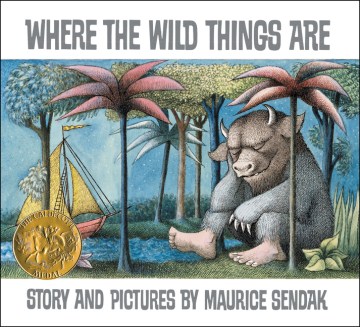
Maurice Sendak was born on this day in 1928 in Brooklyn. Sendak is the author of one of the most beloved children’s picture books of all time, Where the Wild Things Are. Maurice Sendak died in 2012.
Come into the School Library to check out our newly established Indigenous Peoples Collection. This section of the School Library is devoted to titles from authentic indigenous writers.
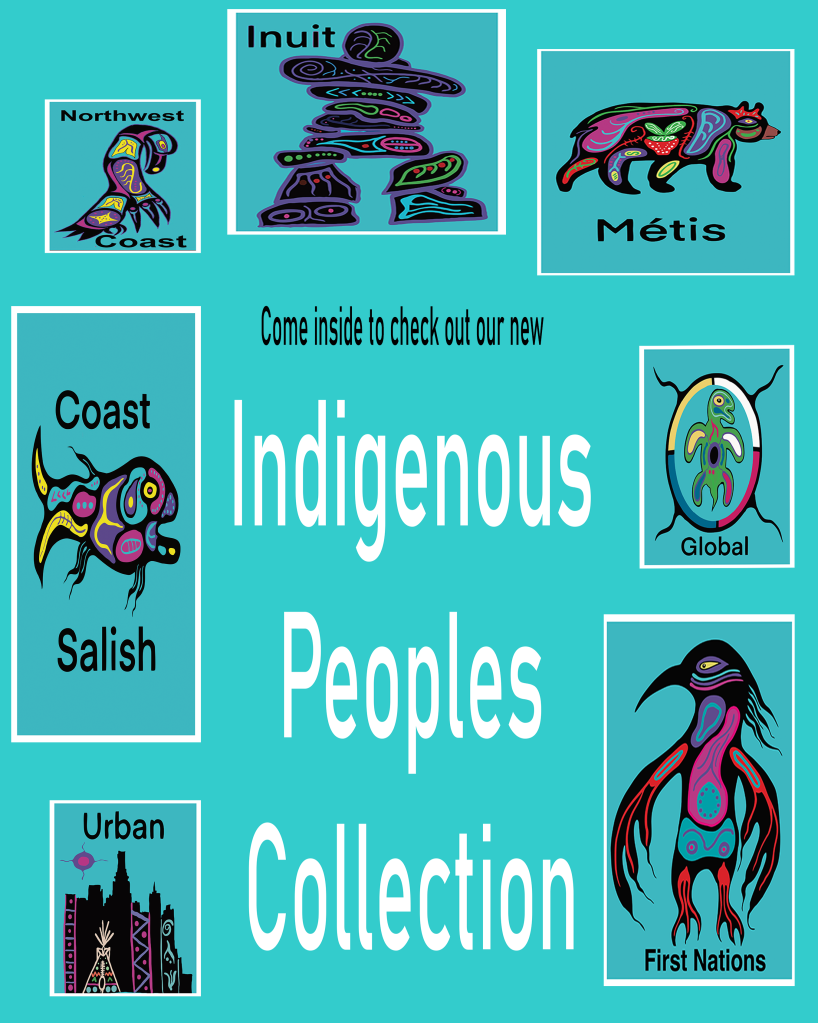
All titles in the Indigenous Peoples Collection are designated with spine labels bearing the “IPC” prefix. Sublocations in the IPC include:
and more…
June is National Indigenous History Month in Canada.
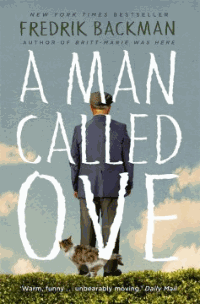
Swedish writer Fredrik Backman was born on this day in 1981. Backman is the author of many novels, including A Man Called Ove, published in 2012.