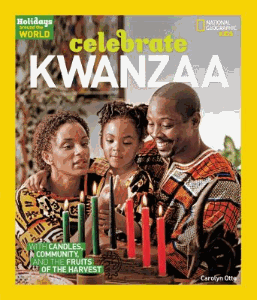
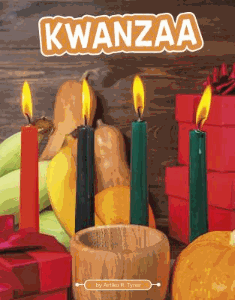
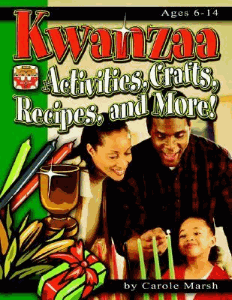
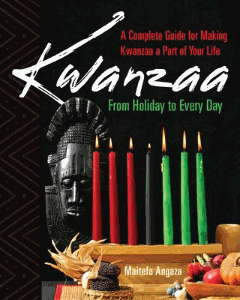
Kwanzaa takes place every year from December 26 to January 1
From the Official Kwanzaa Website:
“Kwanzaa is an African American and Pan-African holiday which celebrates family, community and culture. Celebrated from 26 December thru 1 January, its origins are in the first harvest celebrations of Africa from which it takes its name. The name Kwanzaa is derived from the phrase “matunda ya kwanza” which means “first fruits” in Swahili, a Pan-African language which is the most widely spoken African language.”
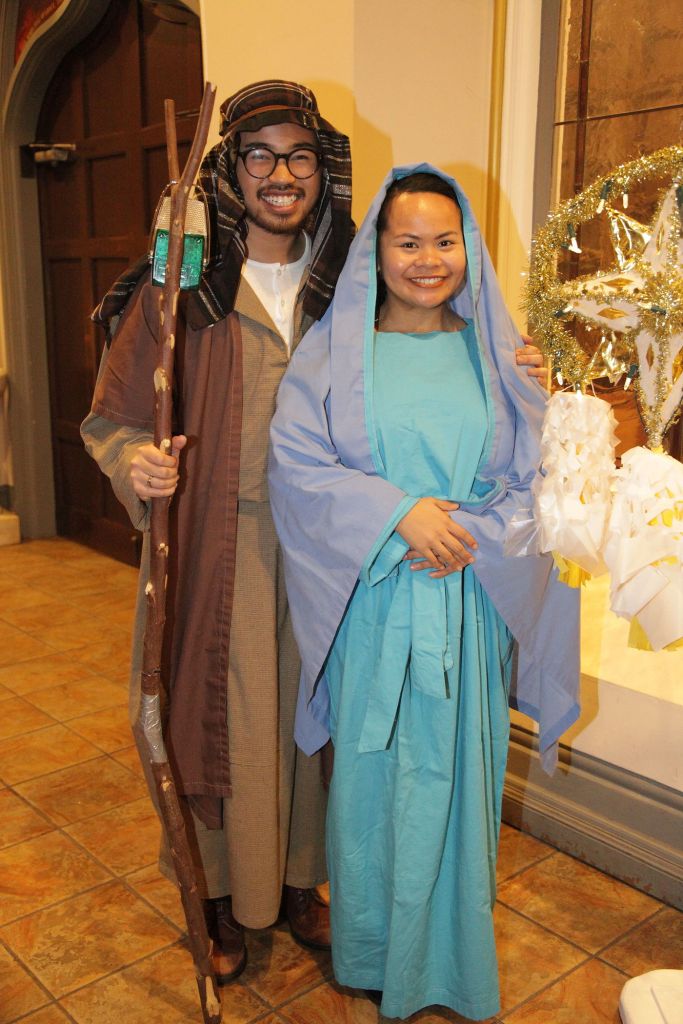
Simbang Gabi is a Filipino Christmas celebration that takes place from December 16 to December 24, concluding with Misa de Gallo at the Midnight Mass. Simbang Gabi is a Novena, or a nine-day festival, similar to the Mexican Las Posadas and other Navidad celebrations in the Spanish speaking world.
Dating back hundreds of years to the beginning of Spanish rule over the Philippines, Simbang Gabi emerged as a distinctly Filipino celebration of Christmas. One of the features that developed in response to the agricultural practices of Filipino farmers is that the services are carried out in the very early morning, sometimes as early as 3:00 AM.
Many Canadians trace their roots to the Philippines, including many students here at Lord Tweedsmuir. Ask some of your fellow students about Simbang Gabi! You can also find out more here:
The Winter Solstice for 2025 will occur on December 21 at 7:03 AM
Why are there so many Holidays and Holy Days at this time of year? Why do so many of them, especially in the Northern Hemisphere, seem to emphasize light, especially light in contrast to the darkness? Likely this is because of the Winter Solstice.
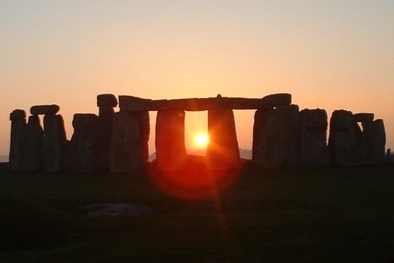
Vicky WJ from Brighton, UK, CC BY 2.0 , via Wikimedia Commons
The longest night of the year. The shortest day. The Winter Solstice occurs on December 21 (in some years December 22) as the North Pole reaches its maximum tilt away from the sun. The North Pole will experience continuous darkness, the Polar region near total darkness, and the northern hemisphere its shortest day and longest night. Winter begins. Most populations will experience the darkest and coldest time of year.
It is a time where people crave light and warmth, and so it seems natural that the feasts and festivals of December emphasize those things. Moreover, at the darkest moment, hope is renewed, as after the solstice the days will get longer. This is hope for more light, more warmth. Spring will come eventually. New birth. New life.
And so many different observances, feasts, and festivals emereged at this time of the year, many on the day of the Solstice, and others near to it on the calendar.
Yule: Celtic Europe, Scandinavia and Germanic peoples.
Mean Geimhreadh: Irish
Alban Arthan: Wales
Modranhit: Anglo-Saxon Europe
Korochun: Slavic Eastern Europe
Shalako, Soyal :Native American peoples
Yalda: Iran/Persians
Dongzhi: China & East Asia
Lohri & Maghi: India, especially the Punjab
Dies Natalis Solis Invicti, Brumalia & Saturnalia: Ancient Rome
Of course, we have spent the last few weeks observing the many holidays and holy days of this time of year. It is not a coincidence that celebrations such as Christmas and New Year have grown to be huge events in the western world, and by extension other cultures, as the west has extended its influence around the globe. In places where modern conveniences such as lighting and heating offset the effect of the cold and dark of December, we might overlook how important it was for our ancestors to hope for the seeming death of one year to turn into the life of a new year, and to celebrate such rebirth.
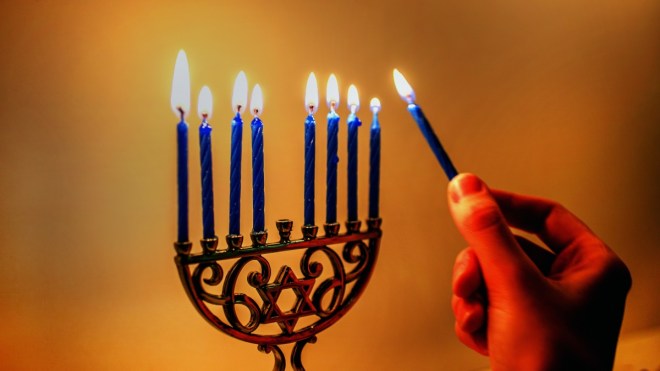
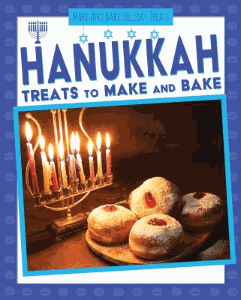
Hanukkah is almost here. Next week Jews in Canada and around the world will celebrate Hanukkah, starting at sundown on Sunday, December 14.
Source: CC/Robert Couse Baker
The Festival of Lights is a celebration of God’s deliverance and provision. The event began in remembrance of Maccabean revolt in the 2nd Century BCE, when the Hebrews recaptured the Temple in Jerusalem, the spiritual centre of Judaism. Each candle of the Menorah is lit, one per day for the 8 day Festival.
Like all Jewish Holy Days, which follow the lunar Hebrew Calendar and therefore vary against the Gregorian calendar, Hanukkah can occur anytime from late November to late December. This year Hanukkah will conclude on the evening of December 15.
For more information on Hanukkah, check out some of the following:
Each year on December 10 the world celebrates International Human Rights Day and reaffirms the Universal Declaration of Human Rights, declared in 1948 by the General Assembly of the United Nations.
In this period of turbulence and unpredictability, where many feel a growing sense of insecurity, disaffection and alienation, the theme of Human Rights Day is to reaffirm the values of human rights and show that they remain a winning proposition for humanity.
Through this campaign, we aim to re-engage people with human rights by showing how they shape our daily lives, often in ways we may not always notice. Too often taken for granted or seen as abstract ideas, human rights are the essentials we rely on every day.
By bridging the gap between human rights principles and everyday experiences, we aim to spark awareness, inspire confidence and encourage collective action.
The campaign emphasizes that human rights are positive, essential and attainable.
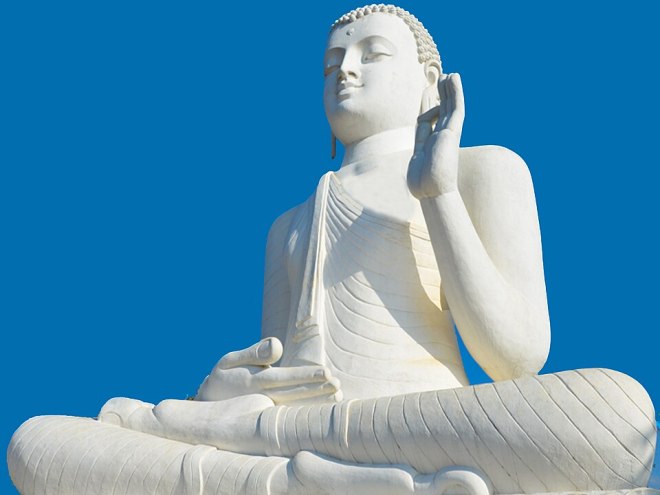
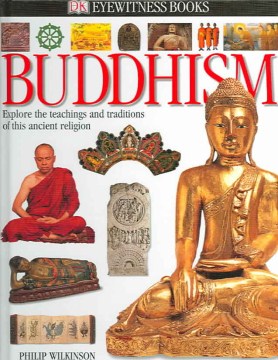
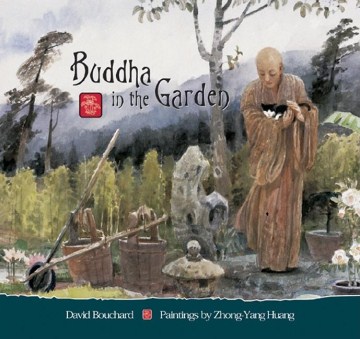
Rohatsu, Laba and Bodhi Day are all different names for the celebration of the Enlightenment of the the Buddha.
In much of the world is is known as Bodhi Day. In China it is known as the festival of Laba, while in Japan it is known as Rohatsu.
Marko Kafé, CC BY-SA 4.0 , via Wikimedia Commons
The religion known as Buddhism dates back to the 6th or 5th Century BCE, when the Indian Prince Siddhartha Gautama became the “Buddha,” literally, “the Enlightened One.” The followers of the Mahayana branch of Buddhism observe Rohatsu, Laba, or Bodhi Day, in celebration of the day that the Buddha sat below the Bodhi Tree and meditated on the meaning of life.
This day is celebrated mainly by the Buddhists of northern and eastern Asia, and in countries to which those people have immigrated (such as Canada). To many this holiday is known as Bodhi Day and it occurs on the 8th day of the 12th month of the lunar year. With the Japanese adoption of the western calendar (Gregorian) Rohatsu is fixed on December 8th.
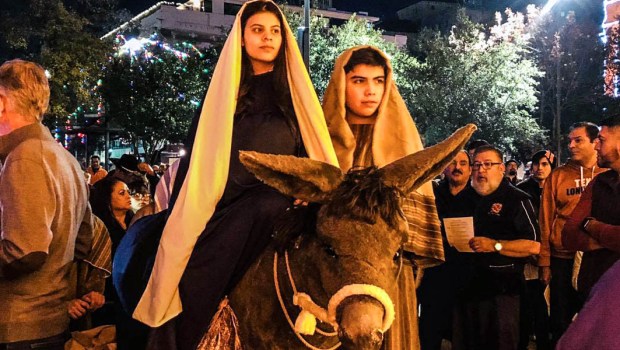
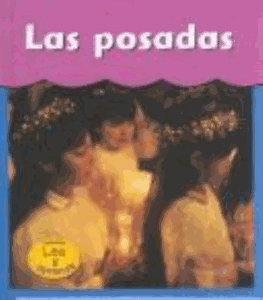
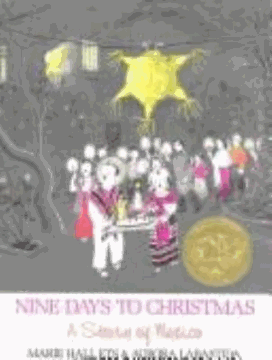
This 9 day festival is central to Navidad (Christmas) celebrations in Mexico. This is a neighbourhood festival that commemorates the journey of Mary and Joseph, who could not find posadas, (Spanish for “lodging”) before the birth of Jesus. A procession, including people dressed as Angels, Saints and the Holy Family, marches through the neighbourhood, knocking on doors looking for a place to stay. Like Mary and Joseph, they are refused, until finally the parade ends at one home where they are welcomed in. Feasting ensues, including a pinata for the children.
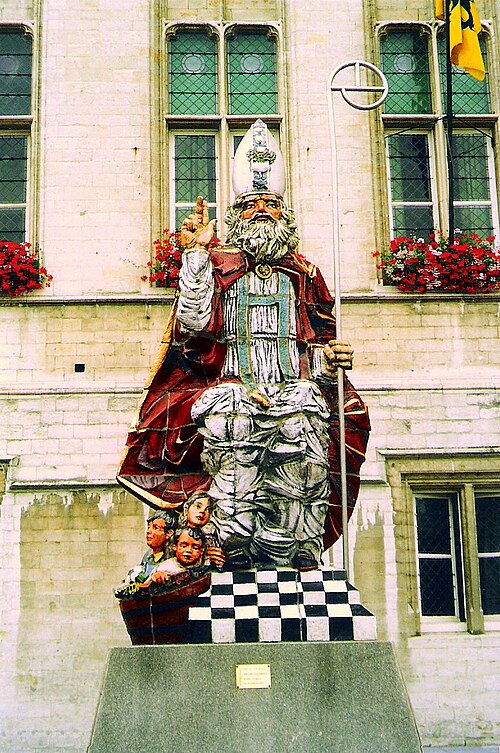
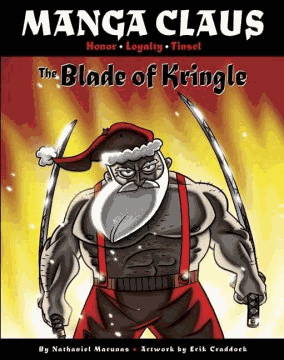
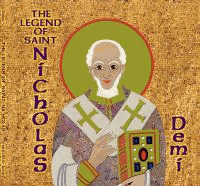
If people tell you that Santa Claus isn’t real, tell them to think again! Saint Nicholas lived in the 3rd and 4th Centuries AD(CE). He lived in what is now known as Turkey, but what was then a Greek area of the Roman Empire. The legends surrounding his life grew and evolved over the years, eventually leading to our modern picture of Santa.
In much of Europe and in many parts of the world, St. Nicholas Day is celebrated on December 6, or on another date other than Christmas.
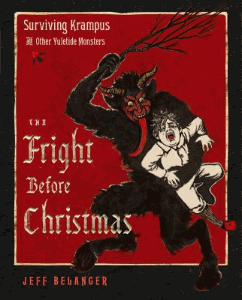
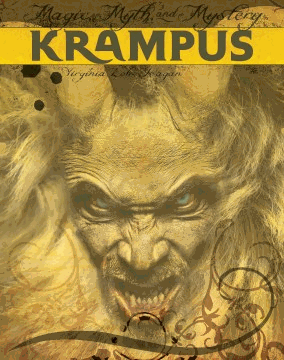
Krampus is coming to give you what you deserve, bad little boys and girls!
Many people all across Europe celebrate St. Nicholas Day on December 6 each year, as do some people in Canada who have roots in Europe. St. Nicholas comes during the night and leaves presents for good girls and boys. (Look for tomorrow’s post more more information on St. Nicholas.)
public domain
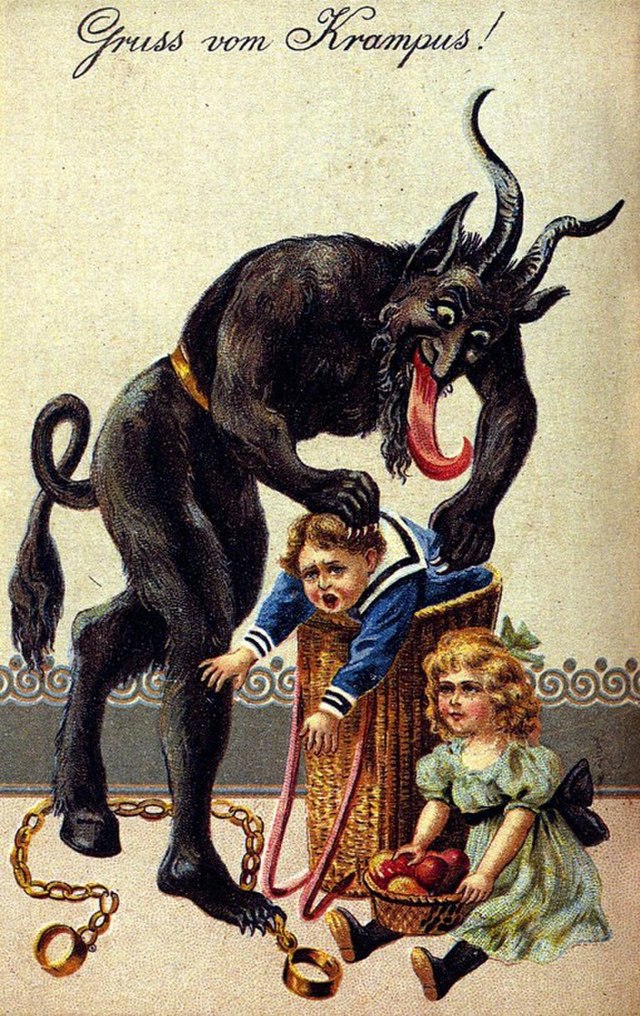
In some places, tradition holds that St. Nicholas had a helper– or at least a counterpart, who visited the bad children. Krampus.
public domain
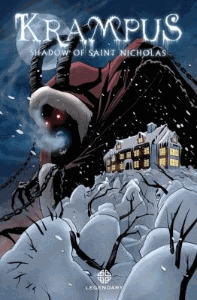
In Germany, Austria and other Alpine countries, Krampus became a part of the St. Nicholas story. Half goat, half demon, Krampus is a nightmarish figure who comes for those overlooked by St. Nicholas, who has gifts for the good (or in some cases, the intelligent!) At best Krampus might deliver coal or twigs. But children fear far worse, that Krampus will punish them, torture them, even kidnap them and carry them away to his lair– or to Hell!
Krampusnacht is is observed in many places on December 5, with parades and other celebrations, including the Krampuslauf, or Krampus Run, in which young people dress up like Krampus.
Here are just some of the observances, festivals, celebrations and special days that take place in the coming month or so of holidays and holy days, known to many as “The Holiday Season.”
November 30: Advent (first Sunday)
December 1: Gita Jayanti
December 2: Giving Tuesday
December 5: Krampusnacht
December 6: St. Nicholas Day
December 7: Advent (second Sunday)
December 8: Bodhi Day / Rohatsu
December 8: Feast of the Immaculate Conception
December 10: International Human Rights Day
December 11: Feast of Masa’il
December 14: Advent (third Sunday)
December 14 (evening): Hanukkah begins
December 16: Simbang Gabi / Los Posadas
December 21: Winter Solstice / Yule / Grianstad an Gheimhridh
December 21: Advent (fourth Sunday)
December 22: Hanukkah concludes
December 23: Festivus
December 24: Christmas Eve
December 25: Christmas Day
December 26: St. Stephen’s Day
December 26: Kwanzaa begins
December 31: New Year’s Eve
December 31: Hogmanay
January 1: New Year’s Day
January 1: Kwanzaa concludes
January 5: Guru Gobind Singh Jayanti
January 5: 12th Night / Christmastide concludes
January 6: Epiphany / King’s Day
January 7: Orthodox Christmas
January 13: Yule (First Full Moon after Solstice)
January 13: Maghi / Lohri
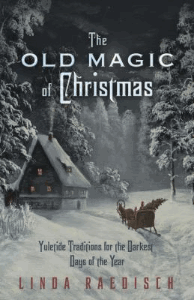
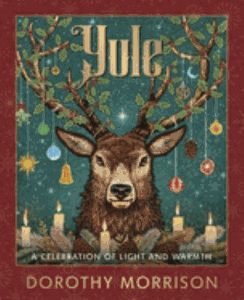
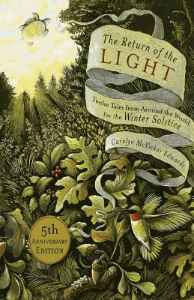
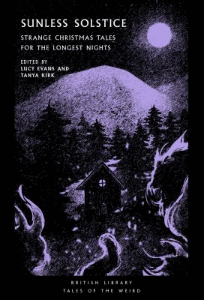
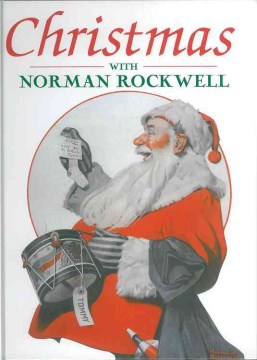
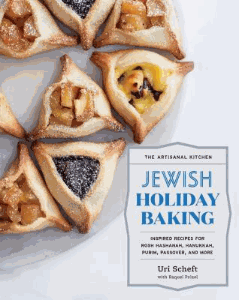
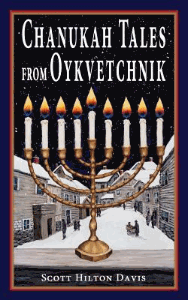
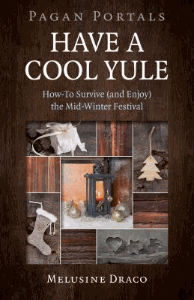
Visit your School Library, in person and online, to find out more about this season of Holidays and Holy Days.