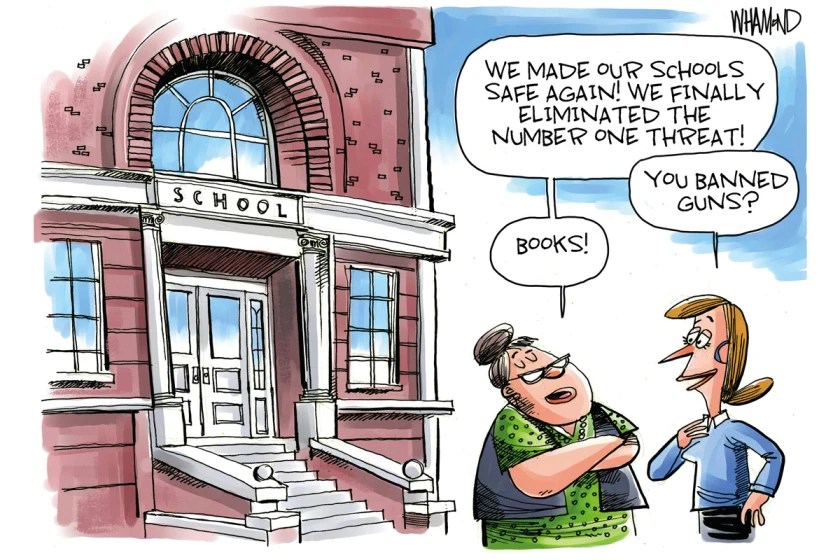
More info on Banned Books Week:
- American Civil Liberties Union
- 15 Most Banned Books in US Schools
- BBW at NY Public Library
- George Takei speaks out against censorship
- A Library Should Have Something for Everyone
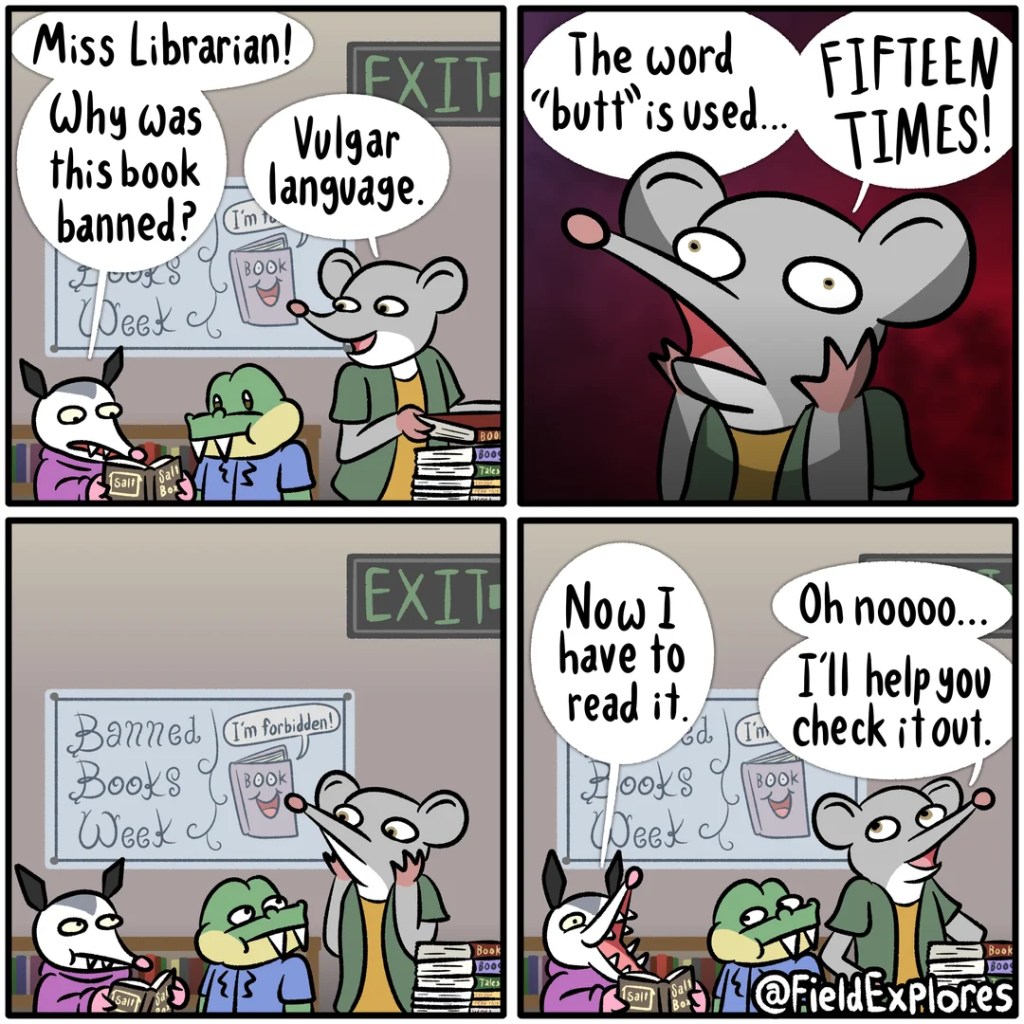
A new documentary explores how public school librarians are standing up for our rights in the fight against book bans and the rise of fascism.

Librarians emerge as first responders in the fight for democracy and our First Amendment Rights. As they well know, controlling the flow of ideas means control over communities.
“In Texas, the Krause List targets 850 books focused on race and LGBTQia+ stories – triggering sweeping book bans across the U.S. at an unprecedented rate. As tensions escalate, librarians connect the dots from heated school and library board meetings nationwide to lay bare the underpinnings of extremism fueling the censorship efforts. Despite facing harassment, threats, and laws aimed at criminalizing their work – the librarians’ rallying cry for freedom to read is a chilling cautionary tale. ” (thelibrariansfilm.com)
Find out more about the documentary film “The Librarians”
The fight against book bans by public school librarians shown in new documentary. Check out this story from PBS News.
October 5-11 is Banned Books Week
October is Canadian Library Month
October is International School Library Month
More teachers were caught reading banned books!
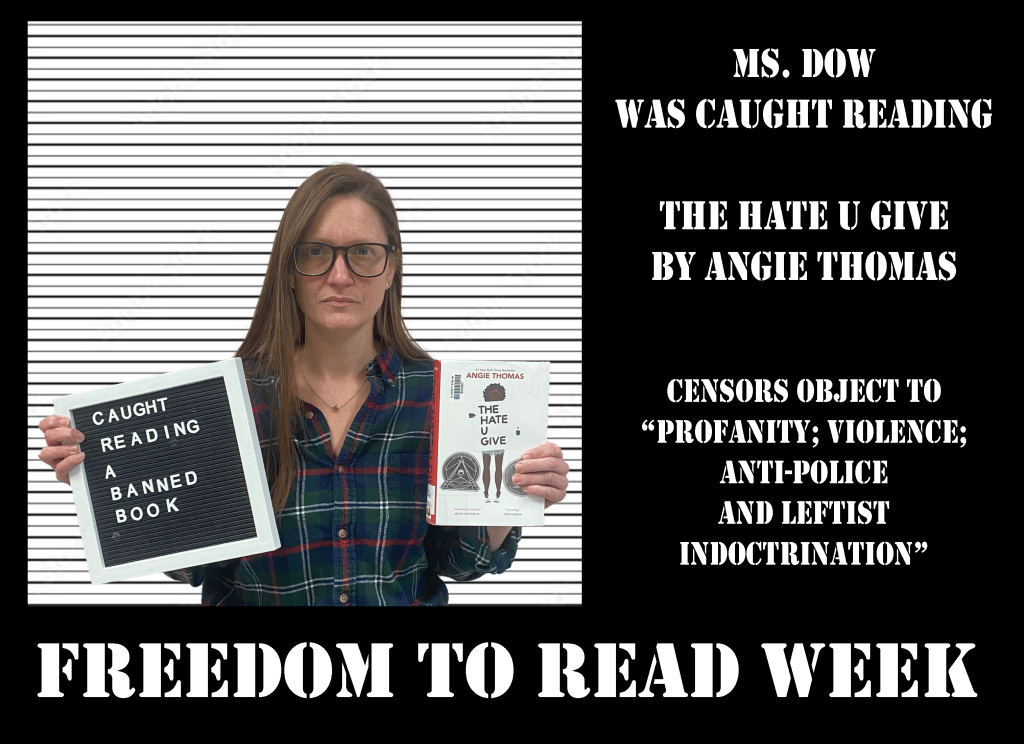
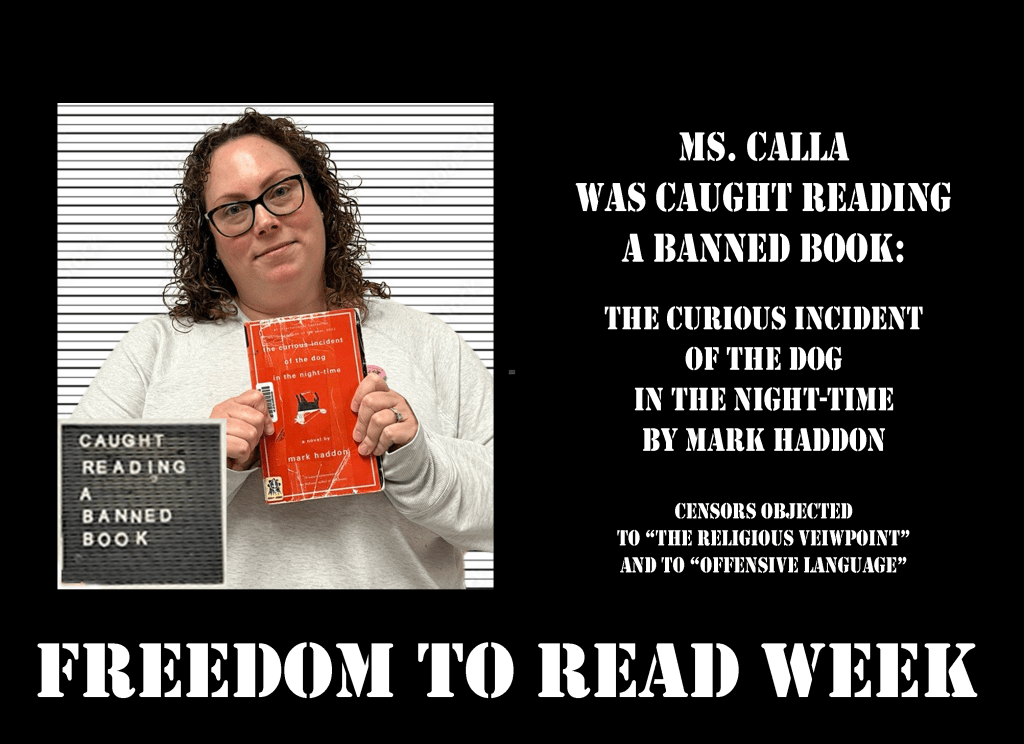
February 23 to March 1 is Freedom to Read Week in Canada
In the past few years, the number of challenges to books in both Canada and the United States has exploded. And while sanity prevails in many cases, in more and more places the censors have been successful. In some jurisdictions, hundreds and hundreds of different titles have been pulled from libraries, schools, government offices and other public institutions. In the private sector, bookstores and publishers have reported the increasing pressures of censorship. Writers have commented on the chilling effect this has on intellectual freedom.
Stand up for your rights and freedoms. Democracy is built on upon your right to information. You have the right to choose for yourself.
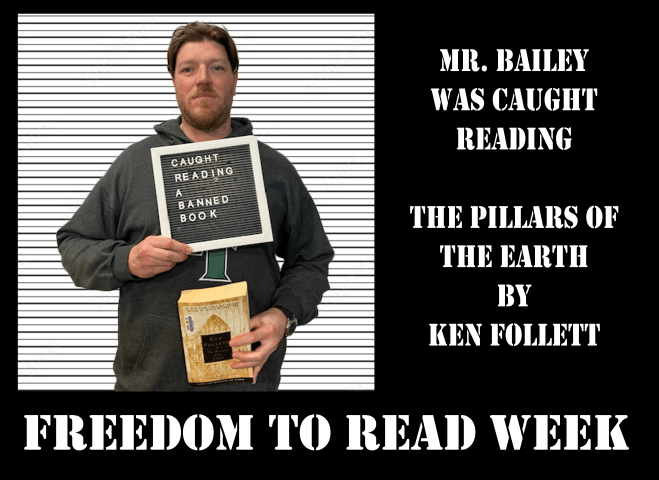
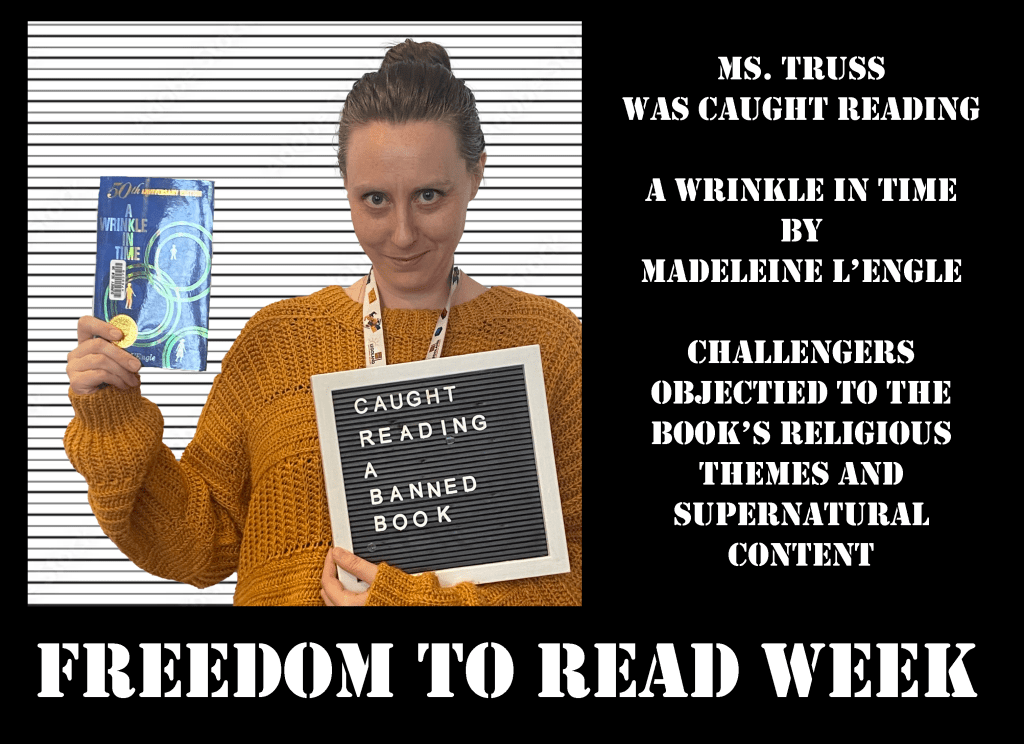
Adults have the right to choose for themselves what they want to read. Adults don’t have the right to choose what other people get to read. Parents have the right– and the responsibility– to teach and guide and discuss with their children about what types of library materials are right or wrong for them. Parents are free to have their opinions on what materials are good or bad for children in general They even have the right to express their opinions about why they think certain materials are good or bad for children. Parents do not have the right to decide for other people’s children what they can or can’t read.
February 23 to March 1 is Freedom to Read Week in Canada
 Lord Tweedsmuir Secondary School Library