School Libraries and Intellectual Freedom

School Libraries should be bastions of intellectual freedom. Tragically, the School Library has always been a battleground in the struggles between those that would protect our rights and freedoms and those that would impose their beliefs on others.


This has become all too evident in the U.S. in recent years, and sadly we in Canada are not immune. Provincial Ministries of Education, School Boards, and individual schools and school libraries have been sucked into the current climate of extreme political polarization. Attacks on the freedom to read are on the rise, and include recent decisions made by the government of Alberta. The following are quotes from the response of Canadian School Libraries:

“Individual parents have the right to decide on their child’s reading, but they do not have the right to impose it on everyone.

The selection and availability of school library and learning resource materials should be made by trained professionals, not politicians and bureaucrats.

Not every book in a school library is meant for every student. Schools need to have a wide range of age and developmentally appropriate resources that cover the needs of the student population.

School library collections, with a richness and diversity that allows students to see themselves and experience lives other than their own, are developed within the lens of the Canadian Charter of Rights and Freedoms and the rights and freedoms it affords to all Canadians, including children.”


Find out more about Canadian School Libraries

International Human Rights Day

From the United Nations:

Human Rights Day is observed every year on 10 December — the day the United Nations General Assembly adopted, in 1948, the Universal Declaration of Human Rights (UDHR): a milestone document proclaiming the inalienable rights which everyone is inherently entitled to as a human being regardless of race, colour, religion, sex, language, political or other opinion, national or social origin, property, birth or other status.

The theme for Human Rights Day 2024 is “Our Rights, Our Future, Right Now.” 

From the UN:

Human rights can empower individuals and communities to forge a better tomorrow. By embracing and trusting the full power of human rights as the path to the world we want, we can become more peaceful, equal and sustainable.

This Human Rights Day we focus on how human rights are a pathway to solutions, playing a critical role as a preventative, protective and transformative force for good.

Human rights impact everyone, every day and in this campaign, Our Rights, Our Future, Right Now, we will show the tangible impact of human rights by focusing on relevant global issues, showcasing impact, successes and practical solutions.

UN.org

Find out more:

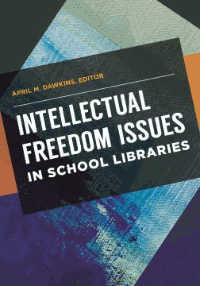
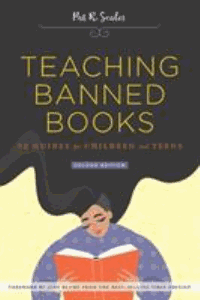
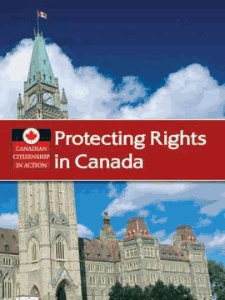
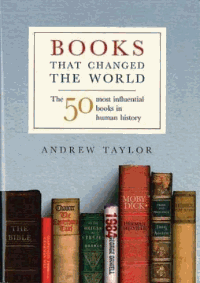
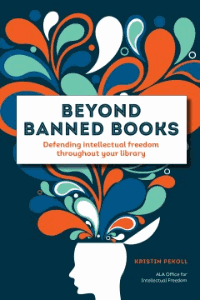
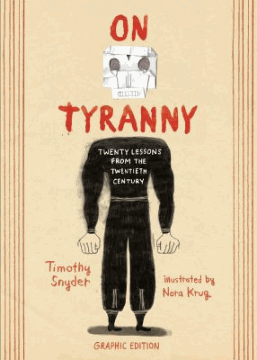
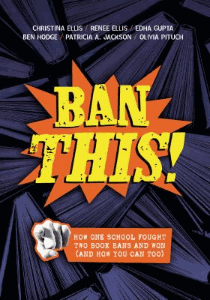
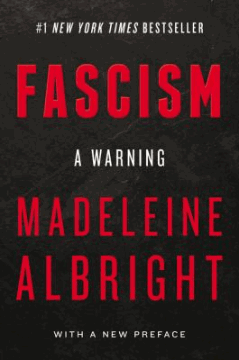
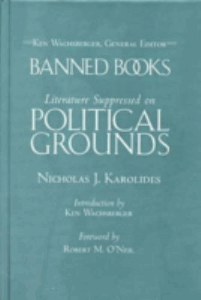
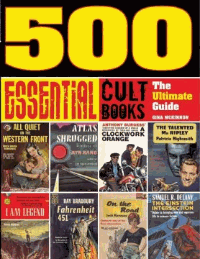
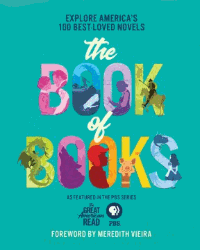
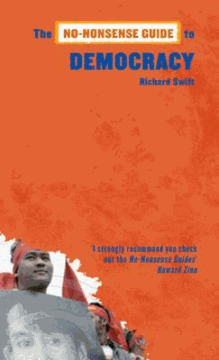
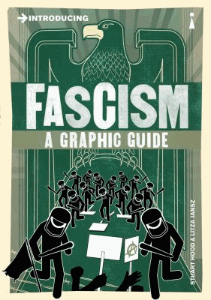
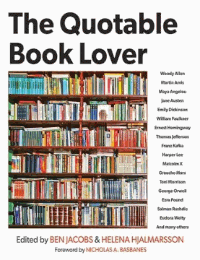
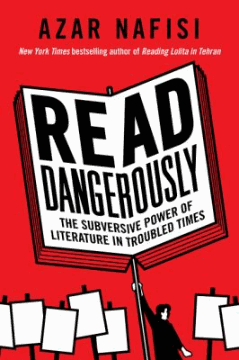
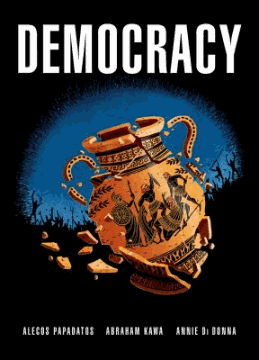
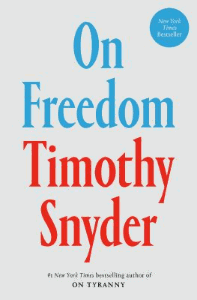
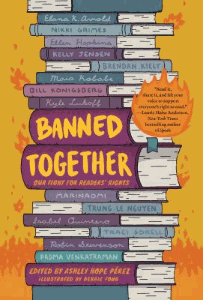
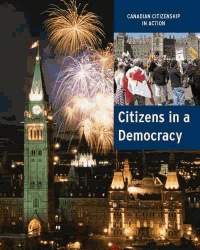
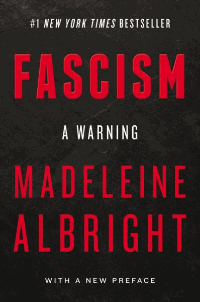
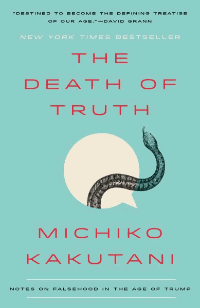
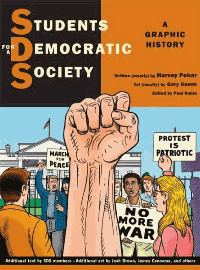
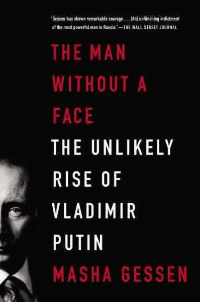
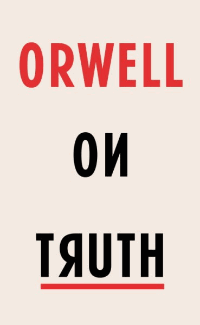
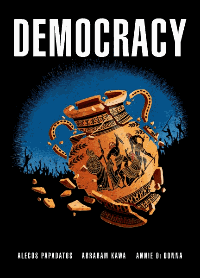
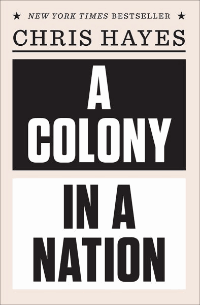
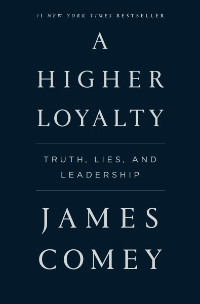
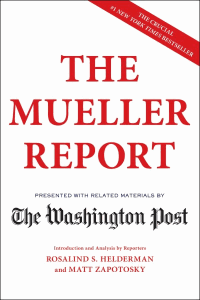
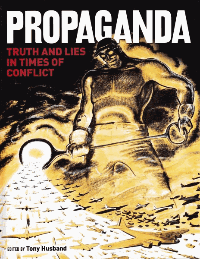
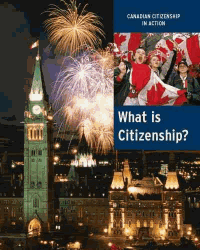
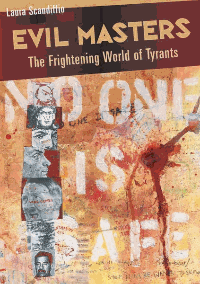
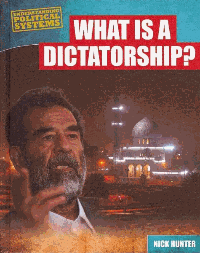
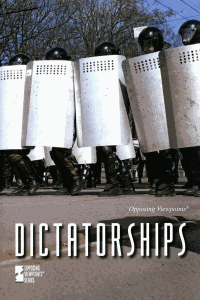
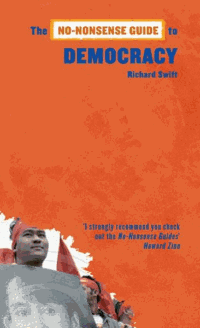
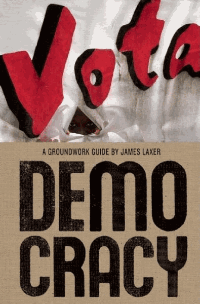
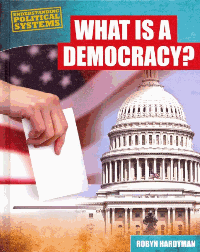
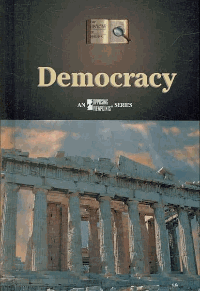
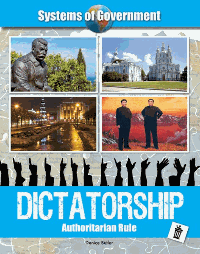
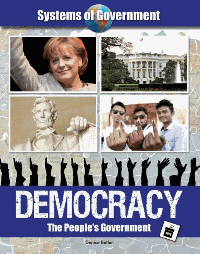
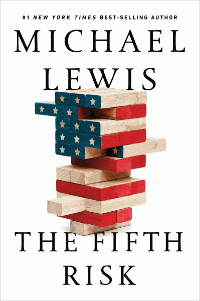
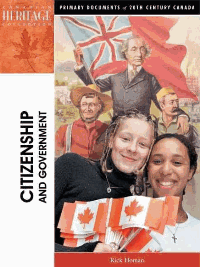
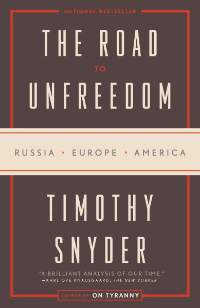
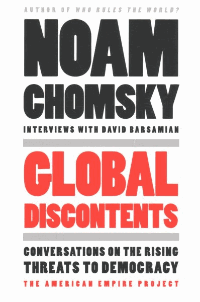
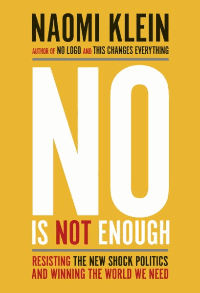
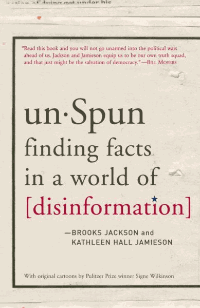
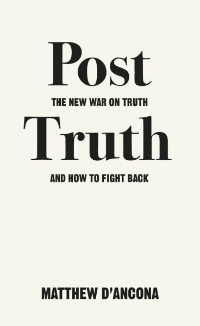
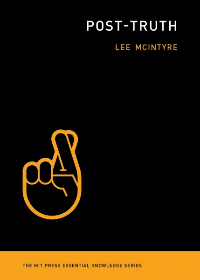
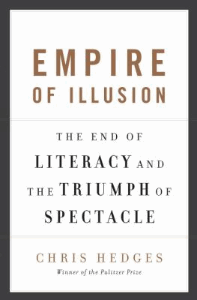
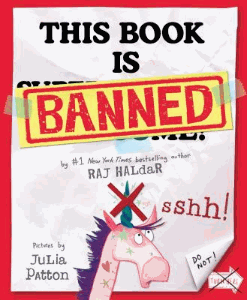
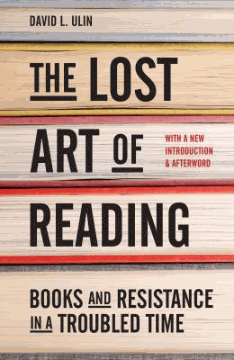
Check out these books in your School Library:

International Women’s Day is Coming Up!


Join with us in Your School Library as we celebrate International Women’s Day by learning more about the historical and ongoing struggle for women’s rights and equality in Canada and around the world.

Freedom to Read is Useless if People Don’t Read

“The man who does not read has no advantage over the man who cannot read.”

Source: Unknown*

The rights and freedoms of Canadians include the right to read what you want to read. Such rights and freedoms are fundamental to democracy. However, such rights and freedoms are meaningless unless citizens exercise these rights and freedoms.

There are authoritarian forces at work in our society that seek power by attacking your rights, including attempts to censor or limit your freedom to read. Totalitarian states know that uneducated and illiterate citizens are easier to control and oppress. Such forces can only celebrate that the work is much simpler when significant portions of the population choose not to read. Censorship becomes less pressing when “aliteracy” becomes prevalent.

A true democracy guarantees fundamental rights and freedoms to its citizens. But to work effectively, indeed, to survive, democracy requires that citizens exercise those rights. In particular, democracy breaks down if citizens aren’t educated, informed and active.

The rise of powerful new information technology in the last few decades has made it more important than ever that citizens are highly “information literate.” Citizens must not only have access to information, they must have the tools required to wade through increasingly destructive levels of misinformation, disinformation, propaganda, and outright lies. Citizens need to have access to information that is credible, accurate and trustworthy.
The rise of anti-intellectualism and anti-science movements, perhaps most recently represented by anti-vax conspiracies, are part of the wider breakdown of democratic institutions. There is little doubt that attacks on public education over many years have reaped some these results and are integral to the rise of authoritarianism.
It is not enough to celebrate the Freedom to Read. As citizens of democratic societies, we have an obligation to exercise our Freedom to Read, in part so that we are equipped to defend our democratic rights and freedoms.

It is clear that democracy is under attack, throughout the world, and in our back yard. We must act.

Find out more:


Note* The above quote, or variations on it, are often popularly attributed to Mark Twain. However the original source of this quote, or its variations, remains unclear.

Book Challenges in Canada


From September 2022 to the end of August 2023, Canadian libraries, especially school libraries, faced the highest number of book challenges ever for a 12 month period in Canada (source). The number of official challenge is likely just a small fraction of the challenges that go unreported– ALA studies suggest 82 -97% of challenges go unreported (source).

Intellectual freedom has been a pillar of library philosophy for nearly a century; and in our current climate, it is perhaps our most valuable tool in our efforts to amplify the voices of the most marginalized within our communities.

Michael Nyby

Read the full article, “A Rising Tide of Censorship: Recent Challenges in Canadian Libraries” by Michael Nyby of the CFLA Intellectual Freedom Committee, at Freedomtoread.ca

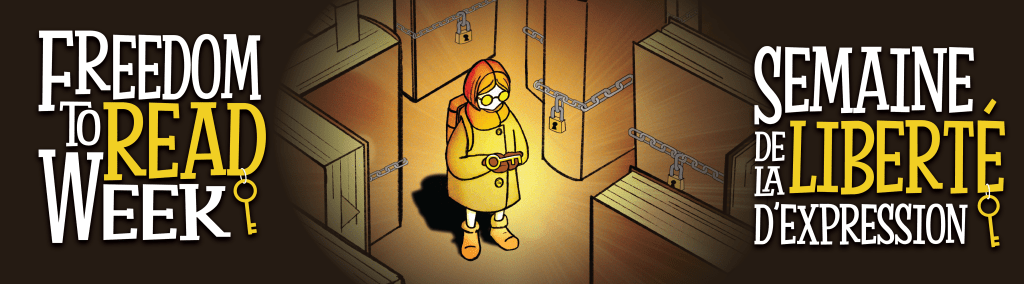
Freedom to Read Week

Canada’s Freedom to Read Week in 2024 is February 18-24.


Do you believe that you should be able to choose what you read? Or should other people be able to decide for you what you can read? Freedom to Read Week celebrates our fundamental freedoms as citizens of democracies and our fundamental rights as human beings. Freedom to Read Week also asks you to stand up for your rights and oppose those who want to take away your freedom to read.

Find out more at freedomtoread.ca

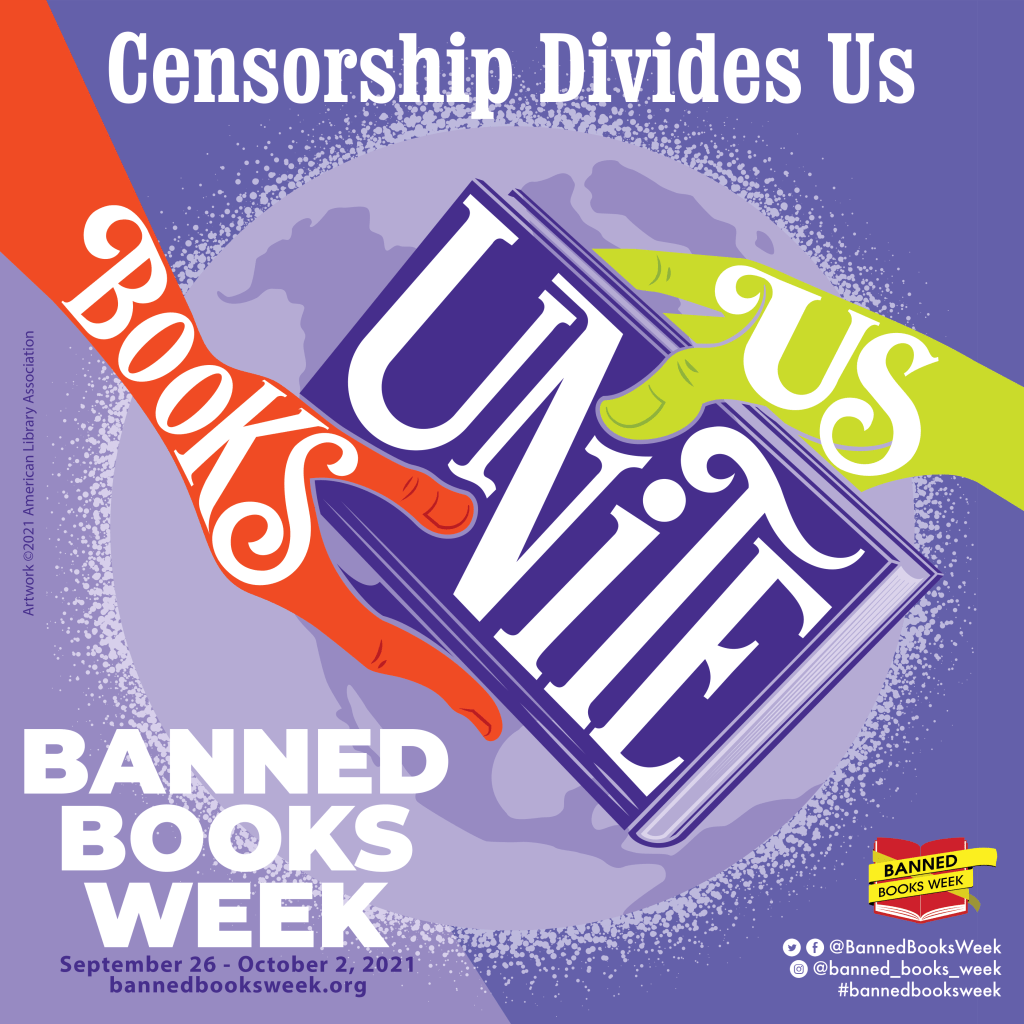
Banned Books Week

Source: ALA

Your School Library has ALL of these books. You don’t have to read any of these books. But you can if you want to. And it must make you wonder, why are some people so set on trying to keep you from reading these books? In some ways, doesn’t that make you want to read them even more?

Here are some more books that were challenged and/or banned

Freedom to Read Week


Do you see any common themes amongst all these books?

These are just some of the books that have been challenged, banned and removed from school libraries in the USA, just this year. The freedom to read what you want to read is a fundamental cornerstone of democracy. However, just as democracy itself is under siege around the world, the freedom to read cannot be taken for granted. Anti-democratic forces are always at work to undermine your freedom to read and other democratic rights. You must stand up for those rights.

Is it a coincidence that the books seen above deal with themes such as discrimination, racism, and oppression, or have central characters that come from marginalized groups?

What do you think?

Find out more: FreedomtoRead.ca


If you don’t read, they don’t need to ban books.


People need to read books for book banning to even be a thing. This idea has been expressed in many different ways.

So Read. Keep reading. Read some more. Read what you want to read. Read what you decide to read.

Read for information. Read to learn. Read for fun. Read to escape. Read for entertainment. Read to experience the world from the point of view of different people. Read to cry. Read to be scared. Read to laugh.

Read to understand. Read to learn new things. Read to learn more about things you already know.

Read to learn the point of view of people that you might disagree with, even when you are certain that you will disagree with them. Read to consider new information, new evidence, new perspectives. Read critically, even skeptically, but read with an openness to change your mind when faced with rational and logical reasons to do so.

Read for whatever reason you decide. Stand up for your freedom to decide for yourself what you want to read.

That doesn’t mean you should read anything and everything. People that care about you might know why reading some things, at certain times, might not be so good for you. You might decide not read some books because of your age, maturity, or history. Some books might not be right for you because of your current mental or emotional health. Perhaps some material has nothing to offer you of any value. But that is for you to decide in cooperation with the people that you trust. That is not for other people, other groups, organizations or governments to decide for you.

People try to ban books because they don’t want you to read those books. If you don’t read books to begin with, you are doing their work for them.


Book Banning: Not Just History but Current Events


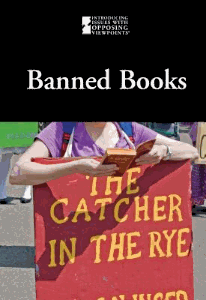
It can be tempting to think of the banning of books as something that happened in the past, only by extremely conservative types, or in authoritarian regimes. Sadly, book banning is alive and well here and now. Sure, it is not shocking that anti-democratic governments in places like China, Russia, Iran, Hungary or Venezuela strictly control the flow of information and literature. Yet in our society, where we make claims on being champions of democracy and freedom, book banning is on the rise.

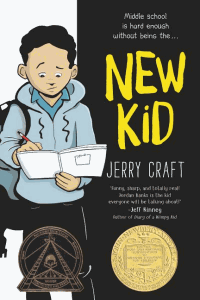
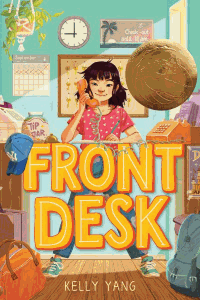
Kara Yorio writes in School Library Journal: “It has been a busy Banned Books Week, as the stepped-up challenges to books and their authors continue,  with books by kid lit creators Jerry Craft and Kelly Yang added to the list of titles some parents claim are objectionable.” Read the rest of this article.

Meanwhile “Ruby Bridges Goes to School” has been targeted by book banners as well. Author Ruby Bridges recounts the true story of her experiences as a 6 year old girl who became the first black student to attend a formerly whites only public school. An organized group of parents wanted their local school board to ban this book, “for supposedly “explicit and implicit anti-American, anti-white” bias (source).” Read more in this Miami Herald article.
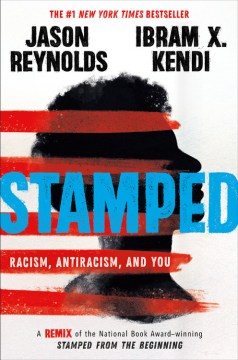
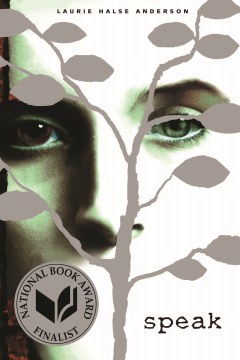
Here are four of the most challenged books from the last year, all available in our school library:

  • George by Alex Gino. Challenged, banned, and restricted for LGBTQIA+ content, conflicting with a religious viewpoint, and not reflecting “the values of our community.”
  • Stamped: Racism, Antiracism, and You by Ibram X. Kendi and Jason Reynolds. Banned and challenged because of the author’s public statements and because of claims that the book contains “selective storytelling incidents” and does not encompass racism against all people.
  • All American Boys by Jason Reynolds and Brendan Kiely. Banned and challenged for profanity, drug use, and alcoholism and because it was thought to promote antipolice views, contain divisive topics, and be “too much of a sensitive matter right now.”
  • Speak by Laurie Halse Anderson. Banned, challenged, and restricted because it was thought to contain a political viewpoint, it was claimed to be biased against male students, and it included rape and profanity.

Read the rest of the “The Top 10 Challenged Books of 2020” from the American Library Association.