Read

The best way to celebrate Freedom to Read Week is to read.

Read freely.

Read regularly.

Read critically.

Read deeply.

Read thoughtfully.

Read widely.


There are people who want to take away your right to read what you choose to read. These people aren’t just in totalitarian states around the world. These people are in Canada, in your province and your city and your neighbourhood. They think that they know best about what you should read and what you shouldn’t read. The fight to protect your rights and freedoms is real.

However, all the fuss about rights, challenges, freedoms, censorship, book bans, literacy, etc — it means nothing if you don’t read. Freedom to Read Week is a waste of time if you don’t read. The forces working hard to take away your freedoms don’t need to bother if you don’t exercise your freedoms.


So read.

Read for fun.

Read to learn.

Read to escape.

Read to know things.

Read to be free.

Read what you choose to read.

Read.

Learn More: Freedom to Read

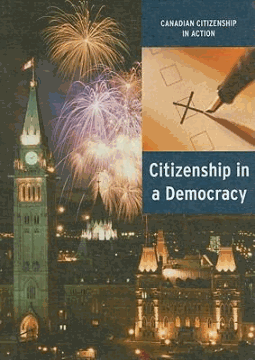
Freedom to Read Week reminds us that our rights and freedoms are both precious and fragile. We must understand them, defend them, and exercise them. To understand the freedom to read, we must explore many overlapping issues including literacy, intellectual freedom, democracy, libraries, the Charter of Rights and Freedoms, citizenship, freedom of expression, access to information, public education, academic freedom, and more.

It is also sadly necessary for us to recognize understand, and defend ourselves from the attacks on our rights and freedoms. These take many forms, including censorship, book bans, fake news, disinformation and misinformation, science denial,anti-intellectualism, the defunding and degrading of public education, and more. All of these contribute the rise of authoriatarianism, fascism and other anti-democratic movements.

We must also exercise our freedom to read. Democratic citizenship is built upon such fundamentals as an educated and informed electorate. Democracy requires knowledgeable citizens who think critically about the issues and act accordingly. Free people are free to explore wherever their curiosity takes them. However, what good is the freedom to do something if we don’t do it?

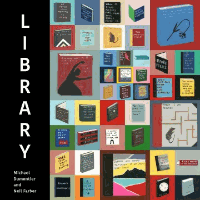
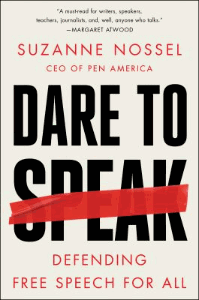
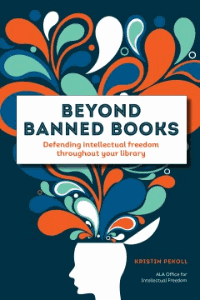
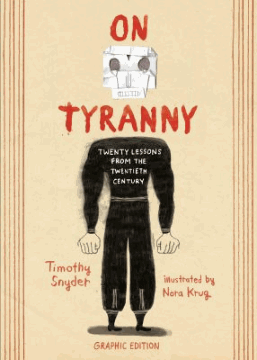
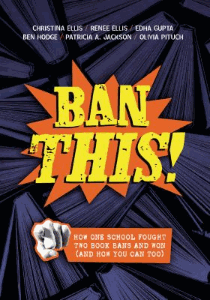
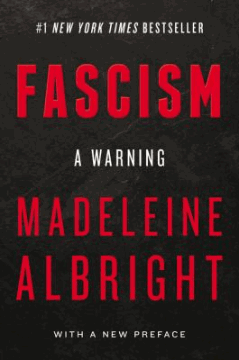
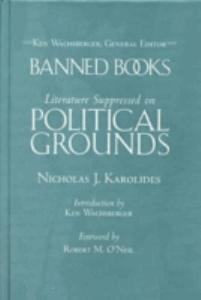
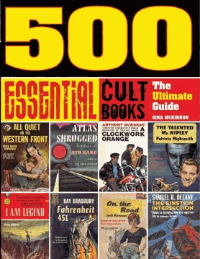
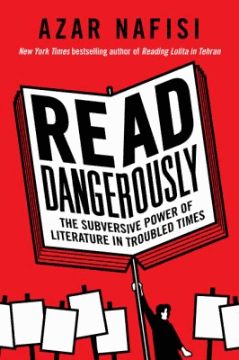
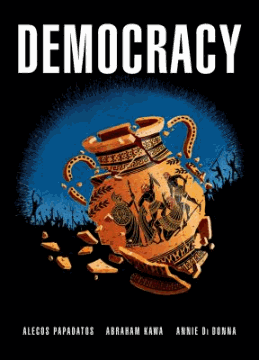
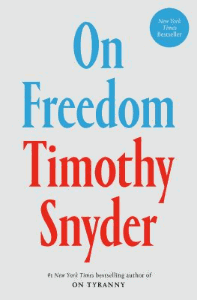
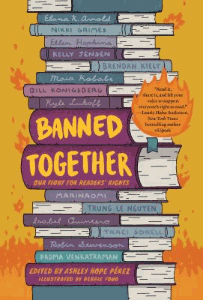
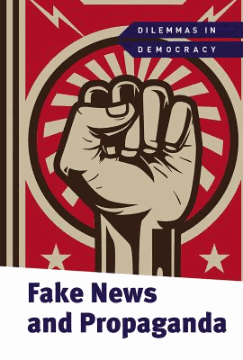
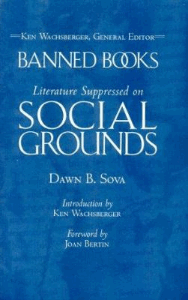
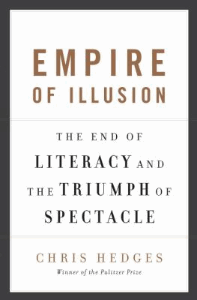
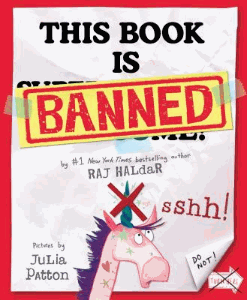
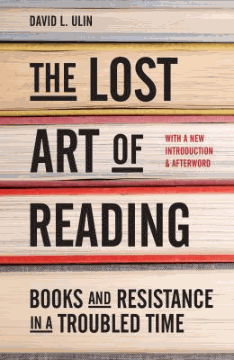
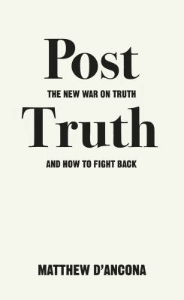
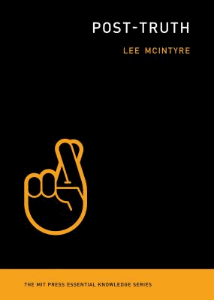
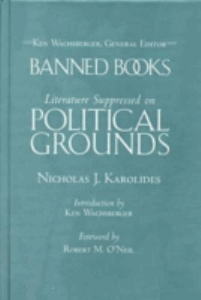
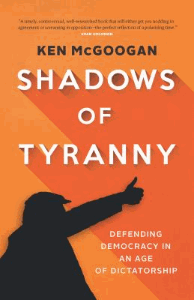
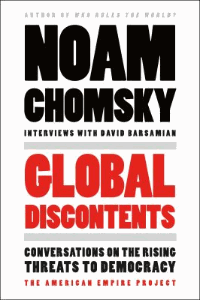
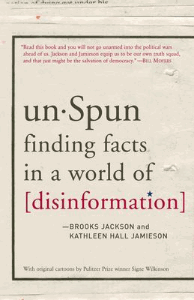
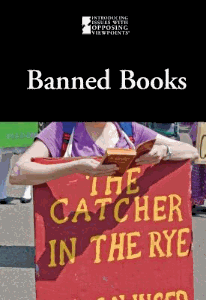
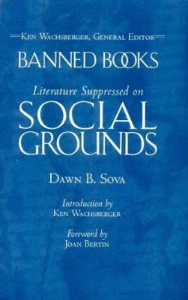
Here are some books to help you learn more about some of these issues.


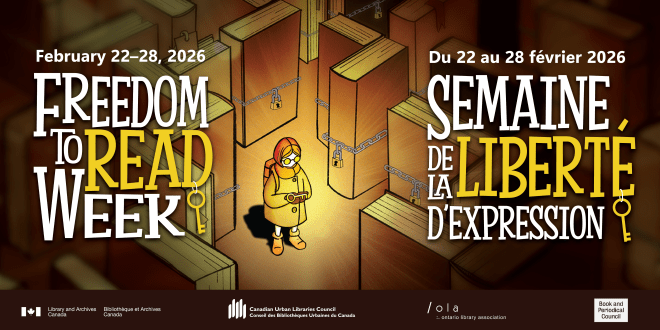
Freedom to Read Week in Canada is February 22 to 28, 2026

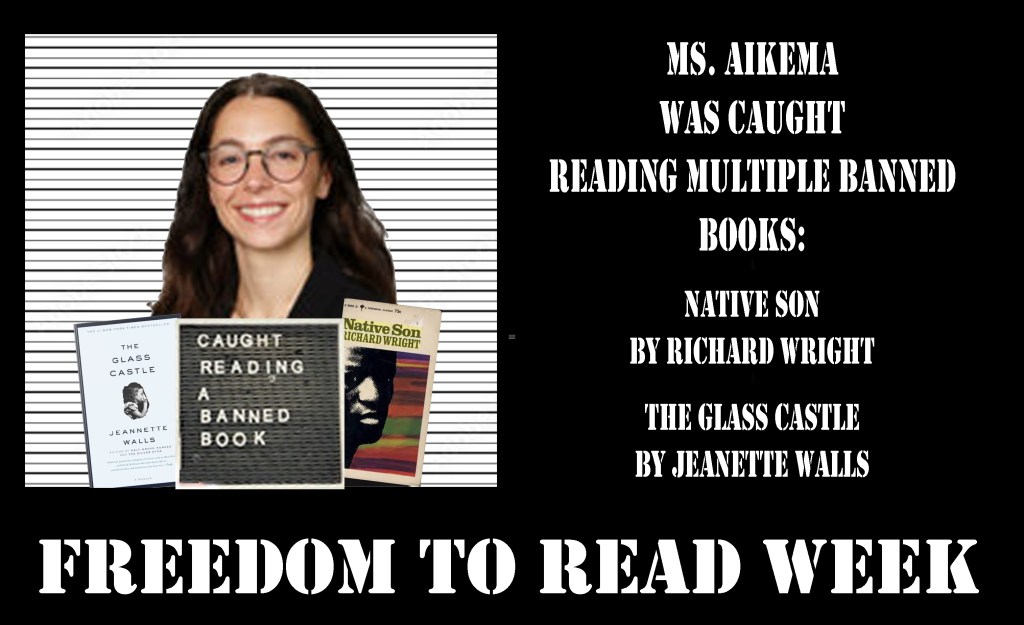
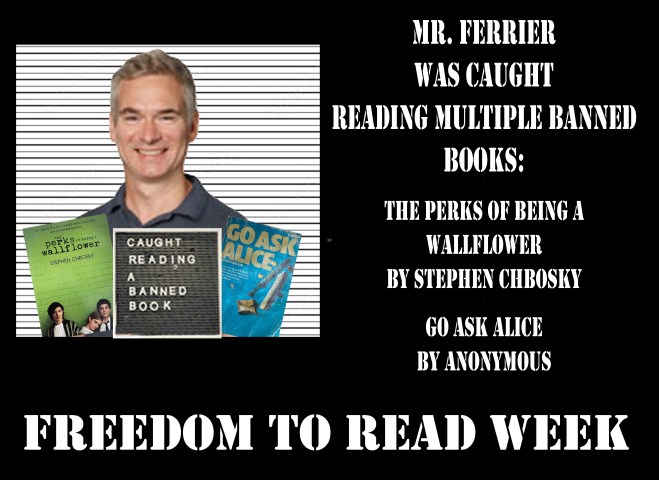
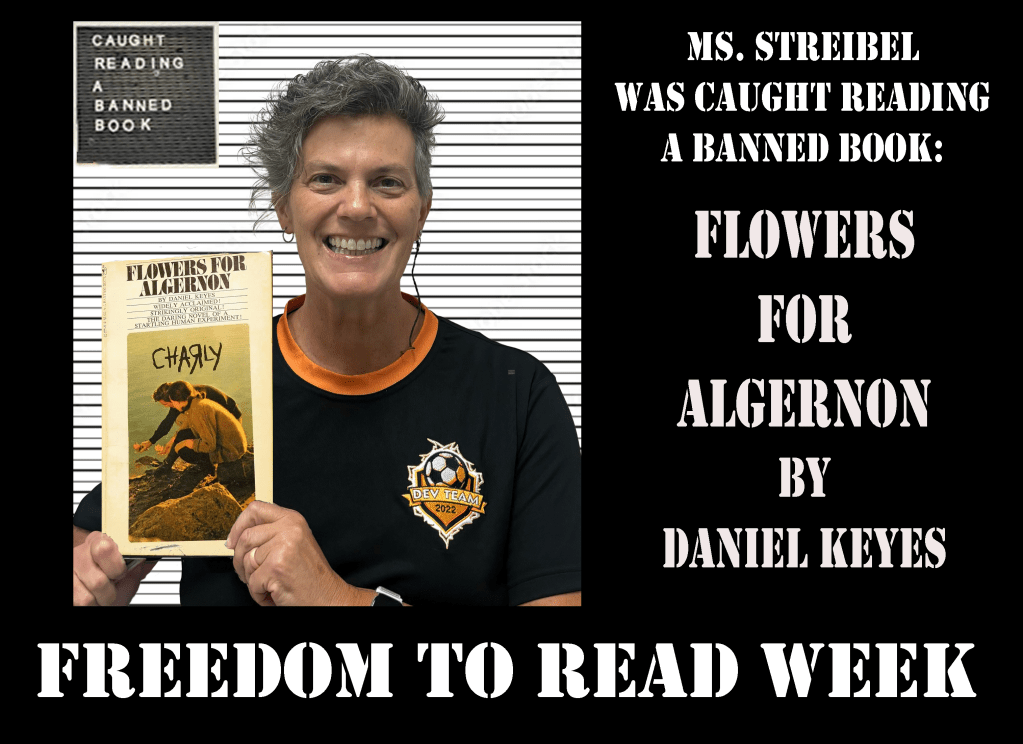
They Were Caught Reading Banned Books

These teachers were caught reading books that are on lists of titles that have been challenged by those who want to take books out of libraries, schools, and even bookstores. There are forces at work in Canada today who want to decide for you what you can read. These teachers are standing up for your right to decide for yourself.


Freedom to Read Week in Canada in 2026 is February 22-28. Come down to your School Library to find out more.

Freedom to Read Week

Be sure to visit your School Library as we focus on our “Freedom to Read.” One of the most important weeks of the year, Freedom to Read Week, takes place Feb 22-28.

Join with us as we use this week to

  • Learn more about our Rights and Freedoms, including our rights to information, inquiry, and expression.
  • Learn about the forces at work to erode and deny our rights and freedoms, including censorship and attempts to restrict or ban books and other media.
  • Celebrate the week by exercising our freedom to read the materials that we choose freely.

From freedomtoread.ca:

Freedom to Read Week is an annual event that encourages Canadians to think about and reaffirm their commitment to intellectual freedom.

Freedom to Read Week provides an opportunity for Canadians to focus on issues of intellectual freedom as they affect your community, your province or territory, our country, and countries around the world.

International Holocaust Remembrance Day

January 27 is International Holocaust Remembrance Day. Join with us as we take this day to remember the many millions who died during the Holocaust, to learn more about what happened, and resolve to fight against anti-Semitism, racism and other forms of hate and violent oppression.

The term “Holocaust” refers to the period in history in which the Nazi regime of Germany murdered over 6 million Jews, as well as millions of other victims, including Roma, homosexuals, people with physical and mental disabilities, and more. The Nazi persecution of the Jews began in the early 1930’s and reached its most horrific and brutal peak during the period of 1941-1945, as the Nazis adopted as official policy the “Final Solution,” the attempt at completely annihilating the entire Jewish population.

Holocaust RemembranceSource: CC / Sienda
Source: CC / Sienda

The Holocaust is not the only example of genocide in human history. What makes the Holocaust stand out amongst the long and plentiful list of human atrocities and evil?  Germany was amongst the most powerful nations of the world and a leader in science, technology, medicine and engineering.  The German contributions to art, music, literature and philosophy put German culture at the heart of what we would call Western Civilization. And yet this supposedly civilized people turned their great achievements and progress towards planning and carrying out ruthless genocidal murder with scientific and economic efficiency.

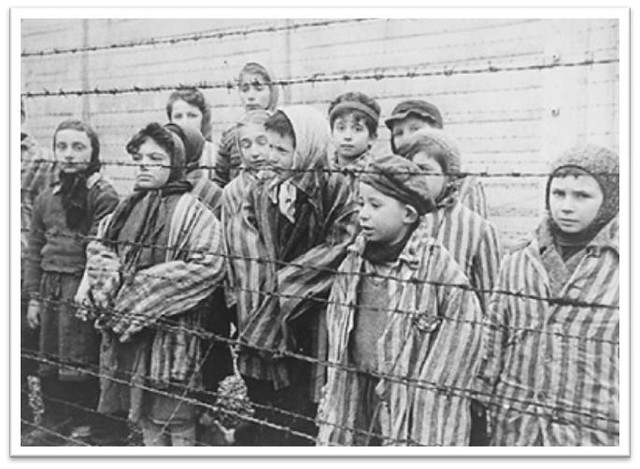
Children selected for extermination
source: wikimedia commons / public domain

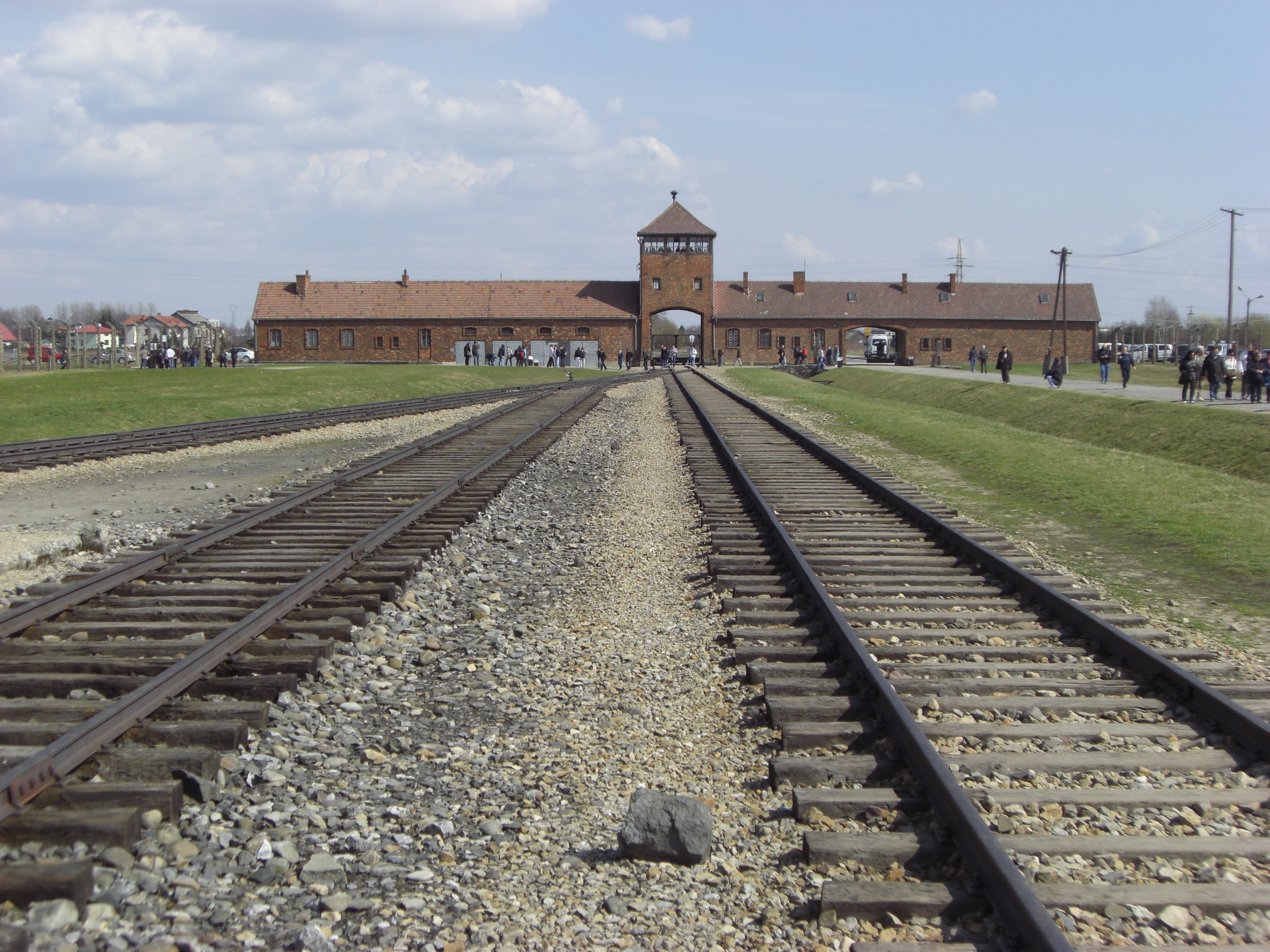
The date of January 27 was chosen for this solemn observance as the death camp of Auschwitz-Birkenau was liberated on January 27, 1945.

Auschwitz Death Camp
source: Diego Delso, Wikimedia Commons, License CC-BY-SA 3.0

For more on the Holocaust:

Yad Veshem

US Holocaust Memorial Museum

Jewish Virtual Library

Vancouver Holocaust Education Centre

United Nations / UNESCO

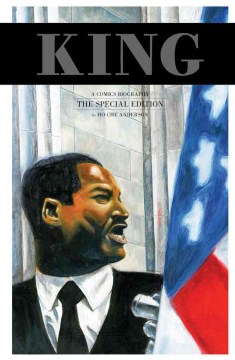
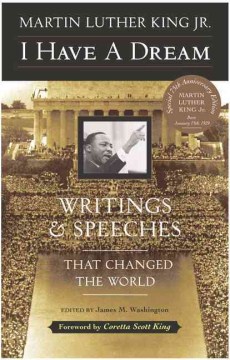
MLK Day

Martin Luther King Jr. Day is observed on the 3rd Monday of January as a Federal Holiday in the United States. The day is observed in celebration of Dr. King’s birthday, January 15, 1929. In 2026 MLK Day is observed on Monday, January 21.

As we witness the alarming and horrifying events currently unfolding in the United States, and throughout the world, we are reminded to take inspiration from Dr. King and to cling to hope in his message of transformative non-violent resistance. Those who believe in a world of justice, equality, freedom, and peace, must stand up and demand it.


Martin Luther King Jr. was the leading figure of the Civil Rights Movement of the 1950’s and 1960’s in the USA. In life Dr. King was at the forefront of the fight against segregation, discrimination and other forms of racism, especially as entrenched in state and federal law. Tragically assassinated in 1967, the legacy of King has continued to inspire those who fight against racism and other forms of social injustice.

Martin Luther King Jr. was committed to the principles of non-violence. King was convinced that the only way to fight against the hate and violence and injustice of racsim was to counter it with peaceful resistance and non-violent protest. Perhaps more than anything else, this is why Dr. King is a hero to millions of people in the US, in Canada, and around the world.


Find out more:

The King Center

12 Historic Facts About Martin Luther King Jr.

Nobel Peace Prize: MLK

NAACP: Dr. King

Stanford University: King Institute


Image Source: editor Eugenio Hansen, OFS, CC BY-SA 4.0 OTFW, editor Eugenio Hansen, OFS, CC BY-SA 4.0, via wikimedia

Raoul Wallenberg Day

Since 2001, January 15 is Raoul Wallenberg Day in Canada. Mr. Wallenberg was a hero who courageously used his position to save thousands of Jews in Hungary during the Nazi Holocaust. Wallenberg was a Swedish diplomat working in Budapest during the Second World War. Wallenberg, with the help of some colleagues, using Swedish passports, letters of protection, and other diplomatic tools, was able to help thousands of Jews to escape from Hungary and to survive through to the end of the war.
Wallenberg 1944
(Source: ushmm.org)

Tragically, Raoul Wallenberg disappeared after the Soviet conquest of Hungary from the Germans in 1945. Some reports suggest he died in a Soviet prison in 1947, but his fate is officially uncertain.
Raoul Wallenberg as a young man.
(Source: https://www.raoulwallenbergcentre.org)

Raoul Wallenberg is considered one of the “Righteous Among the Nations” by Yad Vashem in Israel, and was made an Honorary Citizen of Canada in 1985.


Find out more:


In January we recognize Raoul Wallenberg Day in Canada, as well as International Holocaust Remembrance Day on January 27. Come down to the School Library this month, in person, and continue to visit us online, for more information on the horrific and tragic history of the Holocaust.

The Power of Objects: An Introduction to the Holocaust

The LTSS Social Studies Department and the School Library are very pleased to welcome the Vancouver Holocaust Education Centre for a guest presentation for Grade 10 and 11 Socials classes, all day today in the School Library.

Today’s presentation is entitled “The Power of Objects: An Introduction to the Holocaust.” Students will be introduced to the study of the Holocaust, with an emphasis on learning about primary sources and their vital role in the study of history. From the VHEC:

This workshop offers students a powerful introduction to the Holocaust through an ordinary object from the VHEC’s collection: a small shoe. As they are guided through a close examination of this simple artefact, students make observations about the evidence, draw inferences, and test their ideas against other primary sources — photographs, documents, and survivor testimony. This inquiry-based approach sparks curiosity, develops historical thinking skills, and deepens understanding of the Holocaust. Along the way, students are encouraged to ask their own questions, grapple with the complexity of the past and reflect on the ethical dimensions of the Holocaust.

Find out more at vhec.org

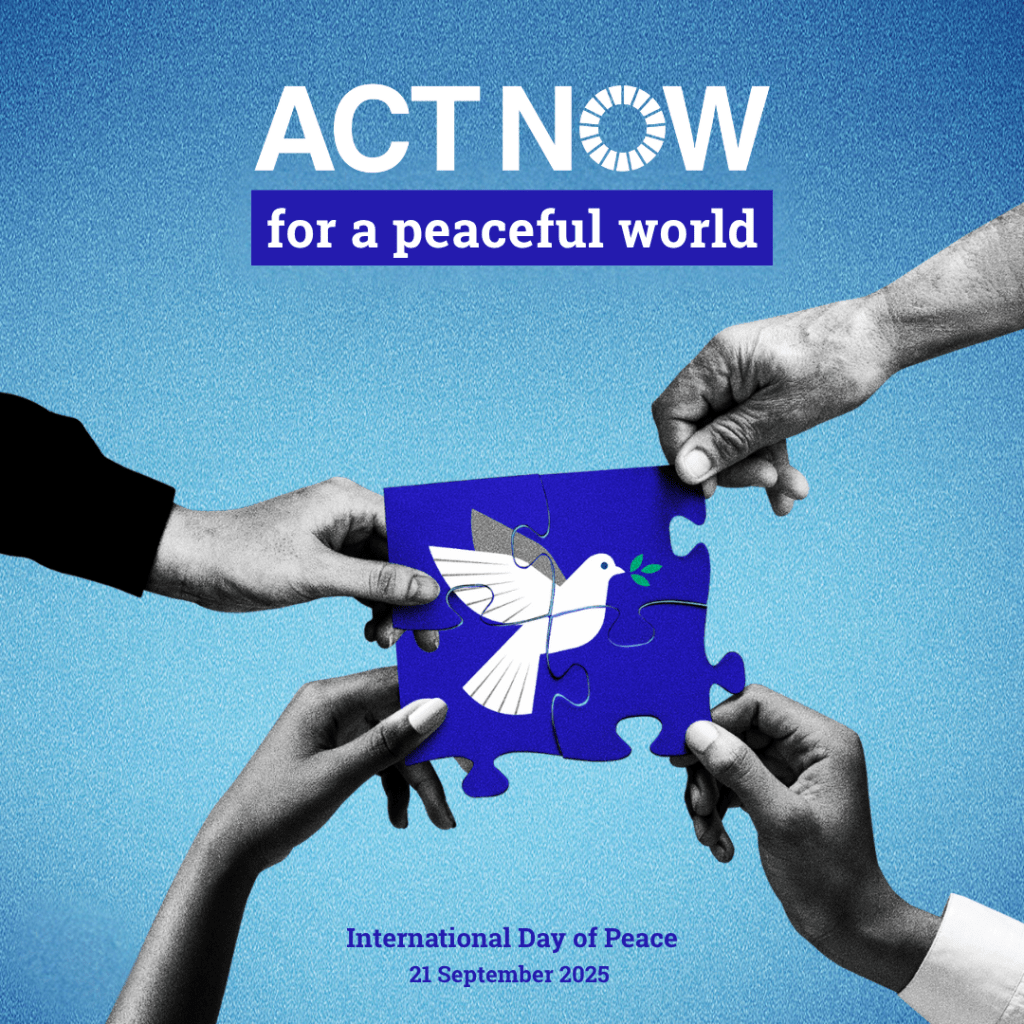
International Day of Peace

Peace Day is observed every September 21. The International Day of Peace is a celebration of those who have worked for peace in our, and who continue to seek a peaceful future. However, the day is also a stark reminder of how far we have fallen short of the quest for lasting peace for humanity. Our world continues to be ravaged by war, including, in our current day, some of the most horrific acts of inhumanity imaginable. Learn more about the International Day of Peace and join in the movement.


Learn more:

UN.org/Peaceday

Actions for a Peaceful World

Hear Us

Act Now for a Peaceful World

InternationalDayofPeace.org

Songs of Peace: War

War, huh, yeah
What is it good for?
Absolutely nothing, uhh

Written by Barrett Strong / Norman Whitfield

Originally written for The Temptations, “War” was eventually released as a single by Edwin Starr. Although the song has been covered by many artists, including Bruce Springsteen, the preeminent version remains that of Edwin Starr. Originally written as part of the protests against the Vietnam War, Edwin Starr’s peformance of “War” has stood the test of time and remains one of the most famous anti-war anthems to this day.


Join us in your school library this month as we explore and celebrate November’s themes: Peace, non-violence, and alternatives to war.


Other “Songs of Peace” in this series:

Covid-19, Omicron, and More


source: WHO

Find out the latest information about the Covid19 pandemic:

Surrey Schools

City of Surrey

Fraser Health

BC Centre for Disease Control

Province of British Columbia

Public Health Agency of Canada

Government of Canada

CDC: Centers for Disease Control & Prevention (USA)

World Medical Association

United Nations

World Health Organization


Songs of Peace: One Love

“Let’s get together and feel all right”

–Bob Marley, “One Love”

source: YouTube / John Lennon / Plastic Ono Band

There are many songs by Bob Marley that are considered “Songs of Peace.” Today we take a moment to consider “One Love.”


November 11 is Remembrance Day
November 5-11 is Veterans’ Week
November is Peace Month


Other “Songs of Peace” in this series: