Gita Jayanti is a Hindu observance that celebrates the Bhagavad Gita, one of the holy books of Hinduism. The Bhagavad Gita is presented as a dialogue between Arjuna, a prince, and Krishna, the embodiment of God. In 2024 this day takes place on December 11, however local festivals may take place at different times, and can last several weeks.
Human Rights Day is observed every year on 10 December — the day the United Nations General Assembly adopted, in 1948, the Universal Declaration of Human Rights (UDHR): a milestone document proclaiming the inalienable rights which everyone is inherently entitled to as a human being regardless of race, colour, religion, sex, language, political or other opinion, national or social origin, property, birth or other status.
The theme for Human Rights Day 2024 is “Our Rights, Our Future, Right Now.”
From the UN:
Human rights can empower individuals and communities to forge a better tomorrow. By embracing and trusting the full power of human rights as the path to the world we want, we can become more peaceful, equal and sustainable.
This Human Rights Day we focus on how human rights are a pathway to solutions, playing a critical role as a preventative, protective and transformative force for good.
Human rights impact everyone, every day and in this campaign, Our Rights, Our Future, Right Now, we will show the tangible impact of human rights by focusing on relevant global issues, showcasing impact, successes and practical solutions.
Rohatsu, Laba and Bodhi Day are all different names for the celebration of the Enlightenment of the the Buddha.
In much of the world is is known as Bodhi Day. In China it is known as the festival of Laba, while in Japan it is known as Rohatsu.
The religion known as Buddhism dates back to the 6th or 5th Century BCE, when the Indian Prince Siddhartha Gautama became the “Buddha,” literally, “the Enlightened One.” The followers of the Mahayana branch of Buddhism observe Rohatsu, Laba, or Bodhi Day, in celebration of the day that the Buddha sat below the Bodhi Tree and meditated on the meaning of life.
The Great Buddha at Kōtoku-in, Kamakura, Japan source: Wikimedia Commons; Bgabel at wikivoyage shared, CC BY-SA 3.0
This day is celebrated mainly by the Buddhists of northern and eastern Asia, and in countries to which those people have immigrated (such as Canada). To many this holiday is known as Bodhi Day and it occurs on the 8th day of the 12th month of the lunar year. With the Japanese adoption of the western calendar (Gregorian) Rohatsu is fixed on December 8th.
December 6 is St. Nicholas Day, celebrated in Europe, and many places around the world by people of European heritage, including some Canadians. For many, the tradition of gift giving that is usually associated with Christmas Day, or perhaps Christmas Eve, in North America, is instead part of St. Nicholas Day.
In many places children go to bed with the expectation that they will wake up to gifts from St. Nicholas, perhaps even money or treats placed in their shoes, left out for him the night before.
Nicholas lived in the 3rd and 4th Centuries CE (AD). He lived in what is now known as Turkey, but what was then a Greek area of the Roman Empire. What is factual about his life, and what is is myth, isn’t certain. Nicholas was associated with generosity and charity, especially for the poor and for children.
source: wikimedia commons
Nicholas became a Bishop in the early Christian Church. He was persecuted and imprisoned by the Roman Emperor, and after he died was eventually identified as a Saint. In the years since his legend has grown, and morphed into various forms. In modern times the figure of St. Nicholas has grown to be known by various guises and names, including Sinterklaas, Kris Kringle, Father Christmas, Pere Noel, and Santa Claus.
Krampus is coming to give you what you deserve, bad little boys and girls!
Many people all across Europe celebrate St. Nicholas Day on December 6 each year, as do some people in Canada who have roots in Europe. St. Nicholas comes during the night and leaves presents for good girls and boys. (Look for tomorrow’s post more more information on St. Nicholas.)
In some places, tradition holds that St. Nicholas had a helper– or at least a counterpart, who visited the bad children. Krampus.
In Germany, Austria and other Alpine countries, Krampus became a part of the St. Nicholas story. Half goat, half demon, Krampus is a nightmarish figure who comes for those overlooked by St. Nicholas, who has gifts for the good (or in some cases, the intelligent!) At best Krampus might deliver coal or twigs. But children fear far worse, that Krampus will punish them, torture them, even kidnap them and carry them away to his lair– or to Hell!
Krampusnacht is is observed in many places on December 5, with parades and other celebrations, including the Krampuslauf, or Krampus Run, in which young people dress up like Krampus.
Here are just some of the observances, festivals, celebrations and special days that take place in the coming month or so of holidays and holy days, known to many as “The Holiday Season.”
December 1: Advent
December 3: Giving Tuesday
December 5: Krampusnacht
December 6: St. Nicholas Day
December 8: Bodhi Day / Rohatsu
December 8: Feast of the Immaculate Conception
December 8: Advent (second Sunday)
December 10: International Human Rights Day
December 11: Gita Jayanti
December 12: Feast of Masa’il
December 15: Advent (third Sunday)
December 16: Simbang Gabi / Los Posadas
December 21: Winter Solstice / Yule / Grianstad an Gheimhridh
December is a month of Holidays and Holy Days. In the northern hemisphere nights are longer, the darkness deepens, and the weather is colder. Many cultural and religious traditions developed around the winter solstice and the end of the agricultural year, with hope for light and warmth and new life to emerge in the coming months. Come down to your school library in person, or visit us online, to find out more about the many different festivals, celebrations and observances that take place at this time of year.
Advent Wreath and Candles. source: Clemens PFEIFFER, Vienna (CC / wikimedia)
The Holiday Season in the western world has traditionally been synonymous with Advent, literally the period of expectation of an important arrival. For Christians the season of Advent is about the anticipation of Christmas, the celebration of the birth of Christ. In the Christian Church, on each of the four Sundays leading up to Christmas, candles are lit as symbols of Advent.
In 2024 the four Sundays of Advent are December 1, December 8, December 15 and December 22.
Happy Thanksgiving to all of our American family, friends and neighbours. The American version of Thanksgiving marks the unofficial start to the “Holiday Season.” We look forward to a time of holiday cheer over the coming weeks. Be sure to visit us in your school library to find out more, especially in December when our theme is “Holidays and Holy Days.”
Happy Thanksgiving to all of our American friends, family and neighbours! Along with Turkey and football games, another staple of American Thanksgiving for many is listening to the 18 minute classic, “Alice’s Restaurant.”
November has been Peace month in the School Library, with an emphasis on understanding peace education, the antiwar movements, civil disobedience and other non-violent means of social change. Such themes overlap with American Thanksgiving in “Alice’s Restaurant.”
Originally released in 1967, Arlo Guthrie’s 18 minute long recording of “Alice’s Restaurant” has become on of the most famous protest songs against the Vietnam War. The events described in the song, beginning with a Thanksgiving celebration amongst friends during the sixties, were the inspiration for a film which was released in 1969.
More than 50 years later Guthrie’s signature song is a staple of classic rock radio stations on and around American Thanksgiving.
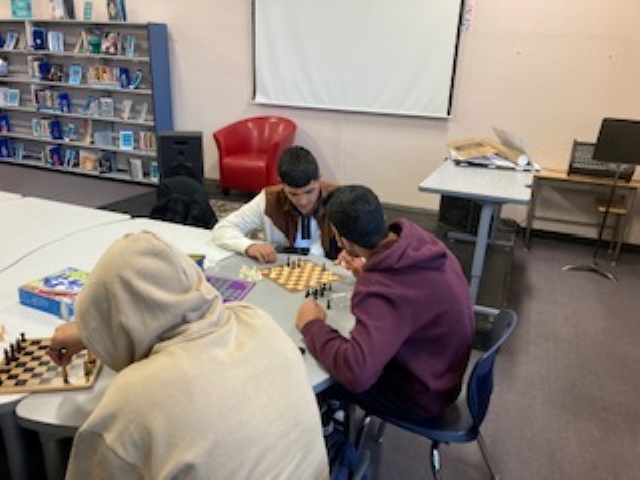
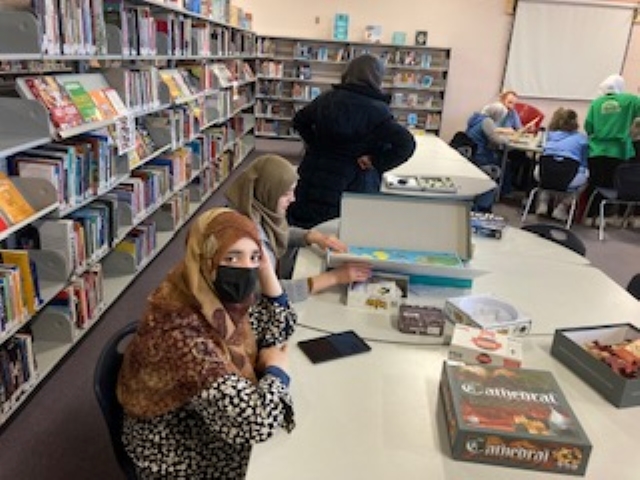
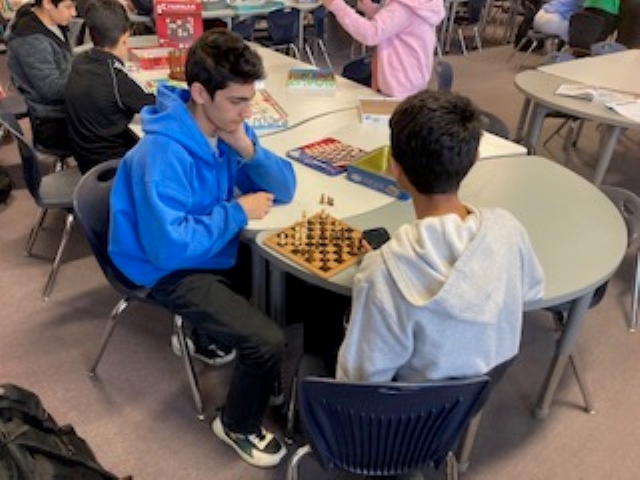
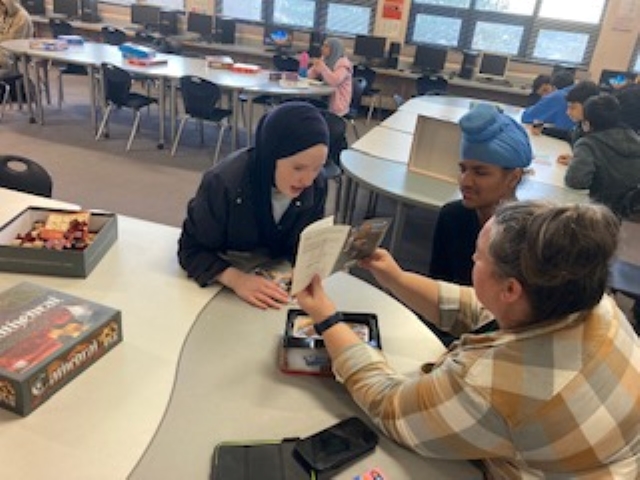
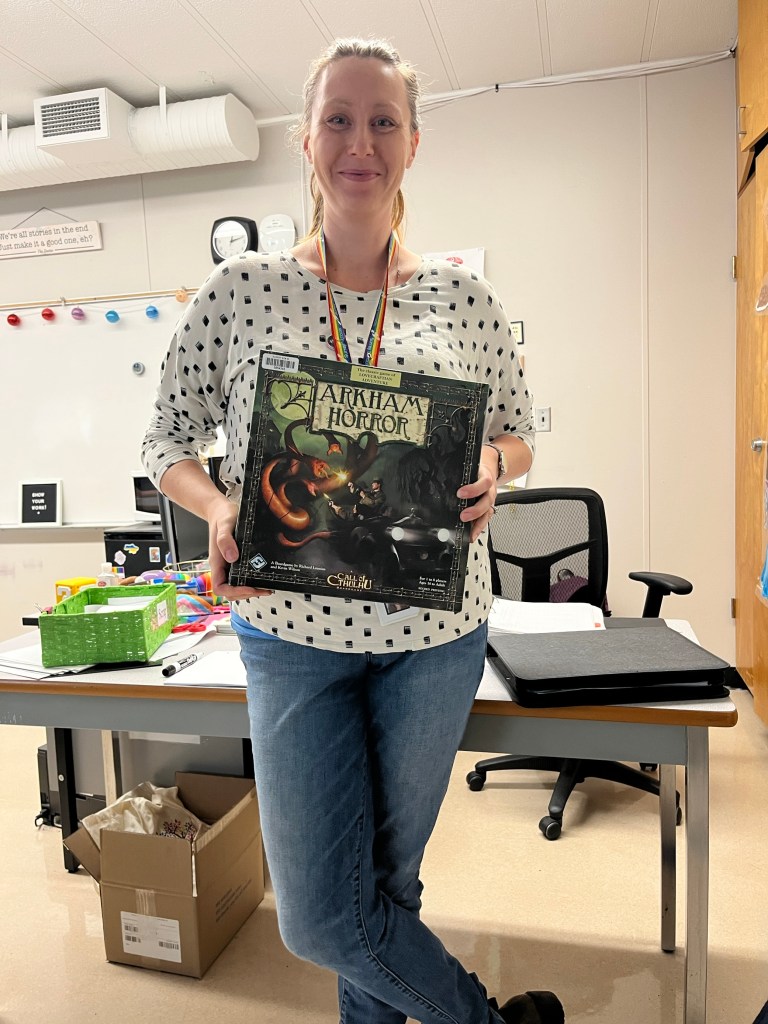
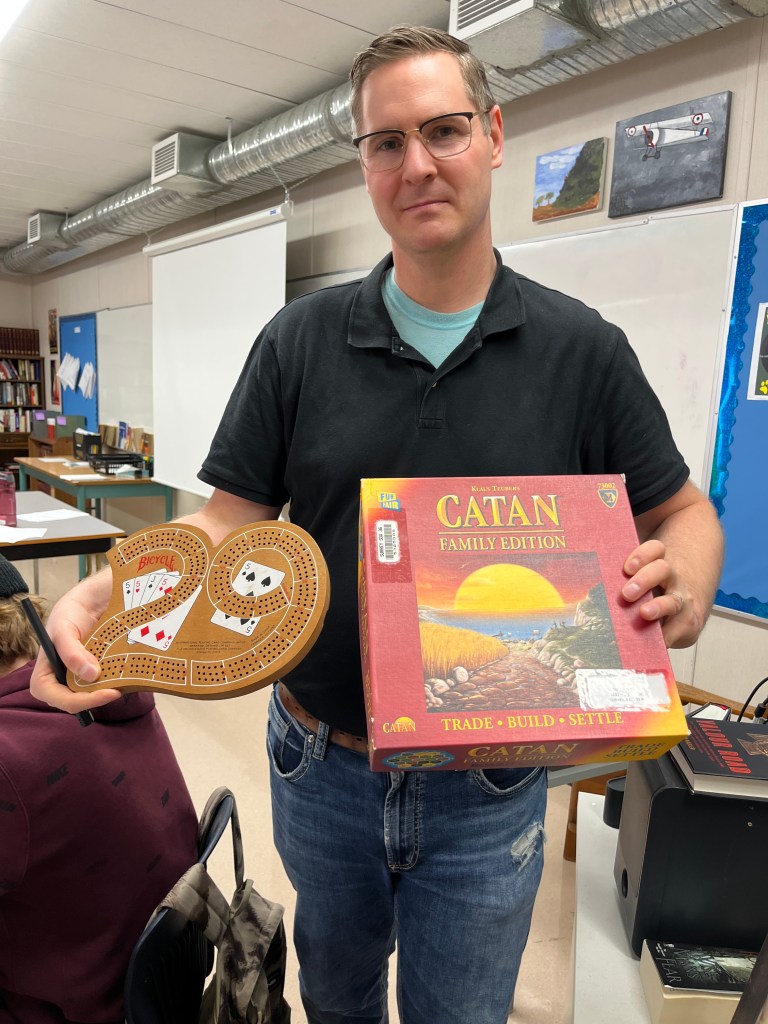
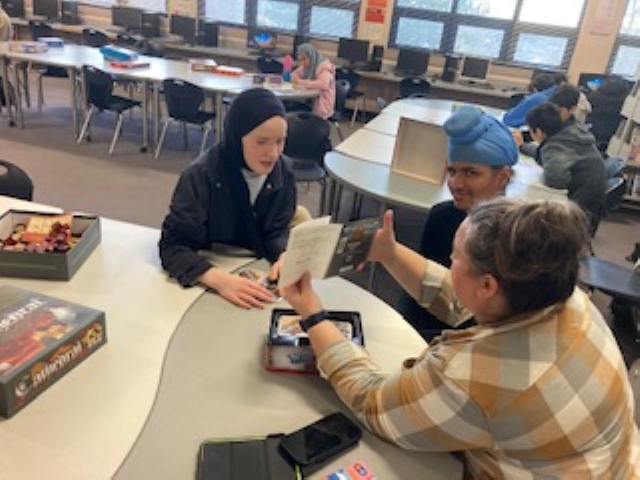
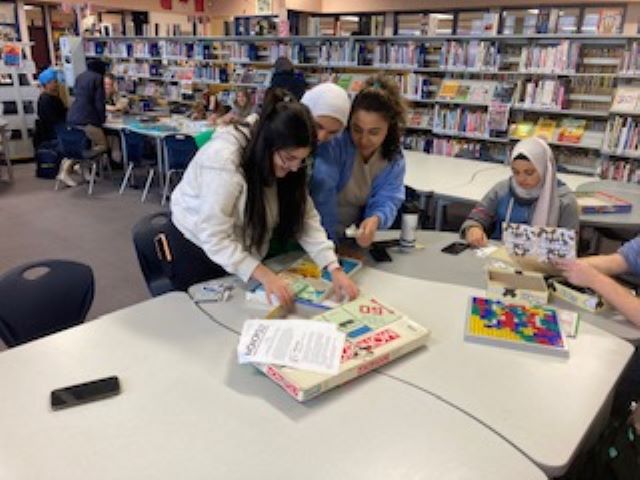
We are in the middle of one of the best weeks of the year as we fill the library with students to play board games! Classes from across the curriculum have come in to experience the joy of board games and to celebrate International Games Month @ Your Library.