St. Patrick’s Day is coming up! We will be on March Break on March 17, but you can get ready by learning more about St. Patrick, and all things Ireland and Irish.


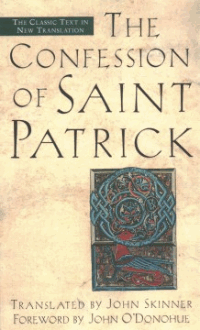
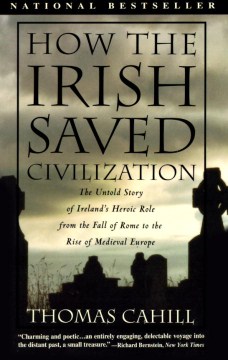
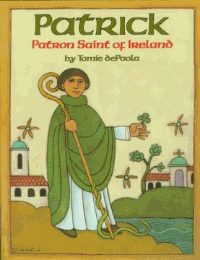
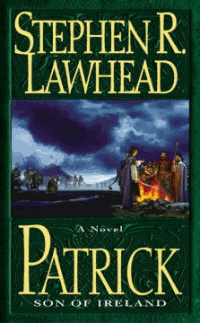
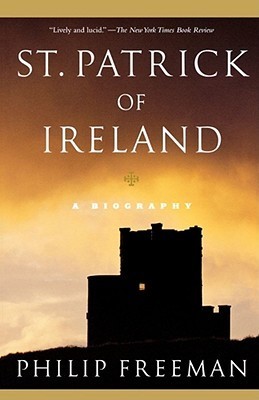
March is Irish Heritage Month. Celebrate with us in your School Library!
St. Patrick’s Day is coming up! We will be on March Break on March 17, but you can get ready by learning more about St. Patrick, and all things Ireland and Irish.
March is Irish Heritage Month. Celebrate with us in your School Library!
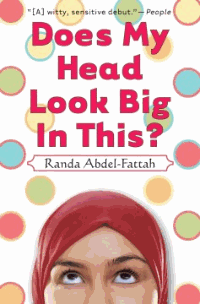
The Islamic month of Ramadan has begun. Ramadan is a month of fasting, prayer and other acts for devotion for Muslims. Ramadan Mubarak!
Ramadan in 2024 begins on March 10 and runs until April 9. Ramadan is followed by the feast of Eid al-Fitr, which runs through April 10.
Find out more about Ramadan, Muslims, and Islam:









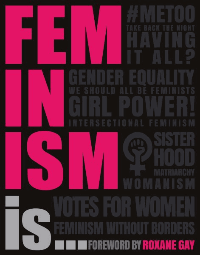
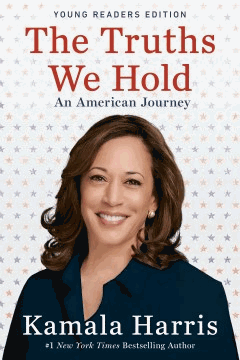
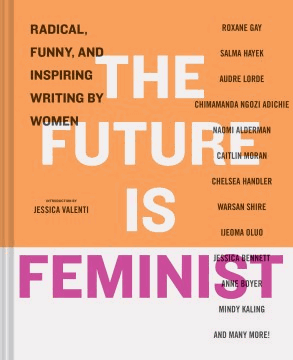

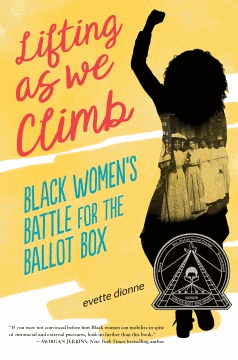

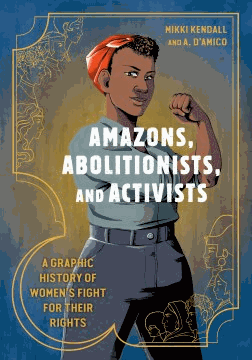




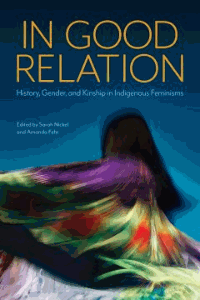



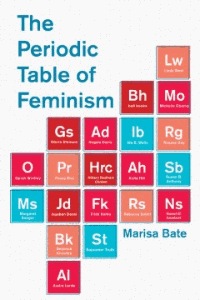

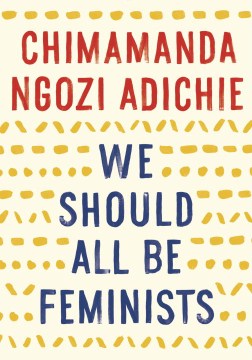
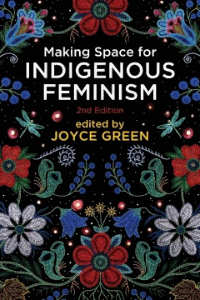
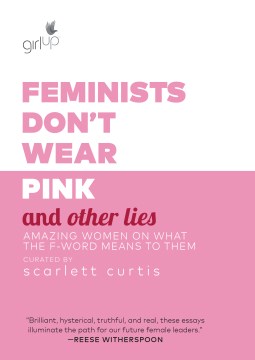

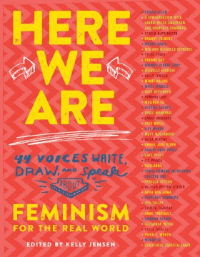

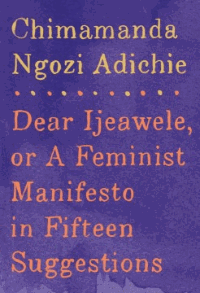

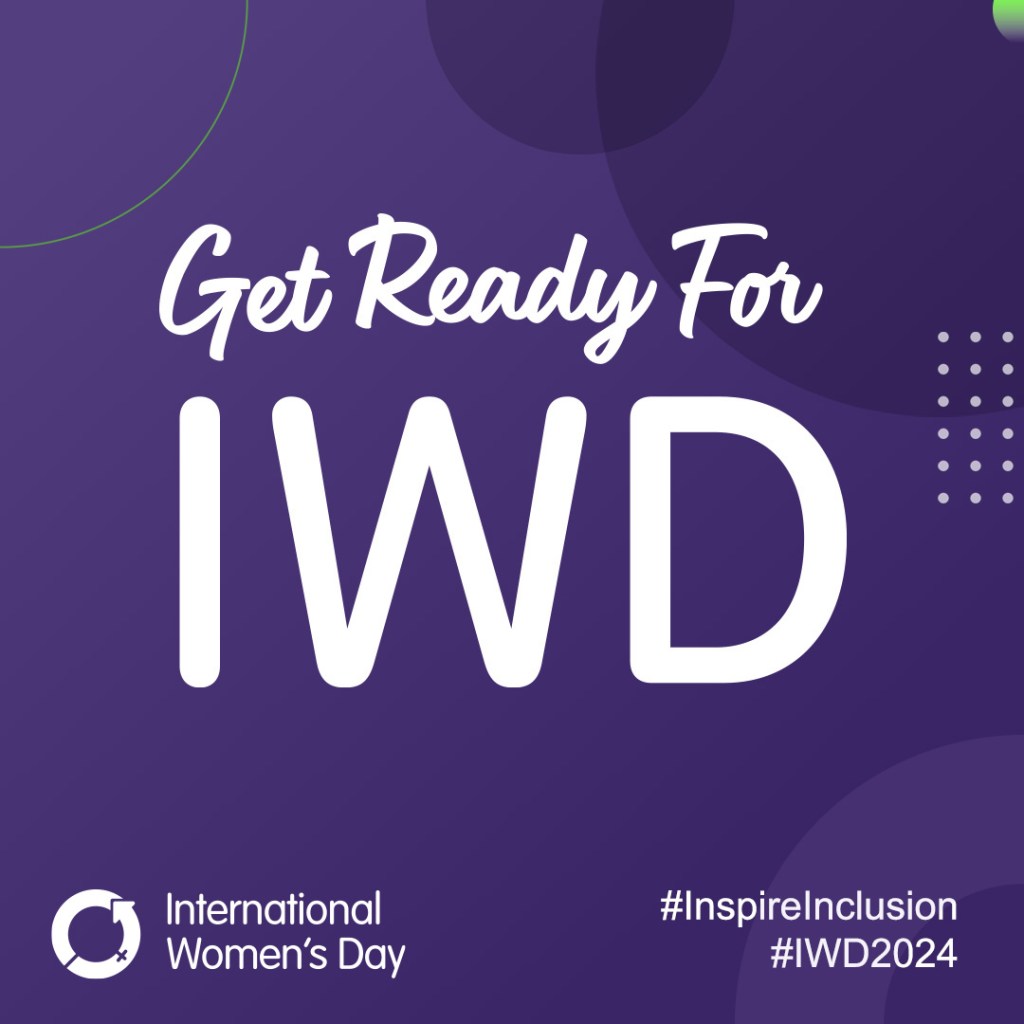
International Women’s Day: Inspire Inclusion
The theme of International Women’s Day 2024 is #InspireInclusion. Visit the School Library, in person or online, to learn more.

Join with us in Your School Library as we celebrate International Women’s Day by learning more about the historical and ongoing struggle for women’s rights and equality in Canada and around the world.
March is Irish Heritage Month in Canada. Join with us in Your School Library as we learn more about Ireland, the Irish people, Irish culture, and Irish-Canadians.
Find out more:
2022: The Government of Canada marks the first official Irish Heritage Month in Canada
Irish Heritage Month: The legacies of the Irish in Canada
Celtic Canada Irish Heritage Month
The Canadian Encyclopedia: Irish Canadians

February is Black History Month in Canada. As February comes to a close, it is important to remember that while we make a point of emphasizing Black History this month, we know that Black History is Canadian History, and as such it is something to learn and celebrate every month of the year.

Here are some more online resources to help you continue to explore Black History in Canada:
BC Black History Awareness Society
A Black People’s History of Canada
29 Black History Month Facts You Should Know
Canadian Museum for Human Rights: Black History
CBC: 23 Historical Black Canadians You Should Know
Black History in Canada: 1960 to Present
19 Canadian books to check out during Black History Month 2024
Come down to the School Library to check out these books for Black History Month in Canada.
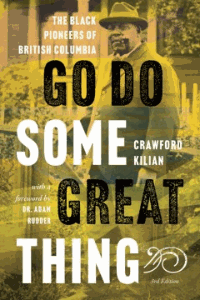


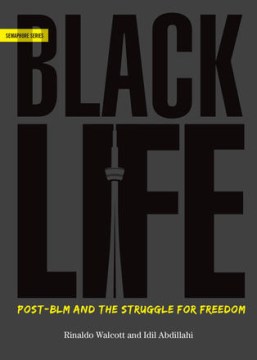

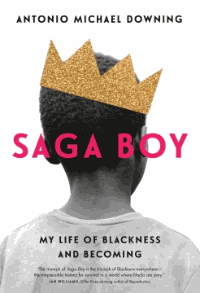



From Canada.ca, here are introductions to just a few noteworthy Black Canadians that perhaps you haven’t learned about yet. “Read the biographies of some notable Black people in Canada who have helped shape Canadian heritage and identity, and who have made and continue to make enormous contributions to the wellbeing, and prosperity of our country.” Read the entire post at Black History Month: Noteworthy Figures

February is Black History Month. Find out more by visiting us in person, or online at tweedsmuirlibrary.ca
“The man who does not read has no advantage over the man who cannot read.”
Source: Unknown*
The rights and freedoms of Canadians include the right to read what you want to read. Such rights and freedoms are fundamental to democracy. However, such rights and freedoms are meaningless unless citizens exercise these rights and freedoms.
There are authoritarian forces at work in our society that seek power by attacking your rights, including attempts to censor or limit your freedom to read. Totalitarian states know that uneducated and illiterate citizens are easier to control and oppress. Such forces can only celebrate that the work is much simpler when significant portions of the population choose not to read. Censorship becomes less pressing when “aliteracy” becomes prevalent.
A true democracy guarantees fundamental rights and freedoms to its citizens. But to work effectively, indeed, to survive, democracy requires that citizens exercise those rights. In particular, democracy breaks down if citizens aren’t educated, informed and active.
The rise of powerful new information technology in the last few decades has made it more important than ever that citizens are highly “information literate.” Citizens must not only have access to information, they must have the tools required to wade through increasingly destructive levels of misinformation, disinformation, propaganda, and outright lies. Citizens need to have access to information that is credible, accurate and trustworthy.
The rise of anti-intellectualism and anti-science movements, perhaps most recently represented by anti-vax conspiracies, are part of the wider breakdown of democratic institutions. There is little doubt that attacks on public education over many years have reaped some these results and are integral to the rise of authoritarianism.
It is not enough to celebrate the Freedom to Read. As citizens of democratic societies, we have an obligation to exercise our Freedom to Read, in part so that we are equipped to defend our democratic rights and freedoms.
It is clear that democracy is under attack, throughout the world, and in our back yard. We must act.

Find out more:
Note* The above quote, or variations on it, are often popularly attributed to Mark Twain. However the original source of this quote, or its variations, remains unclear.
American scholar and leading civil rights activist W.E.B. Du Bois was born on this day in 1868. Du Bois was the first African American to earn a doctorate from Harvard University. Du Bois was a great thinker and researcher in many fields, including Sociology and History, and was leading Civil Rights advocate and opponent of Jim Crow throughout his adult life. He was the author of numerous works, including The Souls of Black Folk (1903) and Black Reconstruction in America (1935). Du Bois was a founding member of the NAACP in 1910, and its journal, “The Crisis.”

Find out more:
February is Black History Month. Find out more by visiting us in person, or online at tweedsmuirlibrary.ca
Canada’s Freedom to Read Week in 2024 is February 18-24.

Do you believe that you should be able to choose what you read? Or should other people be able to decide for you what you can read? Freedom to Read Week celebrates our fundamental freedoms as citizens of democracies and our fundamental rights as human beings. Freedom to Read Week also asks you to stand up for your rights and oppose those who want to take away your freedom to read.
Find out more at freedomtoread.ca
 Lord Tweedsmuir Secondary School Library