 “In those days Caesar Augustus issued a decree that a census should be taken of the entire Roman world. (This was the first census that took place while Quirinius was governor of Syria.) And everyone went to his own town to register.So Joseph also went up from the town of Nazareth in Galilee to Judea, to Bethlehem the town of David, because he belonged to the house and line of David.He went there to register with Mary, who was pledged to be married to him and was expecting a child. While they were there, the time came for the baby to be born, and she gave birth to her firstborn, a son. She wrapped him in cloths and placed him in a manger, because there was no room for them in the inn. And there were shepherds living out in the fields nearby, keeping watch over their flocks at night. An angel of the Lord appeared to them, and the glory of the Lord shone around them, and they were terrified. But the angel said to them, ‘Do not be afraid, I bring you good news of great joy that will be for all the people. Today in the town of David a Saviour has been born to you; he is Christ the Lord. This will be a sign to you: You will find a baby wrapped in cloths and lying in a manger.’ Suddenly a great company of the heavenly host appeared with the angel, praising God and saying, ‘Glory to God in the highest, and on earth peace to men on whom his favour rests.'” from the Book of Luke, Chapter 2
Category: Holidays & Observances
Festivus
“I’ve got a lot of problems with you people!”

With heart warming traditions such as the “Airing of Grievances” and “Feats of Strength,” Festivus is a holiday which owes its popularity to the sitcom “Seinfeld.” For more on this secular anti-celebration, click here.
Winter Solstice and Yule
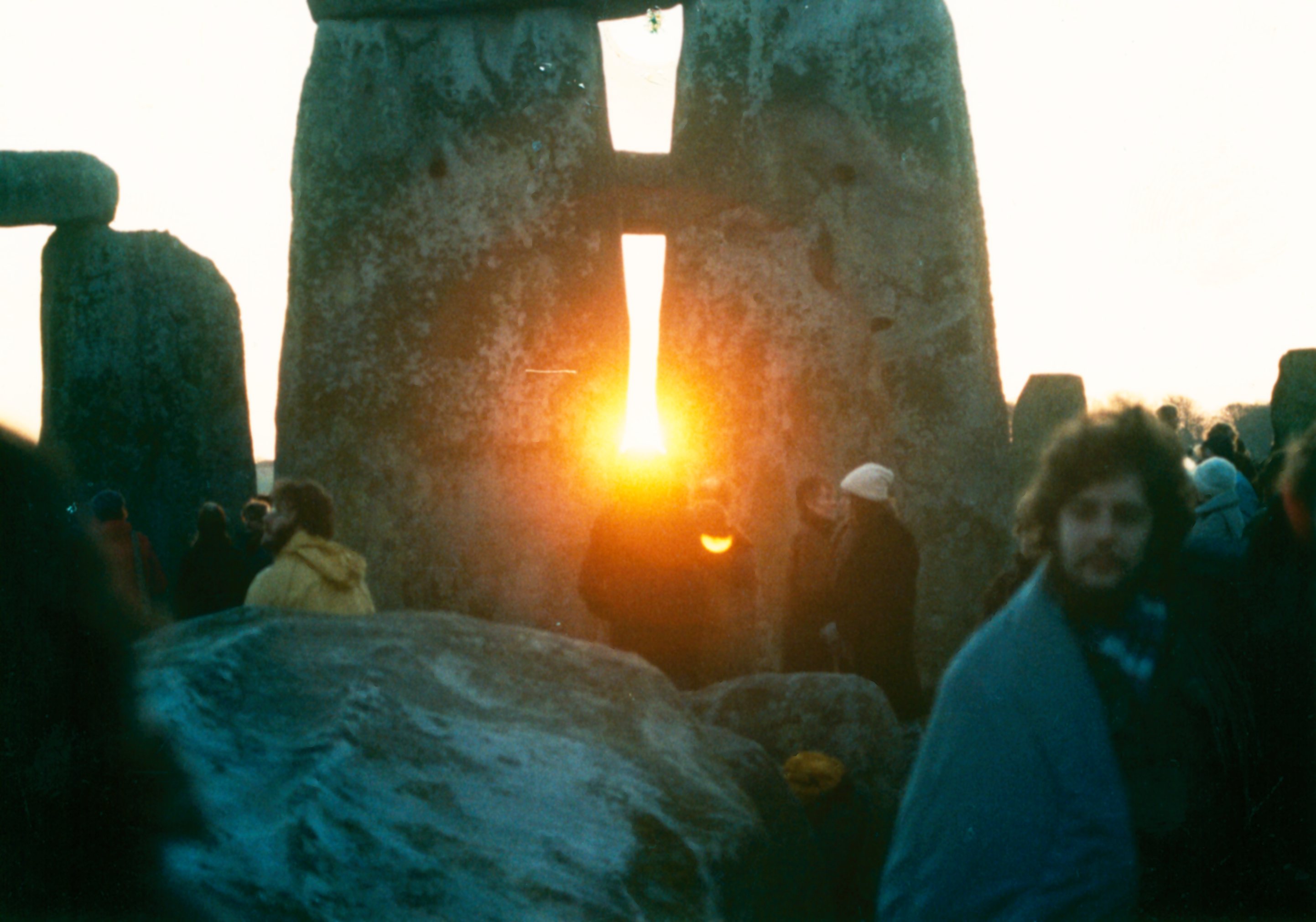
Winter begins in the northern hemisphere on this, the shortest day of the year. In traditional pagan cultures, this time of the year represented darkness giving way to light, and death giving way to life. The dark and cold had reached its nadir. Henceforth the days would grow longer and warmer. Hope was restored. Many of the festivals and celebrations that take place at this time of year, from many different cultures, follow this theme.
For more on this and other winter observances and feasts, check out our display: Holidays and Holy Days.
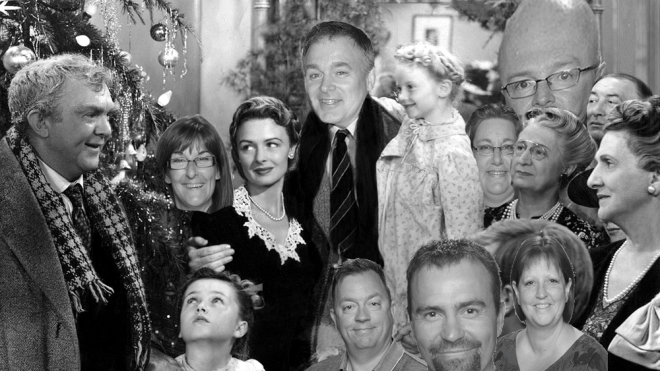
December 20: It’s A Wonderful Life
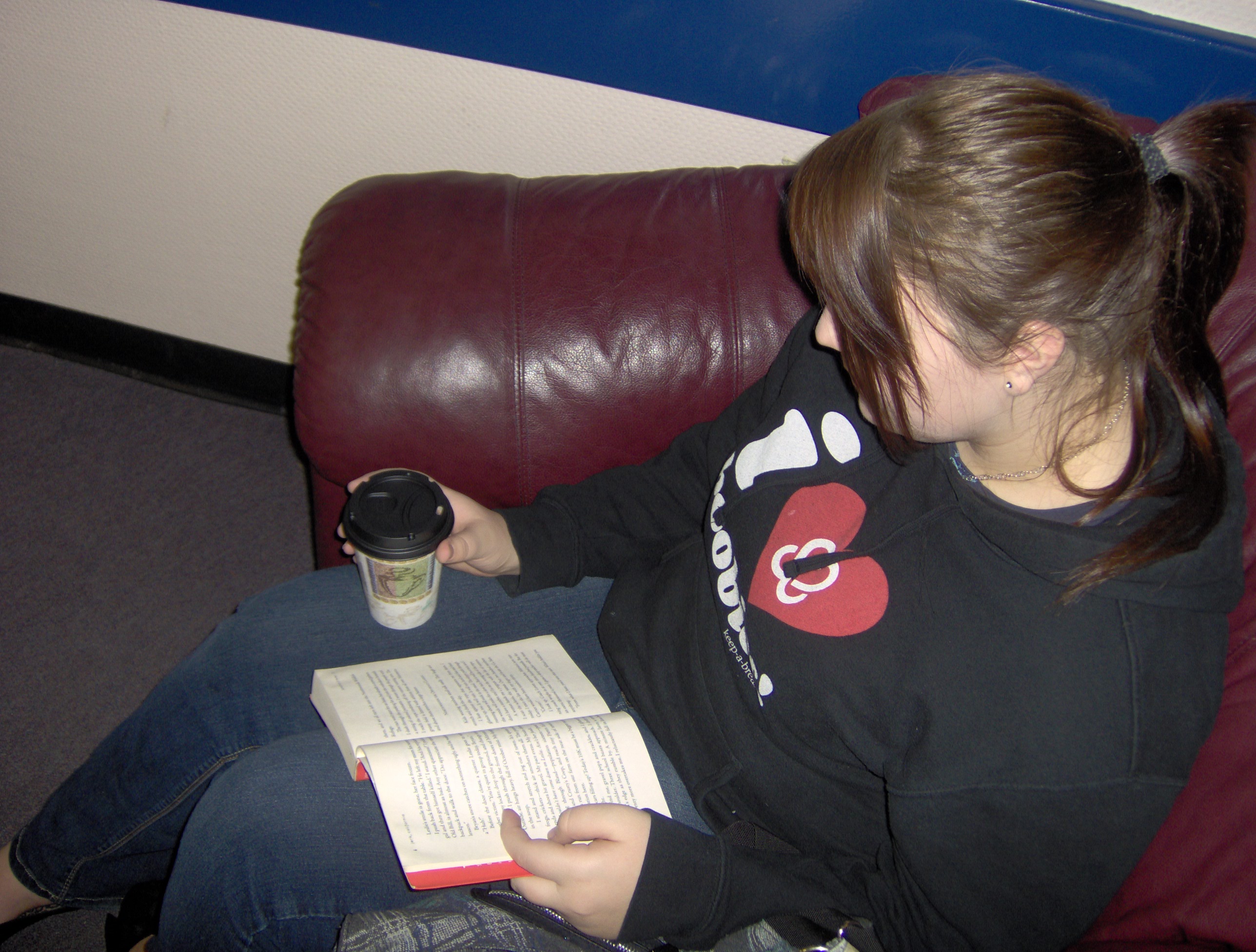
Christmas Reading Rewards!
Reading is its own reward. But from time to time we like to give a little something more to those students who demonstrate a love of reading to the rest of the class during SSR. Teachers select students for Reading Rewards tickets, which earn them trips to the school library during class for warm beverages, some tasty treats, and some bonus silent reading in a warm, comfortable and festive atmosphere!
![IMG_0109[1]](https://tweedsmuirlibrary.ca/wp-content/uploads/2013/12/img_01091.jpg)
![IMG_0110[1]](https://tweedsmuirlibrary.ca/wp-content/uploads/2013/12/img_01101.jpg)
![IMG_0111[1]](https://tweedsmuirlibrary.ca/wp-content/uploads/2013/12/img_01111.jpg)
![IMG_0112[1]](https://tweedsmuirlibrary.ca/wp-content/uploads/2013/12/img_01121.jpg)
![IMG_0113[1]](https://tweedsmuirlibrary.ca/wp-content/uploads/2013/12/img_01131.jpg)
Thanks! Thanks to our volunteers and other members of the Library Team
![IMG_0107[1]](https://tweedsmuirlibrary.ca/wp-content/uploads/2013/12/img_01071.jpg) Thanks to our volunteers and other members of the Library Team. You serve the staff and students of the school in a vital way. We appreciate it very much!
Thanks to our volunteers and other members of the Library Team. You serve the staff and students of the school in a vital way. We appreciate it very much!
![IMG_0108[1]](https://tweedsmuirlibrary.ca/wp-content/uploads/2013/12/img_01081.jpg)
On Wednesday the library shut down for lunch so the volunteers could attend the Volunteer Lunch & Christmas Party Extravaganza! We had festive gathering with a ton of tasty treats (Thanks to everyone who brought some, especially those who baked them themselves!)
Merry Christmas and Happy New Year to everyone on the Library Team.
![IMG_0105[1]](https://tweedsmuirlibrary.ca/wp-content/uploads/2013/12/img_01051.jpg)
Christmas Reading Rewards
 Do you love reading and do you demonstrate that each day during SSR? Ask your teacher about Christmas Reading Rewards! You might be lucky enough to come down to the library this week for some tasty Holiday Treats, a warm drink, some Christmas music, and, best of all, some silent reading time!
Library Team Christmas Party!
All Library Team members are invited to a Volunteer Appreciation Lunch / Christmas Party on Wednesday, December 18. It will be a fun time to celebrate the Season and a chance for us to thank you for all your service to the students and staff of our school!

Las Posadas
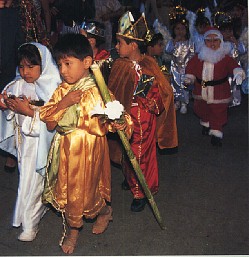 This 9 day festival is central to Navidad (Christmas) celebrations in Mexico. This is a neighbourhood festival that commemorates the journey of Mary and Joseph, who could not find posadas, (Spanish for “lodging”) before the birth of Jesus. A procession, including people dressed as Angels, Saints and the Holy Family, marches through the neighbourhood, knocking on doors looking for a place to stay. Like Mary and Joseph, they are refused, until finally the parade ends at one home where they are welcomed in. Feasting ensues, including a pinata for the children.
Be sure to check out our display, “Holidays & Holy Days.”
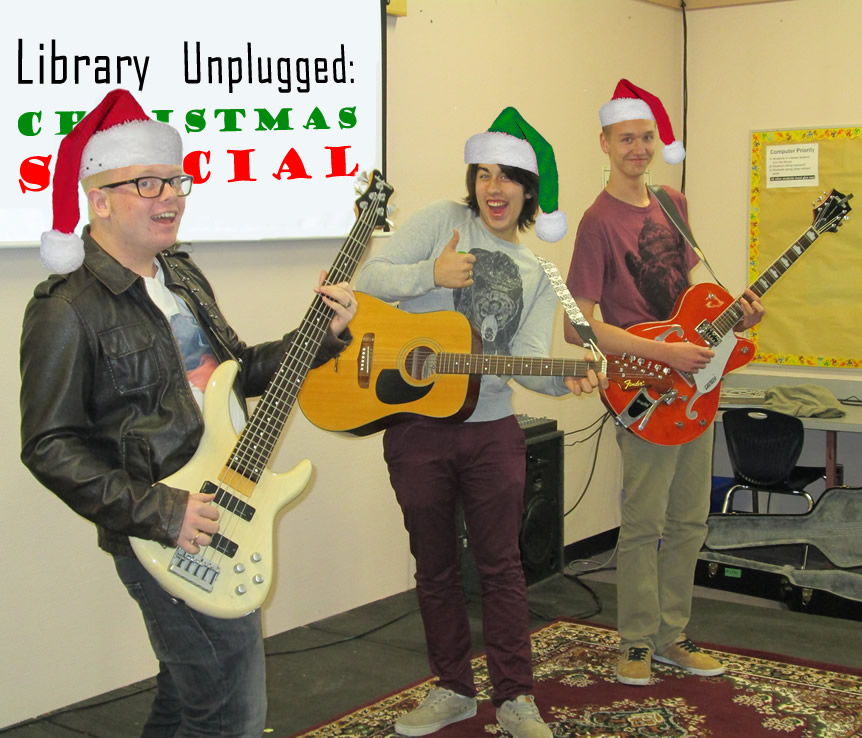
Library Unplugged: Christmas Special
Our second offering in a series of lunchtime concerts in your school library is on tap for Thursday, December 19. Bring your lunch and join us for Christmas Carols and other holiday songs!
Human Rights Day

On this day in 1948 the Universal Declaration of Human Rights was adopted by the United Nations General Assembly.
Article 1.
- All human beings are born free and equal in dignity and rights.They are endowed with reason and conscience and should act towards one another in a spirit of brotherhood
Article 2.
- Everyone is entitled to all the rights and freedoms set forth in this Declaration, without distinction of any kind, such as race, colour, sex, language, religion, political or other opinion, national or social origin, property, birth or other status. Furthermore, no distinction shall be made on the basis of the political, jurisdictional or international status of the country or territory to which a person belongs, whether it be independent, trust, non-self-governing or under any other limitation of sovereignty
Article 3.
- Everyone has the right to life, liberty and security of person.
Click here for the full text of the Universal Declaration of Human Rights, Click here for the history of, and other information about, the UDHR. And click here for more information about Human Rights Day.

Mandela and Rugby
For the rugby players and fans of rugby football in our community, there is another compelling story related to the late Nelson Mandela. While soccer was a sport embraced by the black South African population, for most of the 20th century rugby was the sport of choice for white South Africans, so much so that very many blacks, rugby was a symbol of the racism and oppression of Apartheid. As much as anybody else, Nelson Mandela changed that. Mandela understood the importance of rugby to white South African culture. As he struggled to lead South Africa through the transition from Apartheid, Mandela understood that rugby might be a key factor in garnering support from the white community and perhaps even help step closer to the dream of a racially united “rainbow nation.” As South Africa prepared to host the 1995 World Cup of Rugby, Mandela became the Sprinboks’ number one fan. That the Boks went on to win the World Cup was the storybook ending. It was a truly memorable scene to witness Mandela, clad in his Springboks uniform, once a symbol of Apartheid, handing the Webb Ellis Cup to the Boks’ Captain, Francois Piennar.
To learn more about this fascinating intersection between sport, politics, culture and history, check out the following:
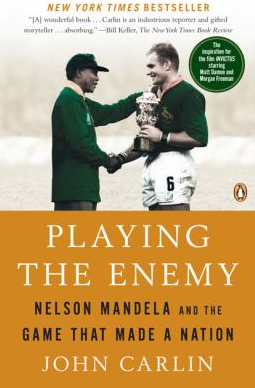 Playing the Enemy by John Carlin (2008).

“Invictus,” a film (2009) by Clint Eastwood, starring Morgan Freeman as Nelson Mandela and Matt Damon as Springboks’ Captain Francois Piennar. Based on Playing the Enemy.

“The 16th Man,” an ESPN 30 For 30 documentary produced by Morgan Freeman.
 Lord Tweedsmuir Secondary School Library