Colm Cille

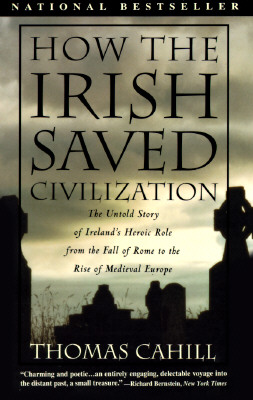
irishsavedIf you haven’t yet read How the Irish Saved Civilization, put it on your reading list! Author Thomas Cahill tells some remarkable stories from the era that he calls one of the “hinges of history.”  Cahill makes the case that ideas that came from the Greeks, the Romans and the Jews, ideas that are among the foundational ideas of our civilization, were on the edge of an abyss, possibly to be lost forever. If not for the Irish, our civilization, at least civilization as we know it today, may have slipped away forever.  Read it for yourself and see what you think.

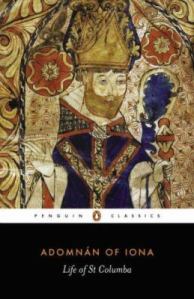
One of the remarkable figures that jumps off the pages is Colm Cille.  Known also as Saint Columba in the Roman Catholic Church, Colm Cille was one of those Irishman who inspired the notion that Ireland is the land of “Saints and Scholars.”  In a world of darkness, Colm Cille helped to bring light.

Fifteen hundred years ago, in the wake of a terrible battle, full of remorse, St. Colmcille left Ireland for Scotland. On the remote island of Iona he began a new life and helped create a new world. The beautiful manuscripts he and his followers produced helped spread not only Christianity but ideas about literacy, peace-making and nation-building, not to mention punctuation! His followers became missionaries, builders, teachers. It’s no exaggeration to say that these men from the North of Ireland rebuilt Europe. (source: The Return of Colmcille)
Columba

Read more about Colm Cille:

Jimi Hendrix and Bruce Lee

source: wikimedia commons

Two pop culture icons with Seattle connections were born on this day.

Jimi Hendrix was born in Seattle in 1942. He would go on to become a rock superstar, widely regarded as one of the greatest and most influential guitar players of all time. He died far too young at age 27.  More on Jimi Hendrix.

source: brucelee.com

Martial Arts legend Bruce Lee was born on this day in 1940 in San Francisco. He was raised in Hong Kong, and was buried in Seattle.  He also died much too young. He was only 32.  More on Bruce Lee.

Andrew Carnegie

On this day in 1835, Andrew Carnegie was born. He would go on to become the “richest man in the world.” A controversial figure, many criticize the manner in which he amassed his wealth. However, he is also one of the most prolific philanthropists in history, having given away more than $350 million in his lifetime. He is best known for the establishment of more than 2500 public libraries throughout the world. The millions he gave away in his lifetime continues to do good work right up to the present, accounting for billions of dollars of philanthropy.

Carnegie Centre, Vancouver
source: Wikimedia Commons / CC J.Mabel

Olympic Protest

On this day in 1968, one of the most iconic images in Olympic history was captured for all the world to see.  As the US National Anthem played at the medal ceremony for the 200 Metre race at the Mexico City Olympics, American sprinters Tommie Smith and John Carlos, the Gold and Bronze Medalists,  bowed their heads and each raised a single, black gloved fist.  This gesture of protest has come to be known as the “Black Power Salute.” Smith and Carlos shocked many with this Silent Gesture, forcing the world to take note of the struggle against racism in the United States and around the world. The Silver Medalist, Peter Norman of Australia, joined the Americans in wearing an OPHR badge (Olympic Project for Human Rights.)

fair use: "1968 Olympics Black Power salute" by AP photographer - http://i.infoplease.com/images/blackpower.jpg. Licensed under Fair use of copyrighted material in the context of 1968 Olympics Black Power salute via Wikipedia - http://en.wikipedia.org/wiki/File:1968_Olympics_Black_Power_salute.jpg#mediaviewer/File:1968_Olympics_Black_Power_salute.jpg
source: wikimedia commons / AP

Reaction was very negative in the US and within the Olympic Community, including those who felt that the Olympics was not the place for such an overtly political gesture. Under pressure from the IOC, the men were expelled from the Olympic village and suspended from the US Olympic Team. Both men were forced to return home to heavy criticism and even threats of violence. Very few publicly lauded their courage and their willingness to make such a bold and profound statement, but over time public opinion has shifted dramatically in support for what Smith and Carlos did on the podium in 1968.


For more, check out these links:

Bartman

source: Bleacher Report

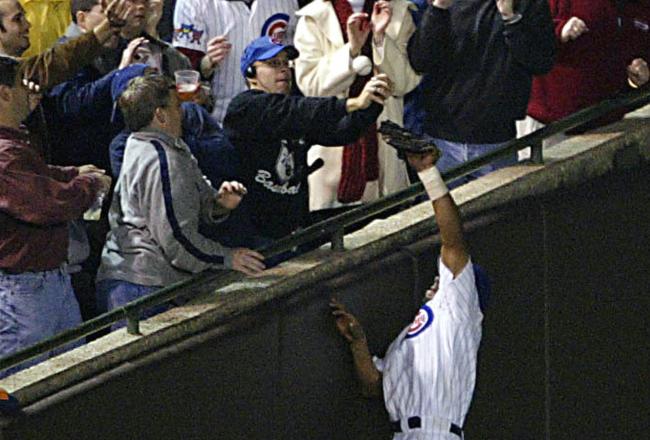
On this day in 2003, the infamous “Bartman Incident” took place at Wrigley Field in Chicago during the National League Championship Series. As much as sport can bring out the best in us, it sometimes can bring out the worst. Lifelong Cubs fan Steve Bartman found himself fearing for his life after his interference in a play late in a Cubs’ playoff game. To learn more about this sad chapter in sports history, check out the amazing documentary, “Catching Hell,” part of an excellent series of sports films called “30 For 30.”  Read more about the Bartman Incident.

The Goal

For those born in last few decades, the greatest goal in hockey that they ever witnessed was the “Golden Goal” of Sydney Crosby, the overtime goal which captured the Gold Medal for Canada at the 2010 Olympics in Vancouver.

For others, sandwiched between the baby boomers and the millennials, the greatest goal ever scored, that they saw, came in 1987, as Wayne Gretzky passed the puck to Mario Lemieux, who scored to give Canada a 6-5 victory over the Soviet Union in the third and deciding game of the Canada Cup.

The case can be made for other great goals as well. However, hockey fans in their 50’s or older were witnesses to “The Goal,”  what most hockey observers, experts and fans alike, consider to be the greatest goal in hockey history.

In 1972 the Summit Series featured the stars of the NHL, Team Canada, against the Soviet Union. The series was about more than just hockey.  It was the height of the cold war, and for many people, this was an extension of that conflict between Soviets, representing communism and totalitarianism, and the democratic, capitalist, “free” countries of the “West.”

1972 was the first time that the best players in professional hockey would be assembled to take on the Soviets, the powerhouse that had dominated international and Olympic hockey since the 1950’s.  Canadians were confident that this time it would be different, as hockey was our game, and now we finally had a chance to prove it, “best on best.”  For the first time we would send our best players, our NHL stars, to teach the Soviets about hockey.

It didn’t start out that way.  The Canadian stars were used to using September to get in shape for the NHL season. They weren’t ready to play and it showed, as Canada only won one game out of the first four games at home, and then dropped the first game in Russia. Down 3 games to 1, with one tie, the Canadians needed to win the final three games in Russia to win the series.  They would win the next two to even the series and make the 8th and final game the decider.

What had already been a dramatic series was about to achieve legendary status. Down by two goals going into the 3rd period, Canada clawed their way back to tie the game with about 7 minutes left.  In the final minute, Paul Henderson scored to give Canada the lead and the victory in the series.

Canadians had been watching on their television sets, all over the country and around the world.  Many Canadians can still tell you where they were when Henderson scored “The Goal.”

Find out more:

The Goal:


Malcolm X

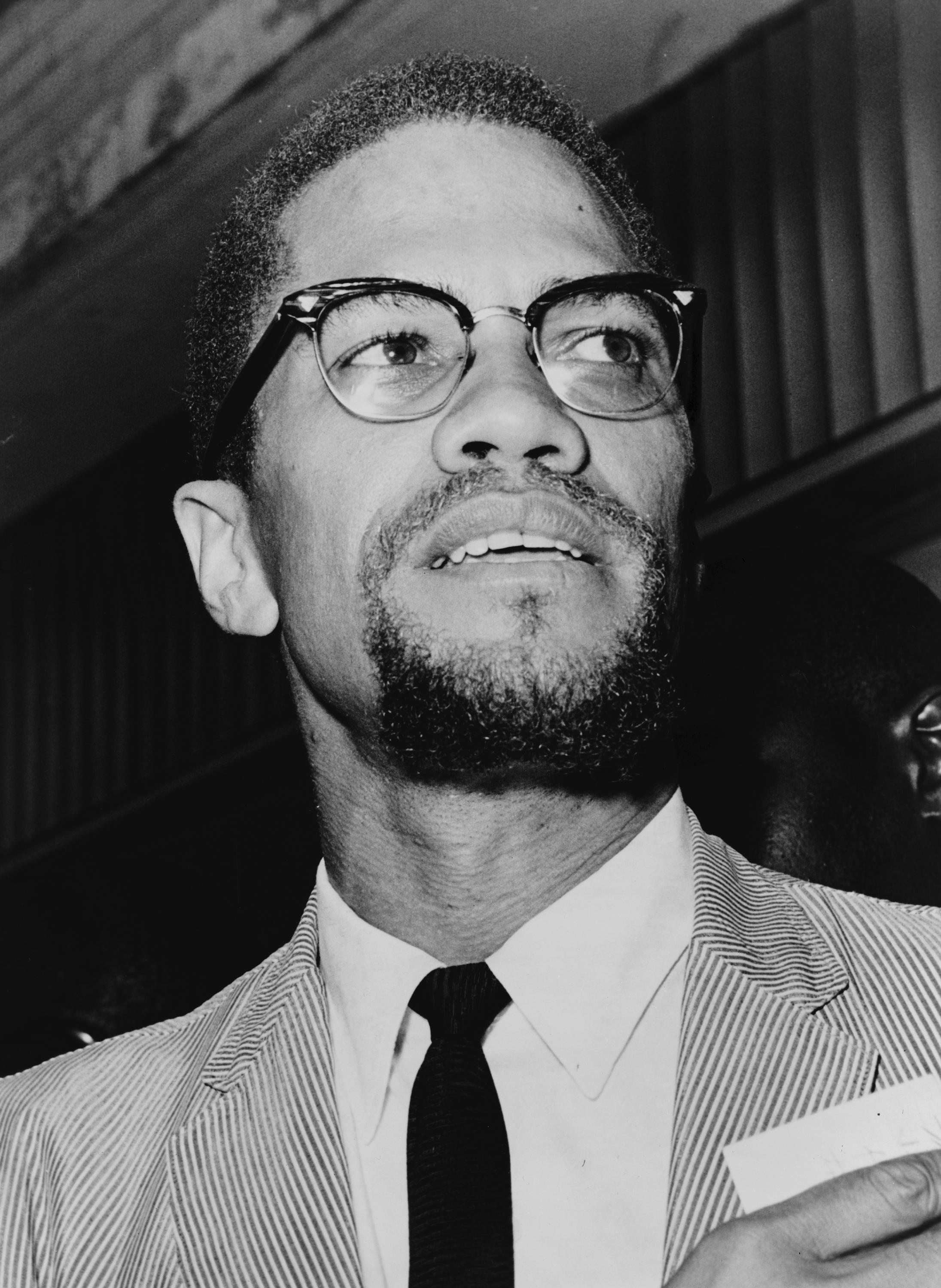
MalcolmXBorn Malcolm Little in 1925, he grew up in poverty and lived a life crime. While in prison he worked to self-educate and converted to Islam, taking the Muslim name El-Hajj Malik El-Shabazz. Publicly he became known as Malcolm X, dropping what he referred to as his “slave name.” He would become one of the leading figures of the fight for equality for African-Americans. In contrast to Martin Luther King who called for non-violent protest, Malcolm X believed that violence would be necessary for black people to gain their rights. He was considered a black-supremacist who believed that blacks and whites could never live together. Just prior to his death, he disavowed that position and preached the equality of all people. He embraced the possibility of peaceful change and a willingness to work with other Civil Rights leaders. He was assassinated in 1965 by members of the group he formerly led, the Nation of Islam.

For more on the life of Malcolm X, click here.

Rick Rypien

source: National Post

Rick Rypien was born on this day in 1984.  Rypien was a hockey player and a fan favourite during his time with the Vancouver Canucks.Sadly, he took his own life in 2011.  Rypien suffered from the devastating effects of depression and other mental health issues.

Former team-mates, friends and family have honoured the memory of Rick Rypien in many ways, not least through the connection to Mindcheck.ca.  Go there to learn more about Rick Rypien and about Mental Health.

Stompin’ Tom

A year ago today Canada lost one its greatest cultural icons and one of its fiercest patriots, as Stompin’ Tom Connors passed away at the age of 77.  Best known for “The Hockey Song,” Stompin’ Tom wrote songs about all things Canadian.

source: stompintom.com

Besides “The Hockey Song” which can still be heard in arenas all over Canada, some of his other wonderful country-folk songs include “Bud the Spud,”  “Sudbury Saturday Night,”  and “Moon Man Newfie.”  Tom Connors was born in 1936 in Saint John, New Brunswick.  He travelled the country from sea to sea to sea, singing his songs and celebrating Canada and Canadians.

)