Students Need to See Adults Reading

ssrcam“As a teacher I am more influential as a model than my students will ever let on.”

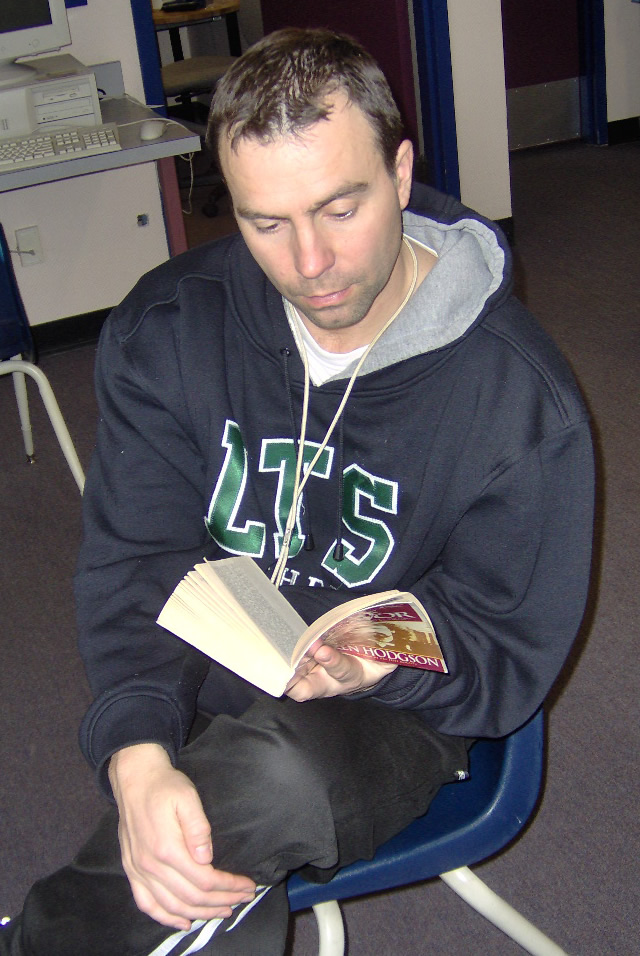
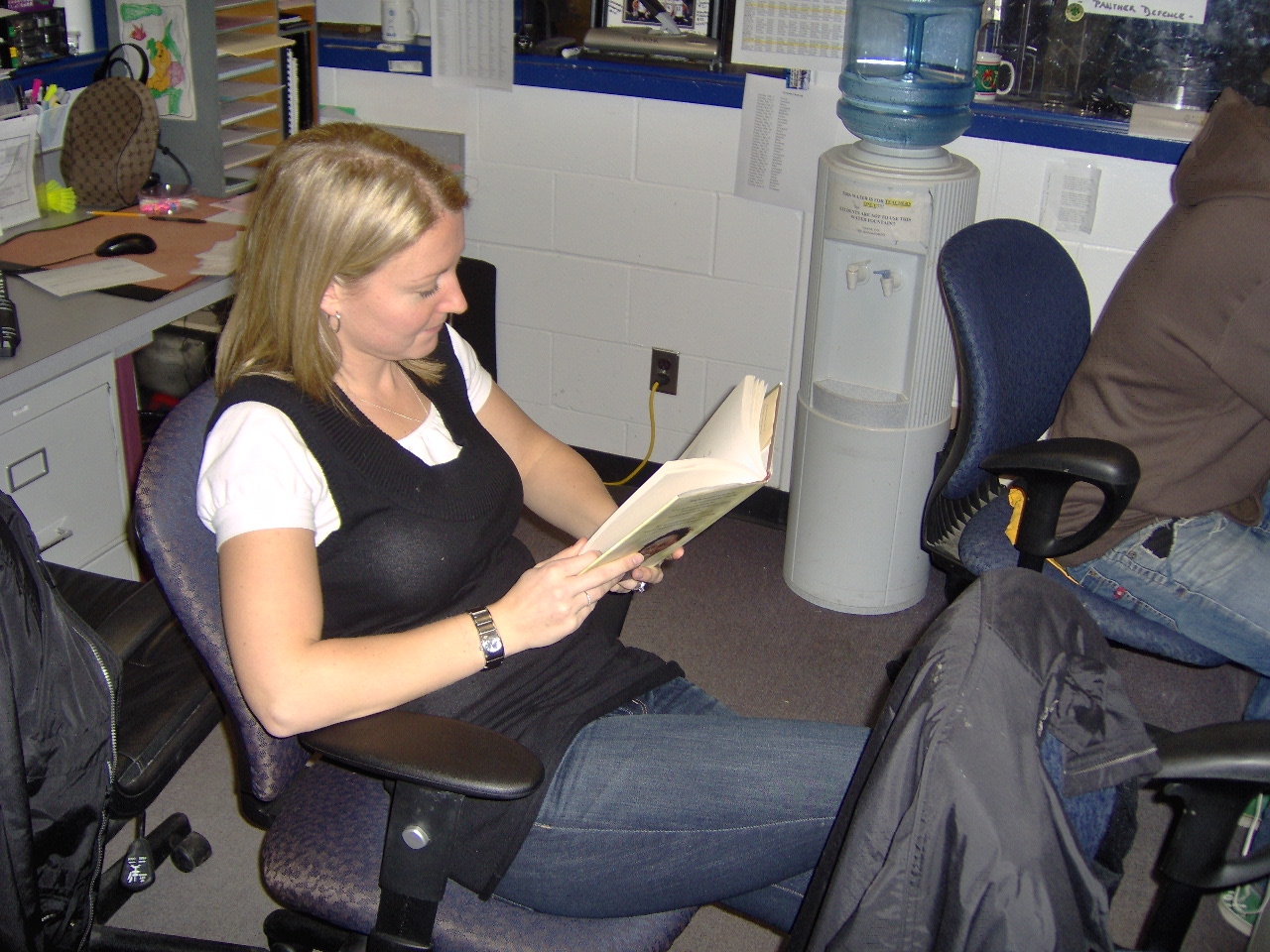
Read during SSR.  Expect students to have a book, be silent, be respectful of others, and read. Model that. Show them that reading isn’t something we just talk about. Reading is something we really do.

“…teachers who grade papers or balance their checkbooks during SSR are also sending their students a powerful message–a message that time set aside to read isn’t important. It’s true that we often have to model a positive behavior ten, twenty, thirty times before we see it begin to take hold in adolescents.  But it’s also true that if we model a bad behavior once, they learn it immediately. I remind myself of this prior to every SSR period– that as a teacher I am more influential as a model than my students will ever let on. If I talk the talk, I need to walk the walk.”

–Kelly Gallagher, Reading Reasons, 2003.

Students Need to See Adults Reading

ssrvolpe“One way to undermine an SSR program is for the teacher to grade papers, work on the computer, and answer phone calls.”

–Valerie Lee, “Becoming the Reading Mentors Our Adolescents Deserve”

Use SSR time to show the students what engaged readers do. Read alongside the students.   Expect them to be silent and immerse themselves in their reading. Model reading for the students.  Mentor them as readers.

Students Need to See Adults Reading

“Building a culture of reading in a school requires the participation of the entire school community– students, teachers, administration, staff, parents, patrons…  Students need to see adults, in various roles, reading: a favorite teacher, a coach, or administrators.”

Makatche and Oberlin, “Building a Culture of Reading.”

We can tell kids that reading is important. But if they don’t see that the adults in their lives value reading, why should they believe us?  Teachers, coaches, parents: Show the kids in your life that you value reading. Read in front of them. masi-ssr

Teachers: Be Reading Role Models

There should be other adults in the lives of our students who are role models when it comes to reading. Sadly, for many of the kids in our schools, there may not be any adults who demonstrate the value of reading in everyday life. It is essential that teachers show our students that reading is a vital aspect of what it means to be a lifelong learner.

From Donalyn Miller’s Four Steps to Creating A School-Wide Reading Culture:

We hope that children have reading role models at home, but many don’t. We must surround children with reading role models throughout the school day – not just in Language Arts class.

Showing children that adults choose to read a wide range of texts for a variety of purposes sends a strong message that reading is important after formal schooling ends. Sharing your own reading life with your students and staff reinforces that you believe reading enriches your life. As much as possible, you should participate in the reading initiatives at your school, not only as a school leader, but also as a reader! Ask students what they are reading… take their book suggestions and share what you enjoy about the books you read.

For many of us, SSR is the best opportunity for us to demonstrate that we are readers. Teachers need to put away the marking and pick up books, magazines or other reading materials to show that reading isn’t just we do to pass tests or assignments at school.

HPIM0895.JPG

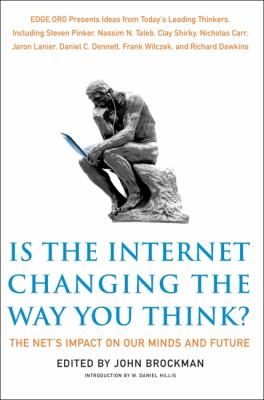
Is the Internet Changing the Way You Think?

InternetThinkingThought provoking ideas from a wide variety of thinkers are brought together by editor John Brockman in Is the Internet Changing the Way You Think? In the opening essay, “The Bookless Library,” Nicholas Carr asserts:

As a technology, a book focuses our attention, isolates us from the myriad distractions that fill our everyday lives. A networked computer does precisely the opposite. It is designed to scatter our attention. It doesn’t shield us from environmental distractions; it adds to them. The words on a computer screen exist in a welter of contending stimuli.

Carr isn’t arguing that the internet is bad.  We cannot dispute that the internet has given us huge advantages. However, those advantages come at a cost.

My own reading and thinking habits have shifted dramatically since I first logged on the Web fifteen years ago or so. I now do the bulk of my reading and researching on-line. And my brain has changed as a result. Event as I’ve become more adept at navigating the rapids of the Net, I have experienced a steady decay in my ability to sustain my attention… What the Net seems to be doing is chipping away my capacity for concentration and contemplation.

The computer age has not rendered the book obsolete. True, the future of paper publishing may be in doubt. The physical book is here for at least the short-term. In the long run maybe they will be completely replaced by e-books. That is not the point. Regardless of the format, we need books, more than ever. We need them for many reasons, not least as an antidote to the distracted, shallow thinking that is the product of so much of what people do on-line. We need long-form text, including fiction and non-fiction. We need to read things that require concentration, engagement and deep thinking.