Bob Marley

BobMarleyReggae legend Bob Marley was born on this day in 1945 in Nine Miles, Jamaica. Sadly, he died far too young, at only 36 in 1981.  For more on the life of this amazing artist, take a look at some of the many books we have here in the school library. Online you can also check out:

Hank Aaron

source: Hand Aaron State Trail.org

Henry “Hank” Aaron was born on this day in 1934.  He became a Major League Baseball player in 1954 and played in a remarkable career all the way until 1976.  “Hammerin’ Hank” is best known for breaking Babe Ruth’s all-time home run record, surpassing the Babe’s 714 in 1974. Hank Aaron would finish in 1976 with 755 home runs.  Many people consider that Aaron’s mark is still the legitimate record, as it would be broken in recent years under the cloud of steroid use and accusations of cheating with PEDs.  More impressive is that Aaron displayed such tremendous skills for so long, and in the face of some horrific hate and threats of violence. As Aaron approached Babe Ruth’s record, he faced an increasing number of messages of hate and threats to his life by racists who couldn’t accept that a black man was accomplishing such a feat.  Aaron faced the hate with courage and grace. For more on Hank Aaron:

Baseball Hall of Fame

Baseball Reference

755 Homeruns.com

International Civil Rights Walk of Fame

Rosa Parks

source: wikimedia commons

One of the icons of the US Civil Rights movement looked an unlikely hero but proved to be someone whose strength of character belied her appearance. Rosa Parks was born on this day in 1934.  In the face of the overt racism of 1950’s America, Rosa famously refused to give up her seat on the bus, as black people were expected to do for white people. She was arrested, and the resulting Montgomery Bus Boycott proved to be one of foundational events of the Civil Rights Movement. For more on Rosa Parks:

Rosa Parks Legacy

International Civil Rights Walk of Fame

NAACP


I Have a Dream

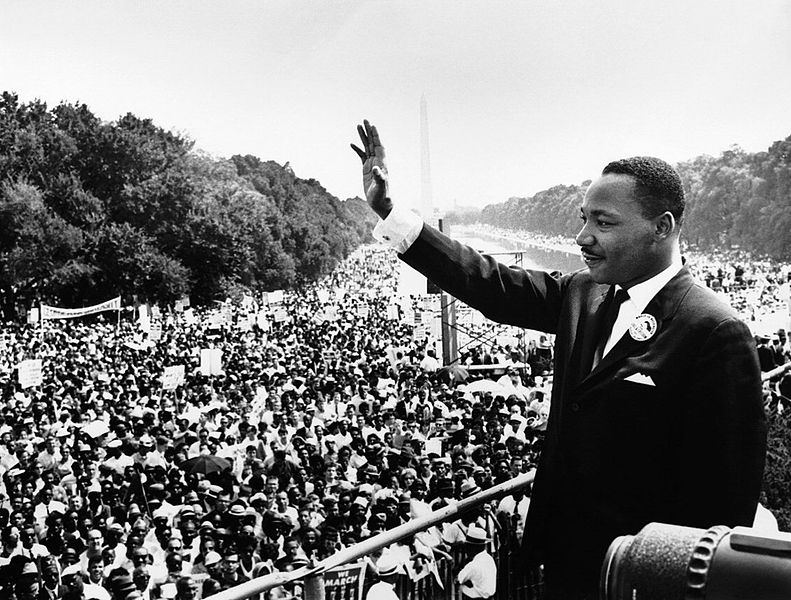
Today in the School Library students and staff will have the opportunity to view the famous “I Have a Dream” speech of Martin Luther King Jr. We will discuss the life of Dr. King, the Civil Rights Movement, and the ongoing struggle for racial equality and justice in our society.  As Americans observe Martin Luther King Jr. Day as a state holiday, we in Canada can also celebrate the work of Dr. King, who stood for non-violent protest, peace, forgiveness and love.

mlk

Persons Day

“The  historic decision to include women in the legal definition of “persons” was handed  down by Canada’s highest court of appeal – the Judicial Committee of the Privy  Council of Great Britain – on October 18, 1929. This gave women the right to be  appointed to the Senate of Canada and paved the way for women’s increased  participation in public and political life.” (From Status of Women Canada: Persons Day.)

source: famous5ottawa.ca

It may seem incomprehensible to us that women were not considered to be “persons”, at least under a strict definition of Canadian law prior to 1929.  The “Famous Five” led the fight all the way to the highest courts of the land to include women in the legal definition of “persons.”

“The exclusion of women from all public offices is a relic of days more barbarous than ours. And to those who would ask why the word  “person” should include females, the obvious answer is, why should it  not?”

–Lord Sankey of the Privy Council, 1929 (source)

Today we can celebrate that victory, and the slow but steady change in Canadian society towards equality for women.  We still have a long way to go, and sadly, in much the world, women are still denied equality, a “relic of days  more barbarous than ours.” Persons Day is a chance to celebrate how far we have come, and to reflect on how far we still need to go.

Malcolm X

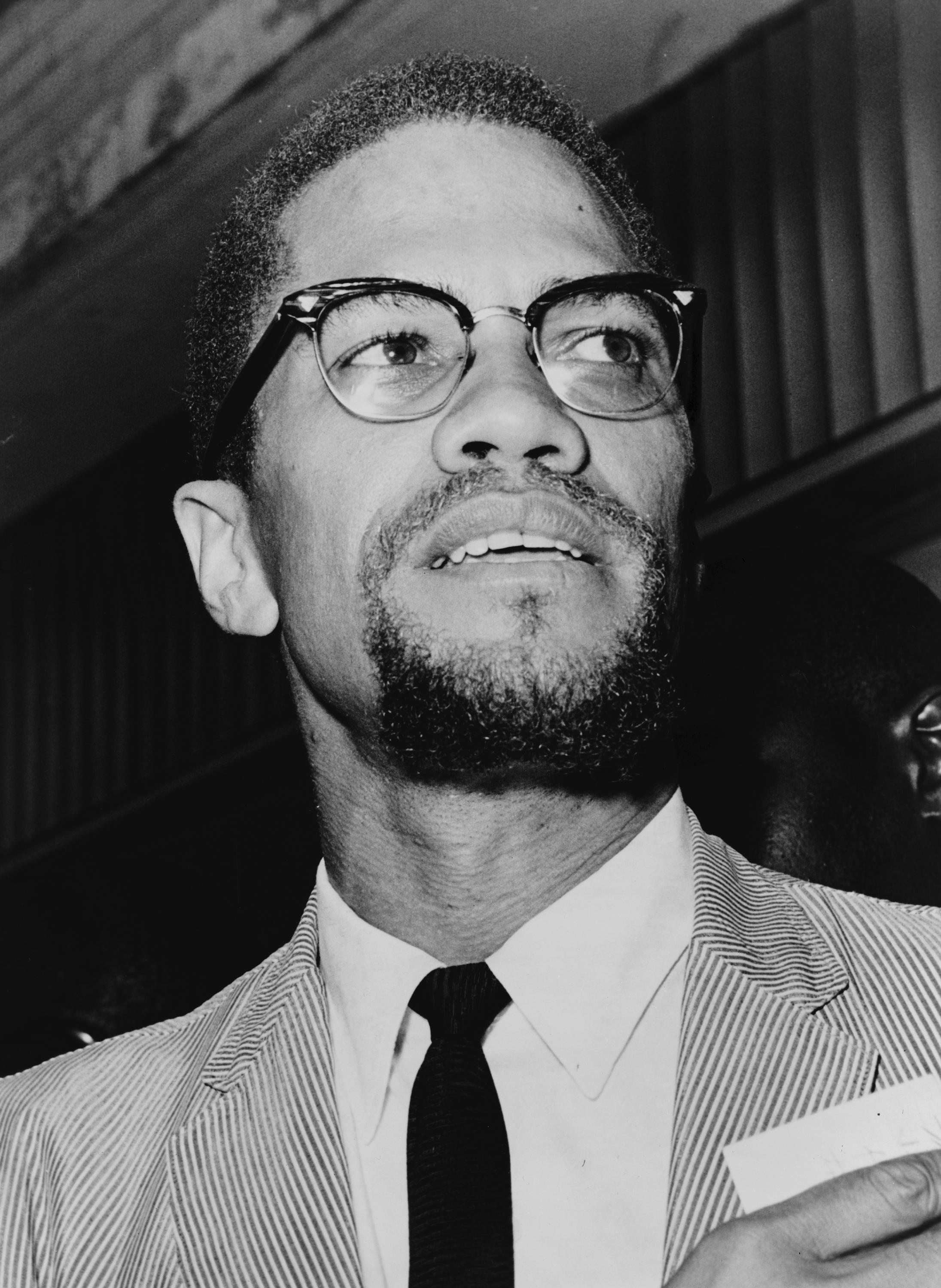
MalcolmXBorn Malcolm Little in 1925, he grew up in poverty and lived a life crime. While in prison he worked to self-educate and converted to Islam, taking the Muslim name El-Hajj Malik El-Shabazz. Publicly he became known as Malcolm X, dropping what he referred to as his “slave name.” He would become one of the leading figures of the fight for equality for African-Americans. In contrast to Martin Luther King who called for non-violent protest, Malcolm X believed that violence would be necessary for black people to gain their rights. He was considered a black-supremacist who believed that blacks and whites could never live together. Just prior to his death, he disavowed that position and preached the equality of all people. He embraced the possibility of peaceful change and a willingness to work with other Civil Rights leaders. He was assassinated in 1965 by members of the group he formerly led, the Nation of Islam.

For more on the life of Malcolm X, click here.

International Women’s Day

March 8 is International Women’s Day.  Women continue to struggle for equality in Canada and around the world. In Canada over the past century we have made significant progress towards improving the status of women, particularly in terms of the law and government. However, Canadian women still struggle for equality of pay and opportunity.  Canadian women still face discrimination and sexism. Worse, Canadian women are still subject to high levels of violence– worse still, violence carried out by men they know and perhaps even love.

Around the world, the situation is even worse.  In many societies women face worse levels of sexism and violence, often with no protection of any sort from the law. In fact, in some places the government endorses, or even carries out the oppression of women.

This is unacceptable.  International Women’s Day is not just for women. It is for all of us.  Together, men and women must continue to fight for human rights to be guaranteed to all people.

For more on International Women’s Day

InternationalWomen’sDay.com

International Women’s Day 2014: The shocking statistics that show why it is still so important

United Nations: International Women’s Day
Martin Luther King Day is January 20

In the United States, the 3rd Monday in January is a National Holiday in memory of Dr. Martin Luther King Jr.. While it is not a holiday in Canada, Canadians and people all over the world will take some time today to acknowledge the tremendous legacy of Dr. King as a champion of freedom, equality and peace.   mlk

In the school library we will be taking the opportunity to view footage of Dr. King’s iconic “I Have A Dream” speech from the 1963 March on Washington. Please be sure to join us!

Learn more:

Persons Day

“The  historic decision to include women in the legal definition of “persons” was handed  down by Canada’s highest court of appeal – the Judicial Committee of the Privy  Council of Great Britain – on October 18, 1929. This gave women the right to be  appointed to the Senate of Canada and paved the way for women’s increased  participation in public and political life.” (From Status of Women Canada: Persons Day.)

source: famous5ottawa.ca

It may seem incomprehensible to us that women were not considered to be “persons”, at least under a strict definition of Canadian law prior to 1929.  The “Famous Five” led the fight all the way to the highest courts of the land to include women in the legal definition of “persons.”

“The exclusion of women from all public offices is a relic of days more barbarous than ours. And to those who would ask why the word  “person” should include females, the obvious answer is, why should it  not?”

–Lord Sankey of the Privy Council, 1929 (source)

Today we can celebrate that victory, and the slow but steady change in Canadian society towards equality for women.  We still have a long way to go, and sadly, in much the world, women are still denied equality, a “relic of days  more barbarous than ours.” Persons Day is a chance to celebrate how far we have come, and to reflect on how far we still need to go.

Stephen Biko

Learn more about Stephen Biko. Borrow this book from your school library.

Anti-Apartheid and Black Consciousness leader Stephen Biko died on this day in 1977.  He was killed by South African police who tortured and beat him while he was in custody. His story, told in the book Biko, and the film “Cry Freedom,”  helped to expose the brutality of the Apartheid regime to the world.

Learn more about Stephen Biko.