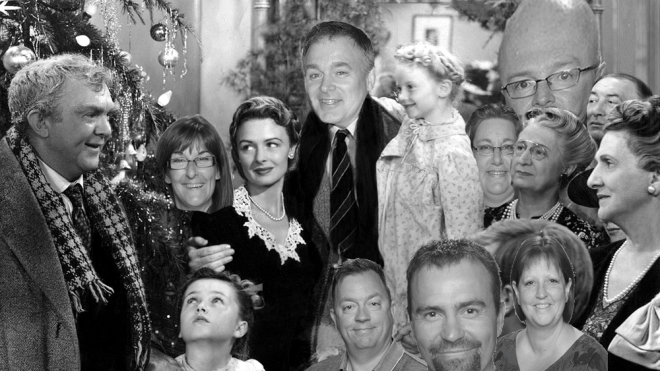
On this day in 1946, Director Frank Capra’s beloved holiday film, “It’s a Wonderful Life” opened in New York. It would go on to become standard Christmas viewing for millions of families. (I estimate that I have seen it 28 times.)

For those who grew up in the 80’s, no explanation necessary.
For those who did not: That’s First Lady Nancy Reagan (wife of US President Ronald Reagan) sitting on the knee of Santa Claus, AKA Mr. T.
For some more celebrity Santas, creepy Santas, and more, check out Mental Floss.

On this day in 1871, Emily Carr, an iconic figure in Canadian art and culture, was born in Victoria. Emily Carr is known all over the world, particularly for her paintings inspired by the forests of British Columbia and the indigenous people of Pacific coast. In addition to painting, Emily was also a writer and poet. Like most artists, she achieved her greatest fame and critical recognition later in life and after her death. For more on the life and work of this great Canadian, go to:


Bob Barker was born on this day in 1923. Barker is best known as the longtime host of the game show, “The Price is Right,” which was a fixture on daytime television for decades. Some consider his finest work, however, to be in the film “Happy Gilmore.” The fight scene between Adam Sandler and Barker is epic. The fact that Gilmore was wearing a Boston Bruins jersey while Bob taught him a lesson is particularly delightful to Canucks fans.
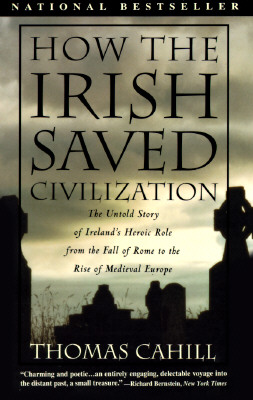 If you haven’t yet read How the Irish Saved Civilization, put it on your reading list! Author Thomas Cahill tells some remarkable stories from the era that he calls one of the “hinges of history.” Cahill makes the case that ideas that came from the Greeks, the Romans and the Jews, ideas that are among the foundational ideas of our civilization, were on the edge of an abyss, possibly to be lost forever. If not for the Irish, our civilization, at least civilization as we know it today, may have slipped away forever. Read it for yourself and see what you think.
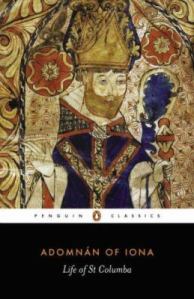
One of the remarkable figures that jumps off the pages is Colm Cille. Known also as Saint Columba in the Roman Catholic Church, Colm Cille was one of those Irishman who inspired the notion that Ireland is the land of “Saints and Scholars.” In a world of darkness, Colm Cille helped to bring light.
Fifteen hundred years ago, in the wake of a terrible battle, full of remorse, St. Colmcille left Ireland for Scotland. On the remote island of Iona he began a new life and helped create a new world. The beautiful manuscripts he and his followers produced helped spread not only Christianity but ideas about literacy, peace-making and nation-building, not to mention punctuation! His followers became missionaries, builders, teachers. It’s no exaggeration to say that these men from the North of Ireland rebuilt Europe. (source: The Return of Colmcille)
Read more about Colm Cille:

There are very few heroes left. It seems like we face a never-ending string of political scandals, resulting in a pervasive mistrust of and disrespect for our leaders. Pop culture gives us celebrities who, inevitably it seems, demonstrate increasingly destructive behaviour as they succumb to addiction and all the other pitfalls of “stardom.” Sports can offer some inspiration, but increasingly we are disillusioned with a world that seems overtaken by greed, cheating, unsportsmanlike behaviour, and violence. People who do really good things are too often ignored by a public fascinated with the ugly and the vapid.
Yesterday we lost a true hero.
For those who don’t know his story, you must learn it. Nelson Mandela was the leading figure in the fight against the racist Apartheid regime of South Africa, the system which enabled the white minority to oppress the black majority for most of the 20th century. Mandela was imprisoned for 27 years by the Apartheid government. From his cell he grew into the symbolic leader of the struggle against Apartheid, and racism around the world. In 1990 he was released, as the government finally realized it had to change. The process led to the first multiracial elections in 1994. Mandela was elected President, a position he held until 1999.
There are many aspects of Mandela’s record and his character to admire. What stands out for me was forgiveness. After having 27 years of his life stolen by his oppressors, Mandela might have used to his influence to lead the black majority in a bloody, violent quest for retribution against the whites. Certainly there were many elements within the black community that called for that. Instead, Mandela called for peace, for forgiveness, for reconciliation. Mandela used his incredible influence, the amazing respect that he commanded, to unite the entire nation in a quest for a peaceful transition to a post-apartheid society. If anyone had a right to demand justice, to seek revenge, it may have been Mandela. Instead, he forgave.
Like Martin Luther King Jr. and Gandhi before him, Mandela demonstrated the power of forgiveness, of non-violence and of reconciliation. As U2’s Bono described him, Mandela was a “lesson in grace.”
Nelson Mandela was just a man. He wasn’t perfect. He had his faults, both private and public. His greatness is demonstrated in the nearly universal respect he garnered, the esteem which he was held in by people all over the world, people of all races, religions, political leanings, wealth and social standing. This respect was built on his incredible example of forgiveness.

Two pop culture icons with Seattle connections were born on this day.
Jimi Hendrix was born in Seattle in 1942. He would go on to become a rock superstar, widely regarded as one of the greatest and most influential guitar players of all time. He died far too young at age 27. More on Jimi Hendrix.

Martial Arts legend Bruce Lee was born on this day in 1940 in San Francisco. He was raised in Hong Kong, and was buried in Seattle. He also died much too young. He was only 32. More on Bruce Lee.
 The first episode of “Dr. Who” aired on the BBC on this day in 1963. It has since become the longest running sci-fi television series ever, winning countless awards along the way. Moreover, in the UK, Dr. Who is a pop-culture icon, while Dr. Who has a cult following in Canada and other parts of the world.
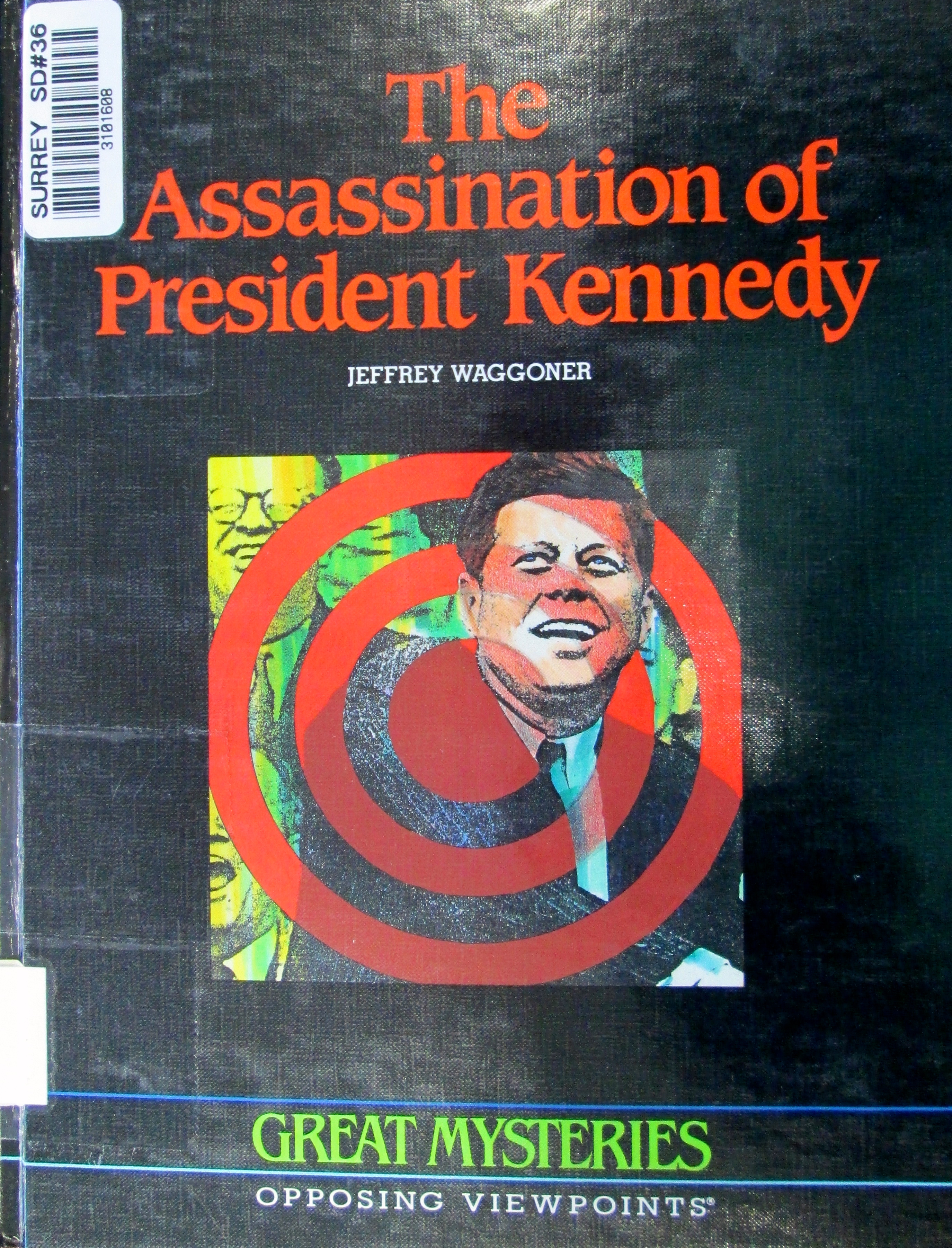 On this day in 1963, the President of the United States, John Kennedy, was assassinated. While the official verdict of the government’s “Warren Commission” came to the conclusion that a single shooter, Lee Harvey Oswald, was responsible, many have believed that the truth was something different. In the fifty years since, the JFK Assassination has become the topic that perhaps best exemplifies the culture of conspiracy theories and skepticism that the powers that be are not telling the truth.
To read more about the JFK Assassination, and other conspiracy theories, check out some of the following from your school library:
 |
 |
 |
 |
 |
 |
On this day in 1945 the Nuremberg Trials began in post-war Germany. An American led “International Military Tribunal” began a series of trials for Germans accused of crimes against humanity, primarily in connection to the Nazi Holocaust of the Jews, Roma, homosexuals and other groups. The various trials stretched out over nearly a year. While public sympathy was very much in favour of both the rationale for and the outcome of the trials, there have been major criticisms against the legal jurisdiction of the tribunal. While we are right in wanting justice for the crimes of the Nazis, how legitimate were the Nuremberg Trials? Moreover, were the Allies themselves guilty of some of the same crimes for which the Germans were tried?

For more on these questions, check out some of the following:
As an interesting side note, today student from our school are joining other students from around the province for a Symposium on the Holocaust at UBC, presented by the Holocaust Education Centre.
For all the amazing accomplishments and advances of humanity, we are still capable of terrible barbarism and unspeakable evil. One of the most terrible and shameful chapters of our history is marked by the remembrance of Kristallnacht, the “Night of Broken Glass.” These events of November 9 and 10, 1938, in Germany, are seen to be the symbolic start of the Holocaust, the systematic persecution and genocide of the Jews (and other groups) by the Nazis.

From Yad Veshem :
On November 9, 1938, the Nazis unleashed a series of riots against the Jews in Germany and Austria. In the space of a few hours, thousands of synagogues and Jewish businesses and homes were damaged or destroyed. For the first time, tens of thousands of Jews were sent to concentration camps simply because they were Jewish. This event came to be called Kristallnacht (“Night of the Broken Glass”) for the shattered store windowpanes that carpeted German streets. Kristallnacht was an essential turning point in Nazi Germany’s persecution of Jews, and a significant event in Holocaust history.
For more about Kristallnacht, click here. For educational resources click here.
Visit the full site of Yad Veshem for more information on the Holocaust. Other online sources include:
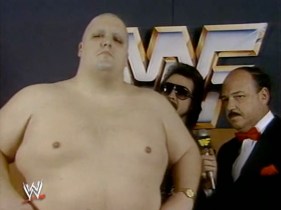
Back in the day, when I was a kid in Grade 8, all the boys were fans of pro wrestling. And as much as we had the good guys to cheer for, it was more about the bad guys to cheer against. Big John Studd, the Iron Sheik, Nikolai Volkov, Paul Orndorff, Greg “the Hammer” Valentine– these were some of the bad guys. Then there was King Kong Bundy. There were plenty of ugly you-know-whats in pro wrestling. Billed at 6 foot 4 and 460 pounds, he had to be the biggest, ugliest so-and-so you loved to hate. Born on this day in 1957 in Atlantic City, New Jersey, Chris Pallies grew up to become the world famous King Kong Bundy.
Note: Pro Wrestling was never again as good as it was in the early 80’s. Did it go downhill that much? Or did we just grow up? I hope it was more of the latter!

 Lord Tweedsmuir Secondary School Library