International Women’s Day is coming up soon, just a a few days away: Tuesday, March 8. We are celebrating all month long. Here are some books to help us learn more about the ongoing struggle for women’s rights in Canada and around the world.
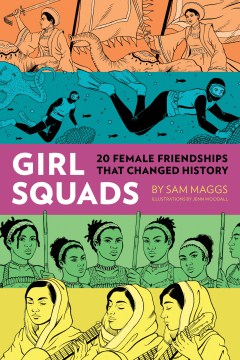
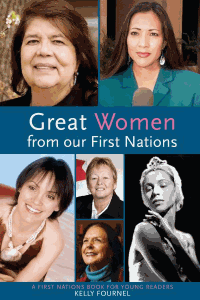

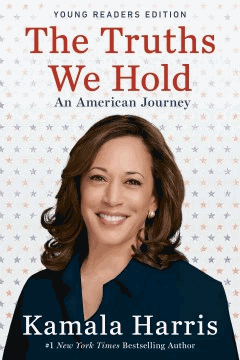
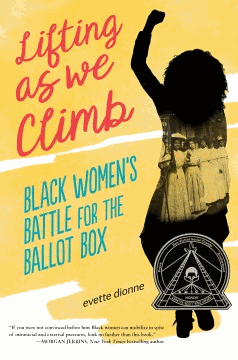

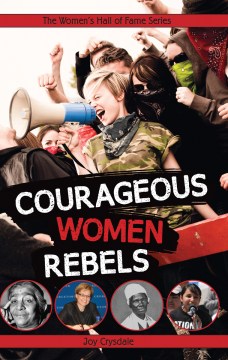
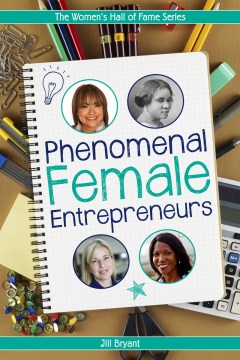
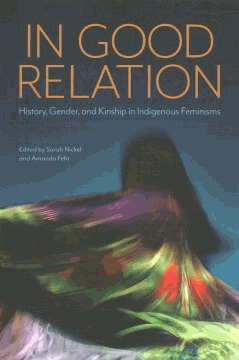

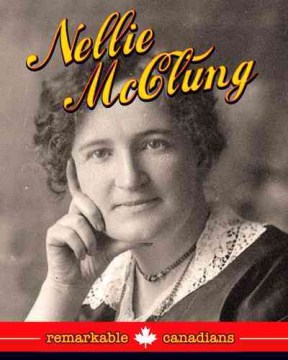
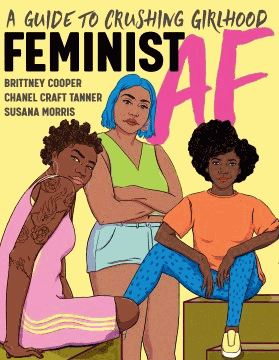
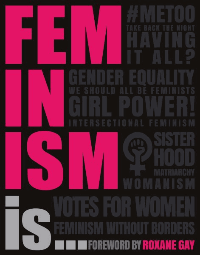


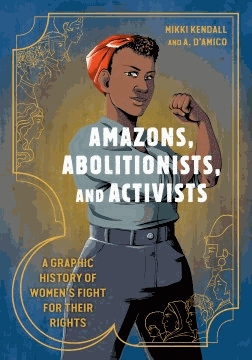


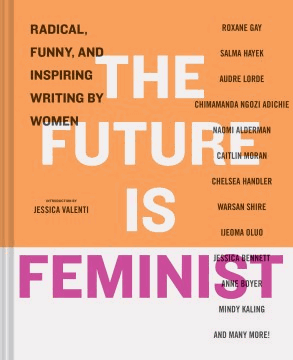
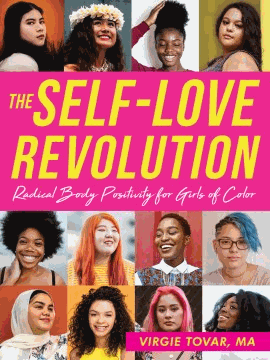

International Women’s Day is coming up soon, just a a few days away: Tuesday, March 8. We are celebrating all month long. Here are some books to help us learn more about the ongoing struggle for women’s rights in Canada and around the world.
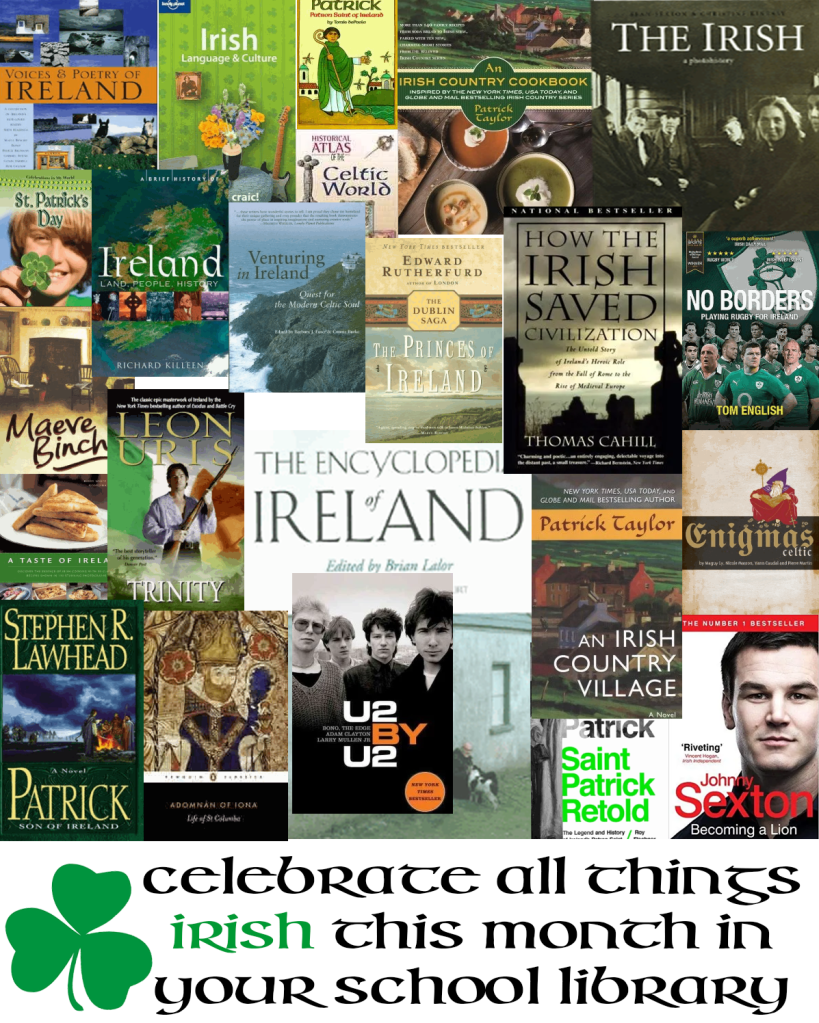
St. Paddy’s Day is March 17th, but we are celebrating ALL MONTH in your School Library! Come down to check out our display of Irish & Ireland related titles, including both fiction and non-fiction.
64 Titles
6 Rounds of Competition
1 Champion

It’s March Madness at your School Library. All your favourite novels in one-on-one competition over the next month as they try to advance through 6 rounds and ultimately a shot at the title: YA Lit Champion of your School Library.
First Step: Nominate your favourite novel.
Go here to get your favourite book (or books!) onto the list of 64.
Find out more: March Madness 2022
Democracy is under attack in the world, and sadly, even here in Canada. Your democratic rights and freedoms as citizens in this country are built upon concepts such as voting rights; the rule of law; the equality of all people; freedom of thought, including political and religious beliefs; the freedom of the press; balancing government of the majority with protection of the rights of the minority; and more.
This week we celebrate and explore the freedom to read, which is interconnected with many other vital concepts, including freedom of expression, the the right to choose to read what you want to read, including access to information, the freedom to seek, use and share information and literature, all of which are integral to democratic citizenship.
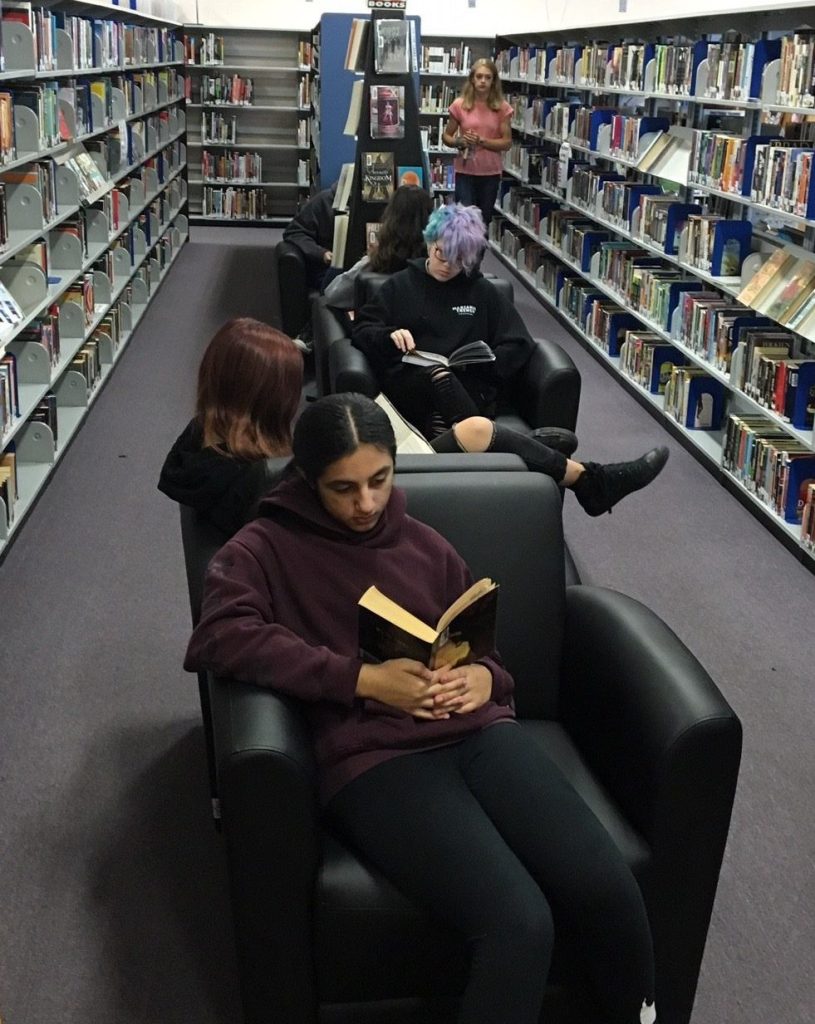
Stereotypically, the library is seen as a quiet place, silent even, where not much happens. Yet the library, and especially the school library, has always been a target of censorship, and as such has always been in the middle of the ongoing struggle between democracy and the forces of authoritarianism. School libraries are now battlegrounds at the center of our current polarized political and cultural climate.
The recent news has been rife with reports of book challenges, book bannings– and terrifyingly, even book burnings– in many U.S. states, school districts, and school libraries. As Canadians we cannot assume that this is only an American problem. We must be vigilant in protecting our students’ freedom to read.
Freedom of expression rights are essential to education in a free and democratic society. These are the rights of everyone in the school community, including students. Teacher-librarians are charged with ensuring that those rights are acknowledged and respected.
Diane Oberg
Some students are fortunate enough to have many places to turn to for books and other sources of information. Collections at home, public libraries, books stores, and of course, the internet(!). However, access to those things may be very limited, censored, or non-existent for some students. The school library is often the safest and most accessible place for a wide variety of books and other sources of information that are relevant and essential for students.
All Canadians who value democracy have an interest in protecting and building up the institutions that support democracy. The school library is one of those institutions.
Read more about the vital role of the Teacher Librarians and of the school library play in protecting and empowering a student’s Freedom to Read:
“Freedom of Expression Rights and the School Library: Who Speaks for the Kids in Your School When the Censor Comes Calling?” by Diane Oberg (from FreedomtoRead.ca)
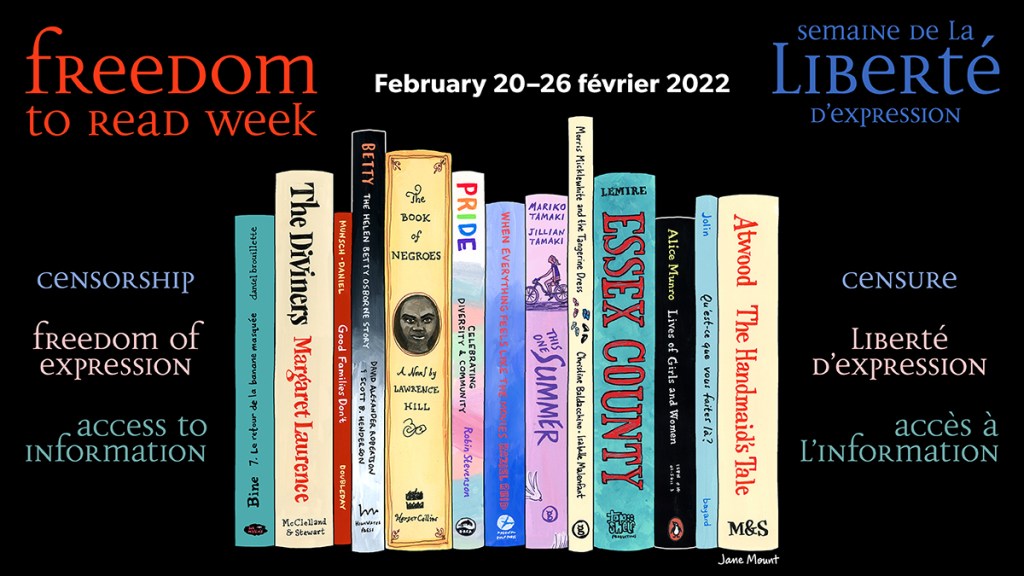

Find out more. Here are some informative and thought provoking articles on the freedom to read, censorship, book banning and free access to information:
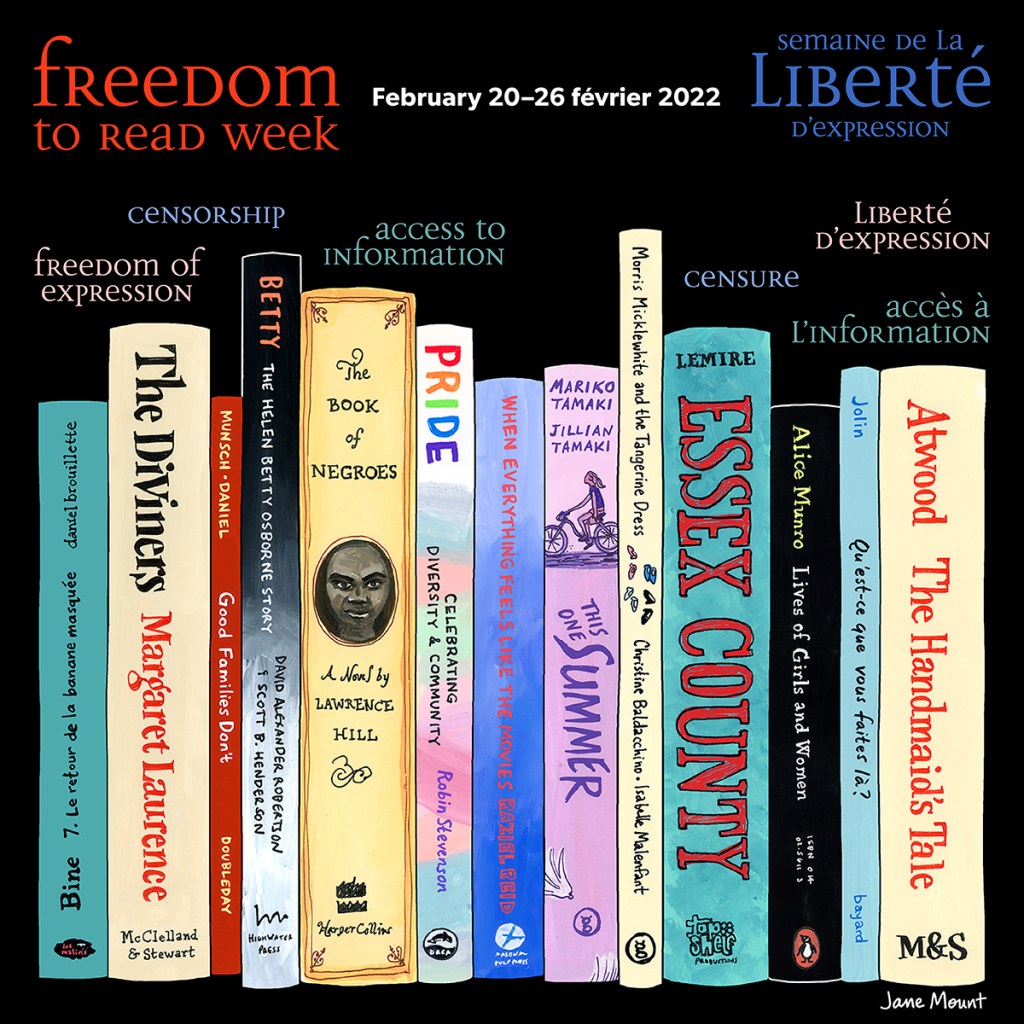
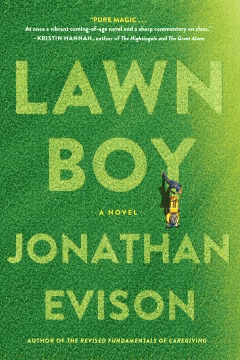
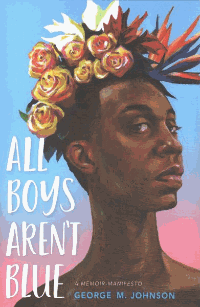

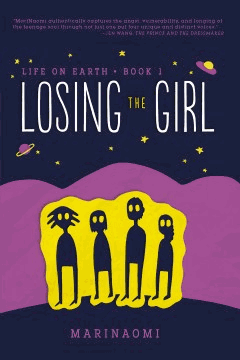
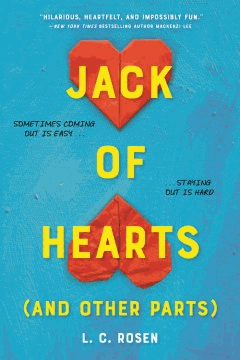
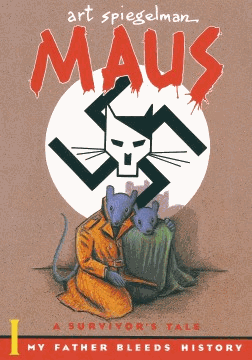
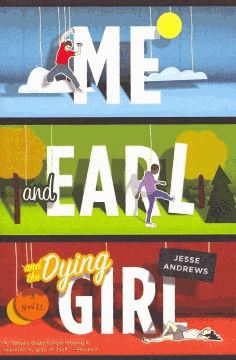
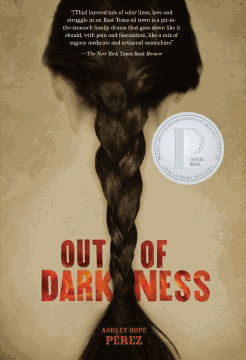
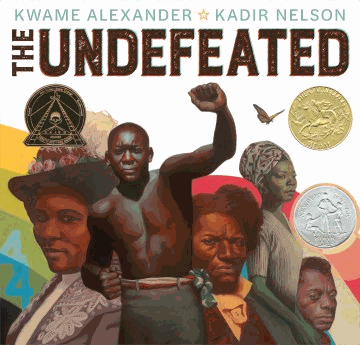
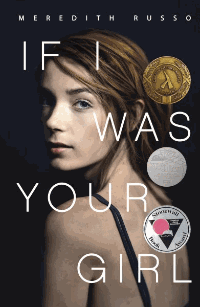
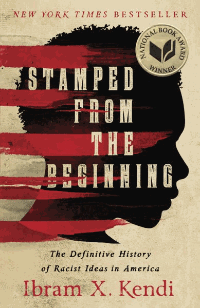
Do you see any common themes amongst all these books?
These are just some of the books that have been challenged, banned and removed from school libraries in the USA, just this year. The freedom to read what you want to read is a fundamental cornerstone of democracy. However, just as democracy itself is under siege around the world, the freedom to read cannot be taken for granted. Anti-democratic forces are always at work to undermine your freedom to read and other democratic rights. You must stand up for those rights.
Is it a coincidence that the books seen above deal with themes such as discrimination, racism, and oppression, or have central characters that come from marginalized groups?
What do you think?
Find out more: FreedomtoRead.ca
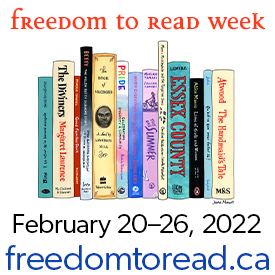
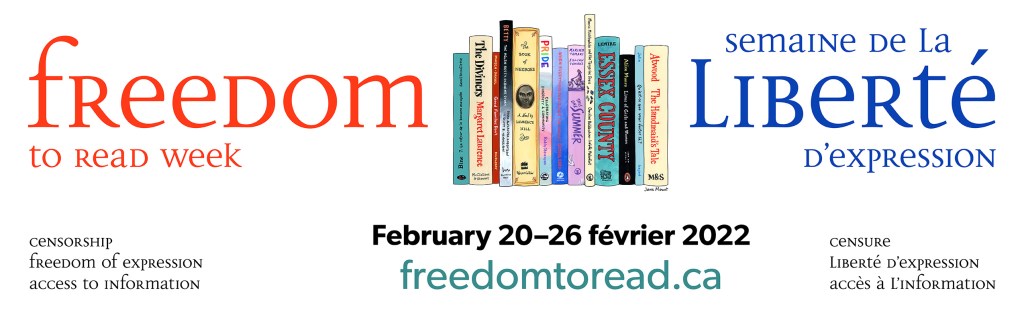
Look for more on Freedom to Read Week in your School Library starting February 22. Meanwhile, be sure to enjoy Family Day on the 21st!
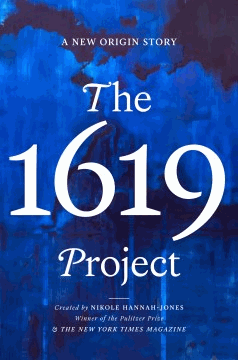
“The animating idea of The 1619 Project is that our national narrative is more accurately told if we begin not on July 4, 1776, but in late August of 1619, when a ship arrived in Jamestown bearing a cargo of twenty to thirty enslaved people from Africa. Their arrival inaugurated a barbaric and unprecedented system of chattel slavery that would last for the next 250 years. This is sometimes referred to as the country’s original sin, but it is more than that: It is the country’s very origin. The 1619 Project tells this new origin story, placing the consequences of slavery and the contributions of Black Americans at the center of the story we tell ourselves about who we are as a country. Orchestrated by the editors of The New York Times Magazine, led by MacArthur “genius” and Pulitzer Prize-winning journalist Nikole Hannah-Jones, this collection of essays and historical vignettes includes some of the most outstanding journalists, thinkers, and scholars of American history and culture-including Linda Villarosa, Jamelle Bouie, Jeneen Interlandi, Matthew Desmond, Wesley Morris, and Bryan Stevenson. Together, their work shows how the tendrils of 1619-of slavery and resistance to slavery-reach into every part of our contemporary culture, from voting, housing and healthcare, to the way we sing and dance, the way we tell stories, and the way we worship. Interstitial works of flash fiction and poetry bring the history to life through the imaginative interpretations of some of our greatest writers. The 1619 Project ultimately sends a very strong message: We must have a clear vision of this history if we are to understand our present dilemmas. Only by reckoning with this difficult history and trying as hard as we can to undersand its powerful influence on our present, can we prepare ourselves for a more just future” (source: TitlePeek)
Find out more:
The New York Times: 1619 Project
New York Time Magazine (Full Text PDF)
February 20-26 is Freedom to Read Week in Canada.
While this is always an important week on the calendar, this year it seems more vital than ever that we understand and celebrate our freedom to read. South of the border books are being banned at an alarming rate. Throughout the world, the freedom of journalists continues to be threatened. As authoritarian and fascist movements rise around the globe, they attack such things as libraries, a free press, and other cornerstones of democracy and human rights.
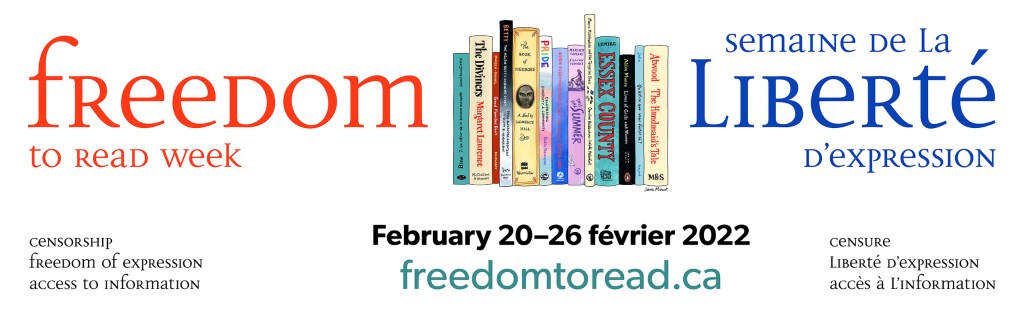
Look for more to come on this vital topic, as we prepare for Freedom to Read Week.
Your local public library system, Surrey Libraries, has great programs for teens.
Find out more: Click here.
Read to learn. Read to escape. Read to find out more about something you are interested in. Read to laugh. Read to cry. Read to see life through the eyes of different people in different times and places. Read for the sake of reading.
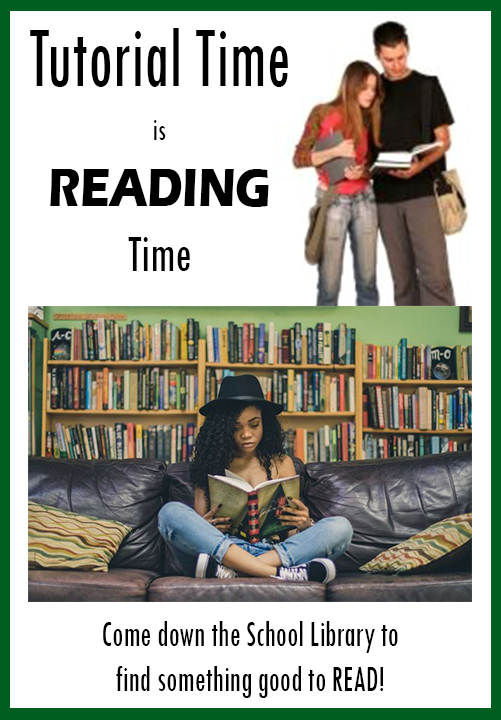
Tutorial time takes place from 9:24 to 9:57, everyday, across the school. In many classrooms around the building students will take time to get extra help from teachers, or to study for tests, or to read just for the sake of reading!
Come down to the school library to find something good to read. We have something for everybody. Fiction or non-fiction. A wide range of genres. Books for different reading abilities. Old classics and brand-new bestsellers. We have Manga. Sports books. Young Adult fiction. Science fiction. Biography. Graphic novels. Fantasy. And so much more.
The school library is also a great place to read during tutorial time! We have comfy chairs spread around the library, including the super-silent “Zen Den.” You can count on a quiet and comfortable environment to enjoy some reading.
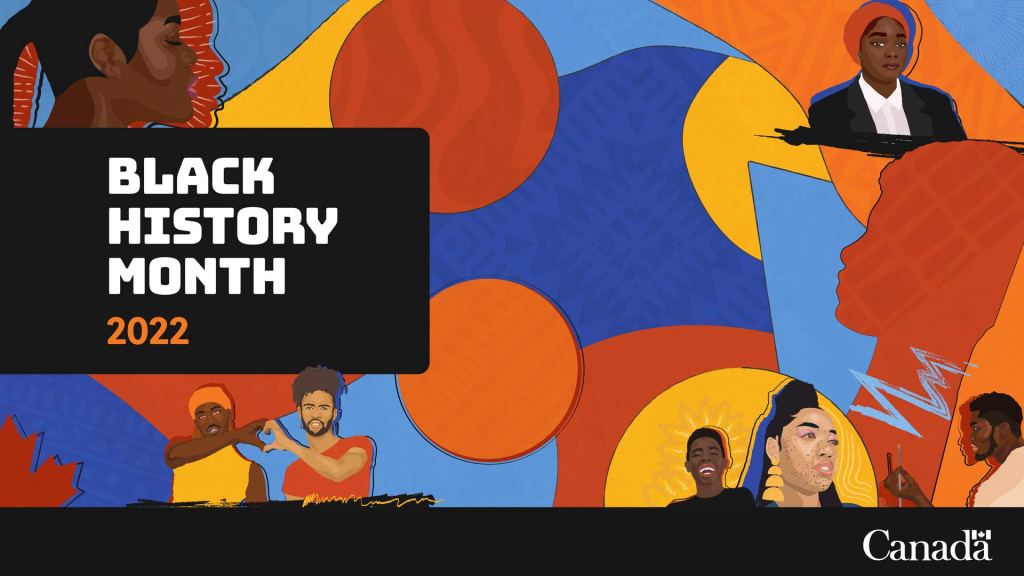
February is Black History Month in Canada. Check out this “Sporcle” on some notable Black Canadians.

Read about these Canadians and and so much more as your School Library celebrates Black History Month. Come down to see what we have on display and on our shelves.
 Lord Tweedsmuir Secondary School Library