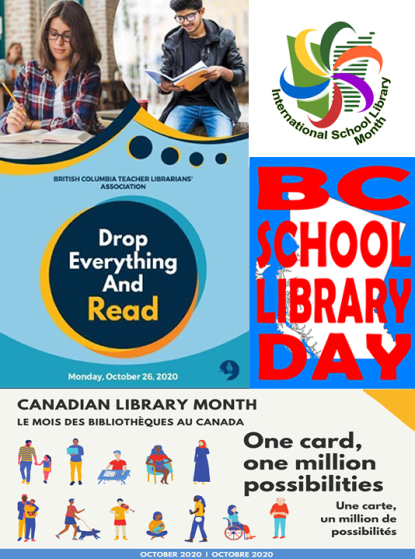
Today is BC School Library Day. Help celebrate the day, and more importantly the power and joy of reading, by rising up to the “Drop Everything and Read” Challenge.
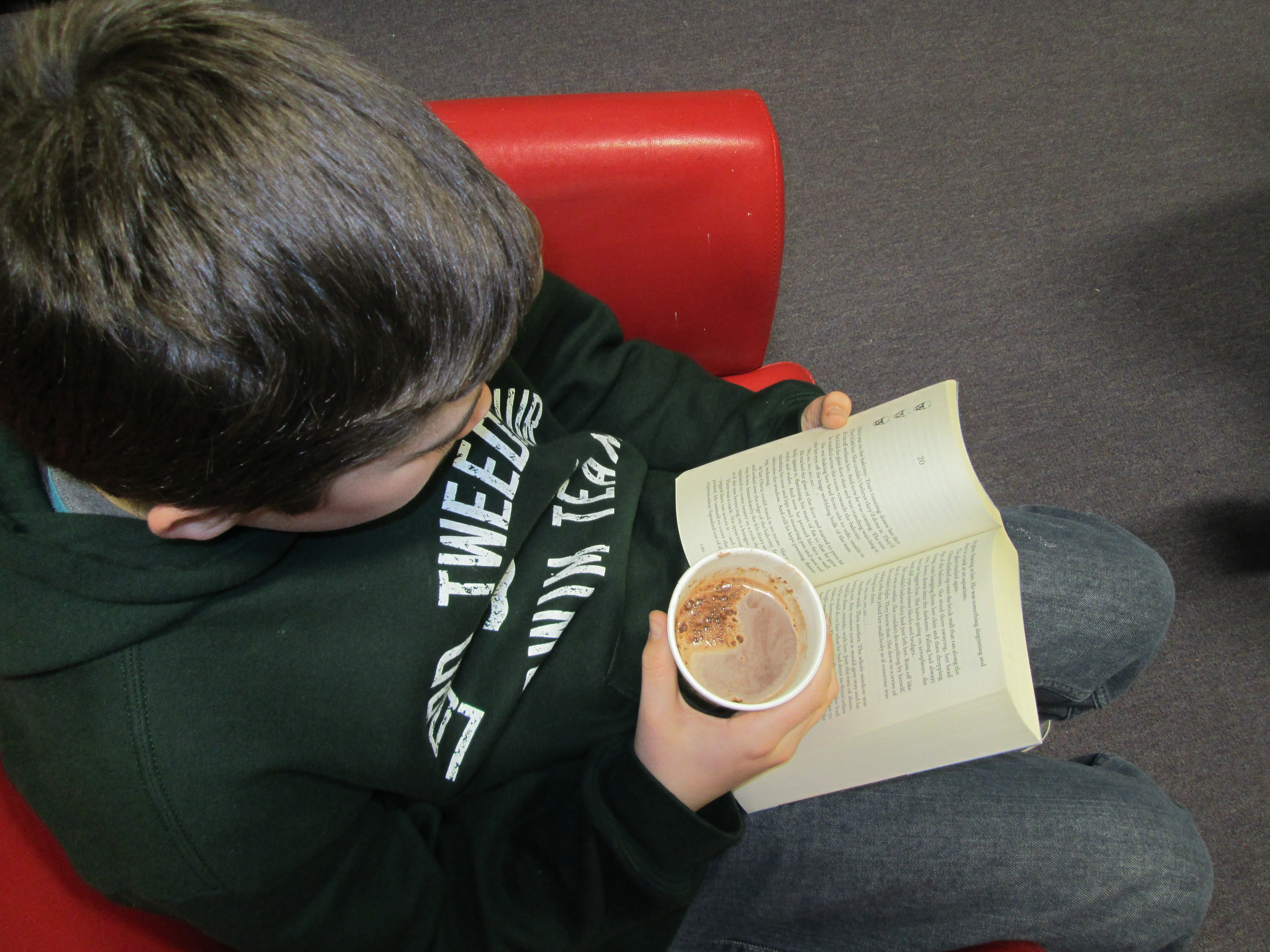
Students, teachers and all staff at Lord Tweedsmuir are challenged to take at least 20 minutes during Block A this morning for recreational reading. That means put away the textbooks, take a break from the lessons, set aside the homework, end the conversations, put your phone in your backpack, and sit back for some silent, uninterrupted reading.
Read for fun, read to escape, read to be scared, or to laugh, or to learn something you want to learn about. Read something you choose because you will enjoy it. Read for reading’s sake.
If parents or somebody asks you why you were reading for fun instead of doing school work, you can tell them, you were doing both. Students who read more for fun do better in school.
Should teachers set aside time during the school day for kids to read for pleasure?
Yes.
Should schools do more to encourage kids to become recreational readers?
Yes.
Will there be enough of a payoff for our education system even if it means less time spent on other things?
Yes.
The answer to all these questions is most certainly yes.
Reading for pleasure, recreational reading, free voluntary reading, personal reading– whatever you want to call it– is built upon the intrinsic goal of reading because it directly benefits the reader: Reading for the sake of reading. Yet there are myriad indirect benefits that come from recreational reading, many of which lead to profoundly positive educational outcomes.
Source: Freepik
A teacher should care that a student reads for pleasure, because reading brings pleasure to the student! However, more than that, a teacher can also point to so many other benefits that come from recreational reading that will pay off in terms of academic achievement, social learning and character education.
If teachers (or parents, or administrators) are worried that the kids are missing out on valuable educational lessons, please remember this: Students who read more for pleasure will do better in school. Recreational reading has many, many indirect educational benefits to students. Students who do more recreational reading will see improvements in vocabulary, writing skills, grammar, spelling, comprehension, critical thinking, concentration and so many other skills that are essential to one’s overall education.
Moreover, students who read more for pleasure will grow in social and emotional learning, as students can share in the experiences of different people, growing in empathy and understanding for people all backgrounds, ages, genders, orientations, beliefs and cultures.
As if those weren’t enough reasons for reading, here are some more. Reading books can help mitigate against the harmful effects of too much time spent on phones and in front of other screens. One simple and yet important example of this is that studies show that people who read from books or magazines before bed will sleep better than those who are looking at screens before trying to fall asleep.
There are so many reasons to read.
Schools need to do more to encourage kids to read for reading’s sake. In doing so, the school will reap the rewards of having kids who do better in school.
October is International School Library Month
and Canadian Library Month.
Today you have been challenged by the BCTF and BCTLA to Drop Everything and Read! The DEAR Challenge is issued every year for BC School Library Day, in conjunction with Canadian Library Month and International School Library Month.
Every person in British Columbia, including every student and every teacher, is challenged to drop everything else and read a book. Read for pleasure. Read for entertainment. Read for knowledge. Read for escape. Read for experiencing other places, other times, other lives. Read for the joy of it.
The BCTLA, in conjunction with the BCTF, has again challenged YOU and all the people of British Columbia to take time on Monday to “Drop Everything and Read.” Set aside your studies, your work, your social media feeds and everything else that keeps you from spending some time reading. Read for at least 20 minutes on Monday. Read for at least 20 minutes EVERY DAY.
Read for fun. Read to learn something you are interested in. Read to escape. Read to laugh. Read to be scared. Read for inspiration. Read because you are interested. Read to know more. Read for your own reasons.
Turn off the phone for a while. Texts, emails, Snapchat, Facebook, Twitter– all that can wait. Find somewhere quiet and comfortable. Concentrate. Stick with it. Read deeply. Think. Enjoy.
What is the comfiest place in the school? The Silent Reading area of the library, of course! At any time of the day you can get away from the noise and chaos of the school, settle into a cozy chair, enjoy a quiet space and lose yourself in a good book! Come down to enjoy this wonderful spot.
“As a teacher I am more influential as a model than my students will ever let on.”
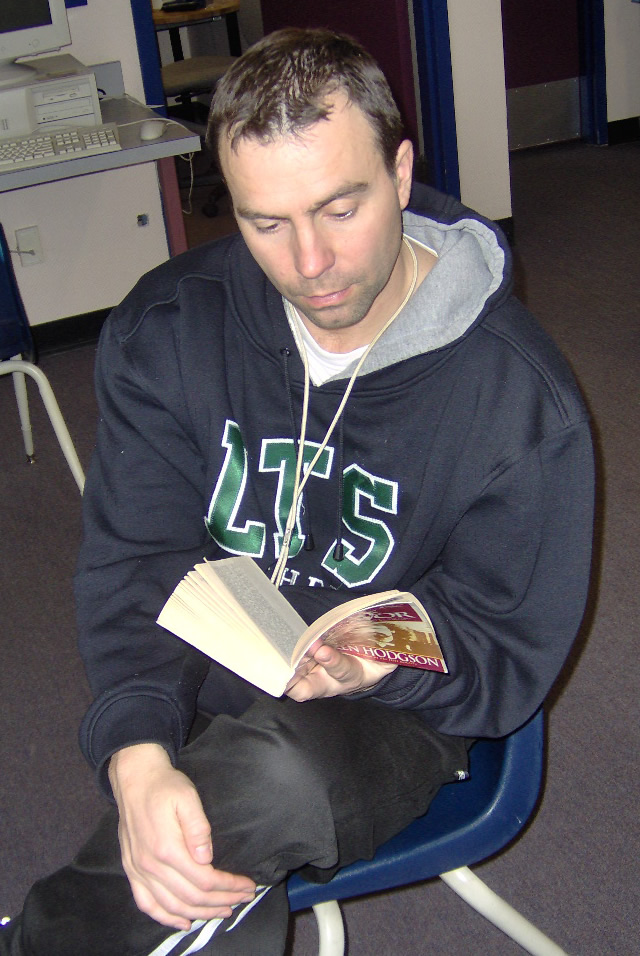
Read during SSR. Expect students to have a book, be silent, be respectful of others, and read. Model that. Show them that reading isn’t something we just talk about. Reading is something we really do.
“…teachers who grade papers or balance their checkbooks during SSR are also sending their students a powerful message–a message that time set aside to read isn’t important. It’s true that we often have to model a positive behavior ten, twenty, thirty times before we see it begin to take hold in adolescents. But it’s also true that if we model a bad behavior once, they learn it immediately. I remind myself of this prior to every SSR period– that as a teacher I am more influential as a model than my students will ever let on. If I talk the talk, I need to walk the walk.”
Use SSR time to show the students what engaged readers do. Read alongside the students. Expect them to be silent and immerse themselves in their reading. Model reading for the students. Mentor them as readers.
“Building a culture of reading in a school requires the participation of the entire school community– students, teachers, administration, staff, parents, patrons… Students need to see adults, in various roles, reading: a favorite teacher, a coach, or administrators.”
We can tell kids that reading is important. But if they don’t see that the adults in their lives value reading, why should they believe us? Teachers, coaches, parents: Show the kids in your life that you value reading. Read in front of them.
One of the best things about SSR is that you get to choose your own book! You can read something that you want to read. Perhaps you want to read a novel. It could be sci-fi, fantasy, horror, suspense, romance, historical fiction, young adult or one of dozens of different fiction genres. Or instead, maybe you want to read non-fiction to learn more about a subject that you are interested in. It could be sports, music, politics, cars, computers, fashion, animals, or something else entirely. Perhaps you want to read a biography of a famous person, a reference book or a detailed “how-to.” The point is that you get to choose.
Come down to the School Library to see what we have that you might like to read for SSR. Ask for help to find what interests you. If you can’t find what you are looking for, let us know, and we can get it!
The DEAR Challenge has been issued by the BC Teacher-Librarians’ Association, to all the people of this province, to Drop Everything and Read. Join with people from all walks of life around BC to celebrate the value of reading. While most will stop at 11:oo for 20 Minutes of Silent Reading, stop whenever you can today for some SSR. At Lord Tweedsmuir we have an SSR period each day from 9:25 to 9:44. Be sure to take advantage of this valuable time to read something that you enjoy.
The BCTLA is a Provincial Specialist Association of the BC Teachers’ Federation.







 Lord Tweedsmuir Secondary School Library