Rohatsu (December 8)

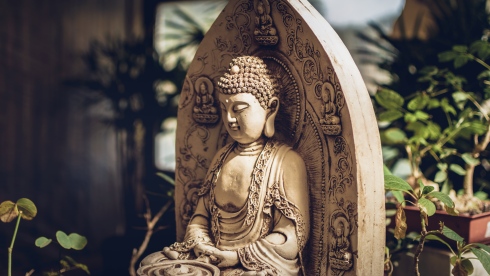
source: TimesColonist.com

The religion known as Buddhism dates back to the 6th or 5th Century BCE, when the Indian Prince Siddhartha Gautama became the “Buddha,” literally, “the Enlightened One.” The followers of the Mahayana branch of Buddhism observe Rohatsu, or  Bodhi Day, in celebration of the day that the Buddha sat below the Bodhi Tree and meditated on the meaning of life.  This day is celebrated mainly by the Buddhists of northern and eastern Asia, and in countries to which those people have immigrated (such as Canada). To many this holiday is known as Bodhi Day and it occurs on the 8th day of the 12th month of the lunar year

In Japan the day is known as Rohatsu. With the Japanese adoption of the western calendar (Gregorian) Rahatsu is fixed on December 8th.

For more on Rahutsu and the life of the Buddha:

and these books in your School Library:


St. Nicholas Day (December 6)

stnickIf people tell you that Santa Claus isn’t real, tell them to think again! Saint Nicholas lived in the 3rd and 4th Centuries AD(CE). He lived in what is now known as Turkey, but what was then a Greek area of the Roman Empire. The legends surrounding his life grew and evolved over the years, eventually leading to our modern picture of Santa.

In much of Europe and in many parts of the world, St. Nicholas Day is celebrated on December 6, or on another date other than Christmas.

For more information, check out the St. Nicholas Centre.

You can also check out these books about St. Nicholas AKA Kris Kringle AKA Santa Claus, at your School Library:


The Winter Solstice and Yule (December 21)

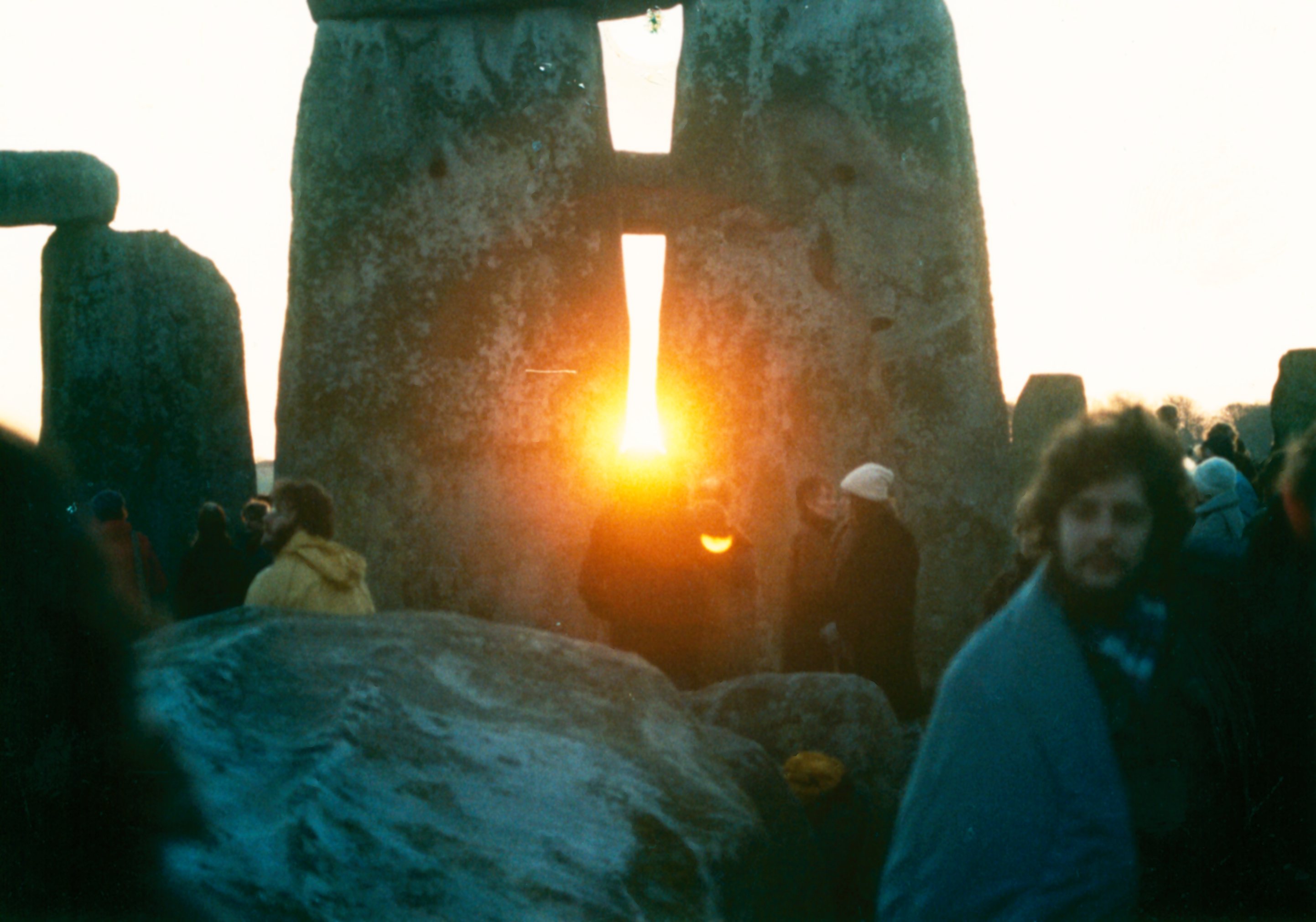
source: Wikimedia Commons / CC

The days of Fall grow shorter and shorter, and in the Northern Hemisphere the month of December is dark and cold. The low point is the Winter Solstice, December 21st, the shortest day of the year.

In traditional pagan cultures, this time of the year represented the battle between darkness and light, between life and death.  Death and darkness seem to be winning through this season. On the Solstice, the dark and cold had reached its nadir. Henceforth the days would grow longer and warmer. The darkness gives way to light, and death gives way to life. Hope is restored.

Many of the festivals and celebrations that take place at this time of year, from many different cultures, follow this theme.  Yule was celebrated by many of the Germanic peoples of northern pre-Christian Europe, including such groups as the Angles, Saxons, Danes and Norse.  Like many of the pagan holidays, Yule was adapted by Christian Europe and incorporated into Christmas traditions. However, followers of neopagan religions, such as Wicca, have re-established Yule as a distinct celebration.

Find out more:

For more on this and other winter observances and feasts, check out our display, “Holidays and Holy Days,” and books such as:


ISLM: Books about Libraries

Join with us in celebrating International School Library Month. Come down to the School Library to check out our display of non-fiction books about libraries.

This slideshow requires JavaScript.

Sputnik and the Space Race

On this day in 1957, the USSR launched Sputnik,  first artificial earth satellite. In the context of the Cold War, this event was shocking to many who had assumed that the U.S. and other western nations were clearly advanced in terms of science and technology.  Many consider that the success of Sputnik triggered the “Space Race” of the 1950’s and 1960’s, eventually leading to the Moon Landing of 1969.

Find out more in these and other fascinating  books that look at the Space Race and space exploration.


Christmas Day

scroogechristmas
source: public domain

Christians in Canada and around the world celebrate the Nativity, the birth of the Christ. Christians believe that Jesus, who was born in Bethlehem, in Roman occupied Israel roughly 2000 years ago, was the Messiah, the long awaited saviour promised by God.The Hebrew word Messiah translates to Greek as Khristos, from which we get the anglicized form, Christ. Christians believe that God became one of us in the person of Jesus, or Emanuel, literally “God With Us.”Over the course of the last century, Christmas has grown from a strictly Christian festival to become a secular holiday celebrated by people of many different religions, cultures and worldviews from all over the planet. For some, Santa Claus, stockings and gift-giving are central to Christmas. To others, it is a much needed rest at the coldest and darkest time of year. Some may agree with the Grinch, who simply hated Christmas, or with Ebenezer Scrooge when he said it was a “Humbug” — although both of them changed their positions in the end!

Whether you are celebrating the birth of the Christ with your family and friends, or observe Christmas as a strictly secular event, we wish you a very Merry Christmas!