
Voting ends soon. Go HERE to vote now!
Voting ends soon. Go HERE to vote now!
As the 2022 March Madness YA Lit Tournament got underway at your School Library, the dream of 64 competitors was to become March Madness Champions. Instead, suddenly it was all over for half of them. 32 books who were eliminated. Sent packing. Dreams crushed.
Most of the contests were very decisive, and went according to expectations, with the higher seeds advancing to the next round. However, there were a few upsets, and a number of matchups went right down to the wire.
As expected, all the Regional #1 Seeds cruised to victory. Harry Potter, Little Women, The Fault in Our Stars, and The Hate U Give all advanced, with Angie Thomas’ novel crushing Speak, 97-3. However, that wasn’t the largest margin of victory. That distinction went to #2 seed The Hunger Games, which obliterated Song of the Lioness with a 100-0 shutout.
As one might expect, the 8 v 9 contests were very close. Shadow and Bone just edged past The Marrow Thieves, and If You Could Be Mine squeaked by Dumplin’, both match-ups going to the final buzzer and 51-49 scores. However, those weren’t the only contests to finish 51-49, as All the Bright Places scared #3 If I Was Your Girl before a heartbreaking finish, while #4 Simon vs. the Homo Sapiens Agenda was nearly upset by Dear Martin.

There were a few upsets. with two #10 seeds, Long Way Down and Infernal Devices advancing. The biggest upset of the round was #12 The Absolutely True Diary of a Part-Time Indian shocking #5 You Should See Me in a Crown.
Thanks to everyone who voted. We look forward to seeing how your votes give us some more surprises and tight match-ups in the Round of 32.
64 titles go toe to toe in 32 matchups as the March Madness YA Lit Tournament gets underway today. Go here to place your votes: VOTING
Don’t forget to fill out your bracket. Go here: BRACKETS
Brackets must be handed in before the end of the Opening Round on March 10.
Win prizes for Voting. Win prizes for best Brackets. Find out more!
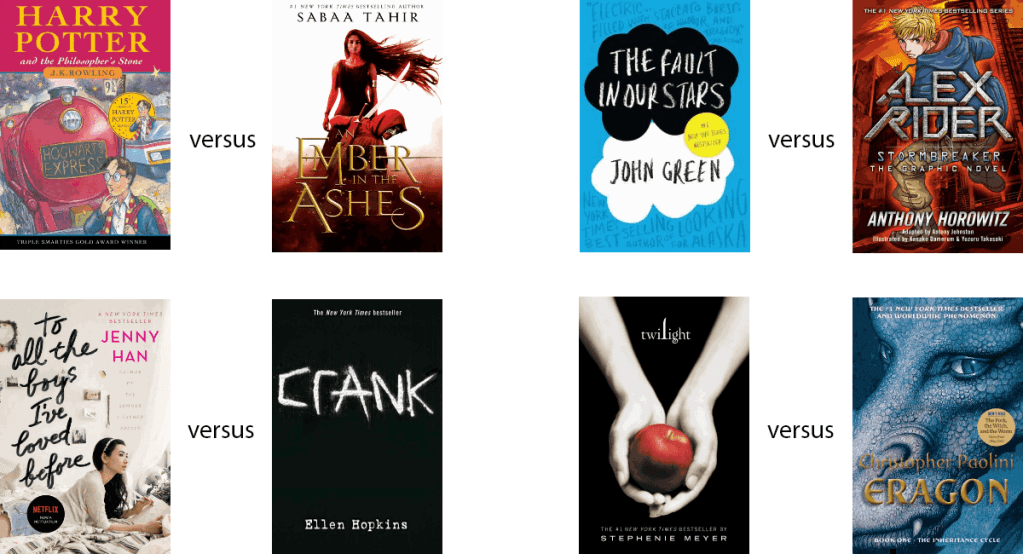
Some of the most anticipated matchups this round:
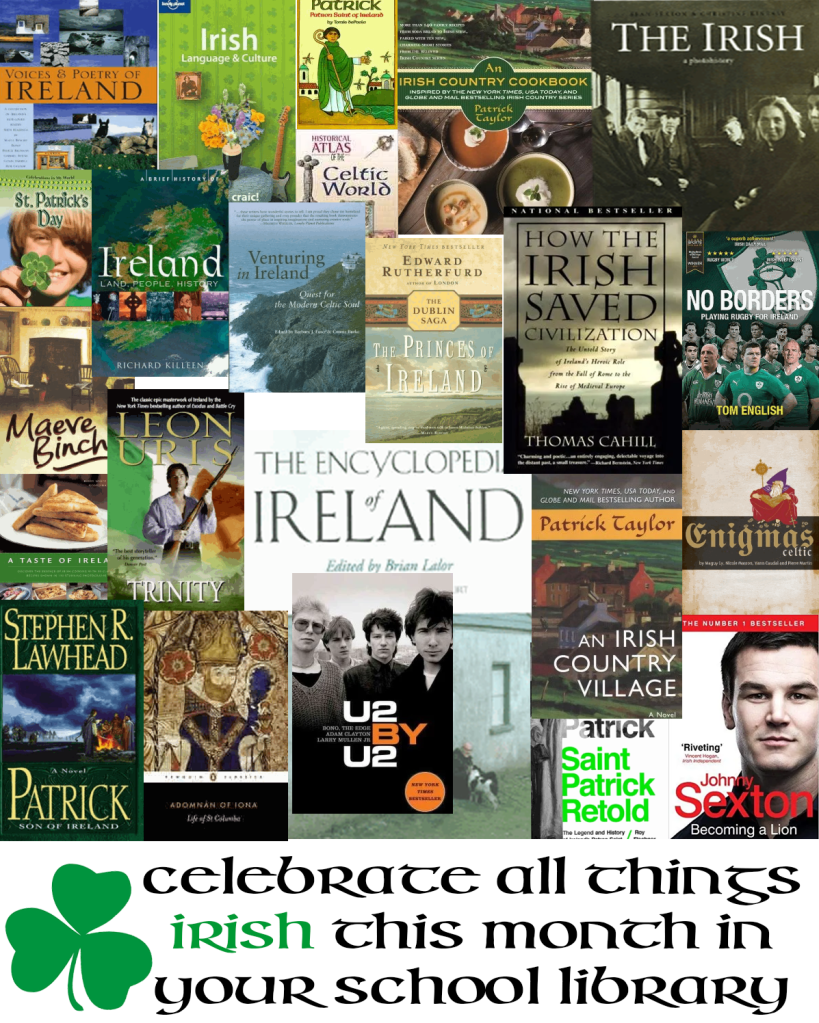
St. Paddy’s Day is March 17th, but we are celebrating ALL MONTH in your School Library! Come down to check out our display of Irish & Ireland related titles, including both fiction and non-fiction.
October is International School Library Month and Canadian Library Month. Join us as we celebrate libraries, librarians, books, the learning commons, online reference, reading, literacy, research, access to information, and everything to do with the library.
Come down to the School Library to check out our display of materials related to libraries, librarians, librarianship and all related issues.




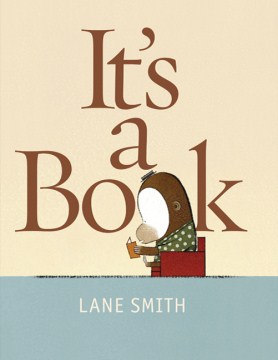




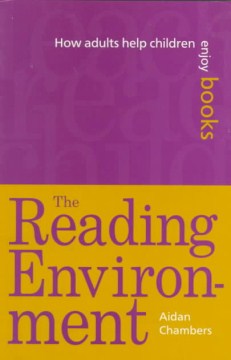
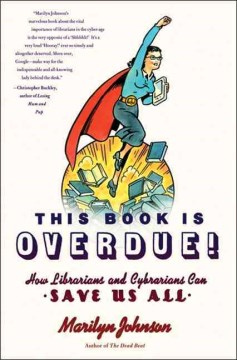
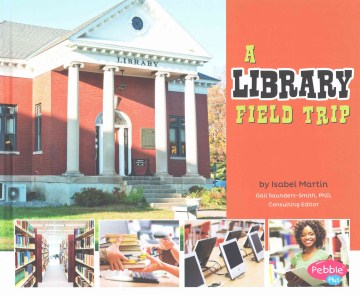
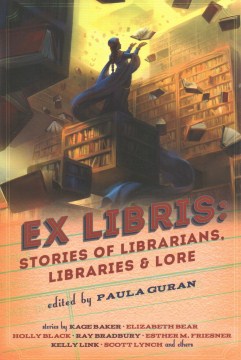
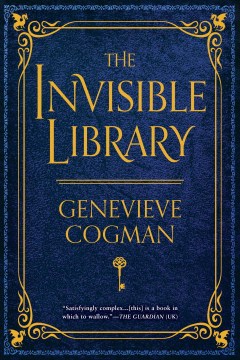

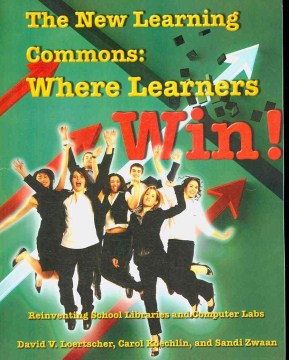

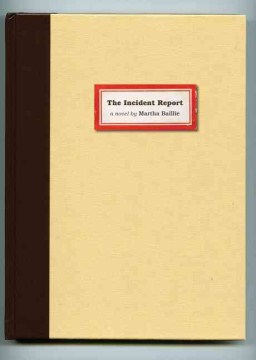
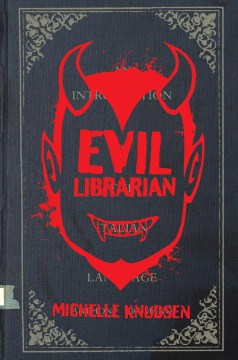
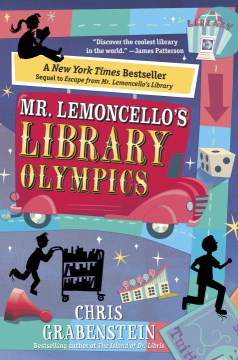
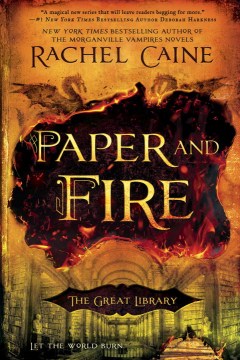

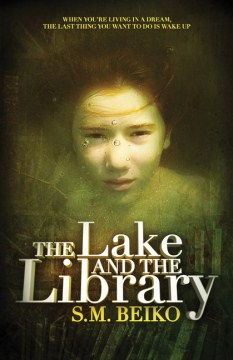
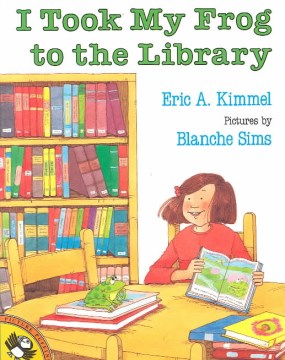
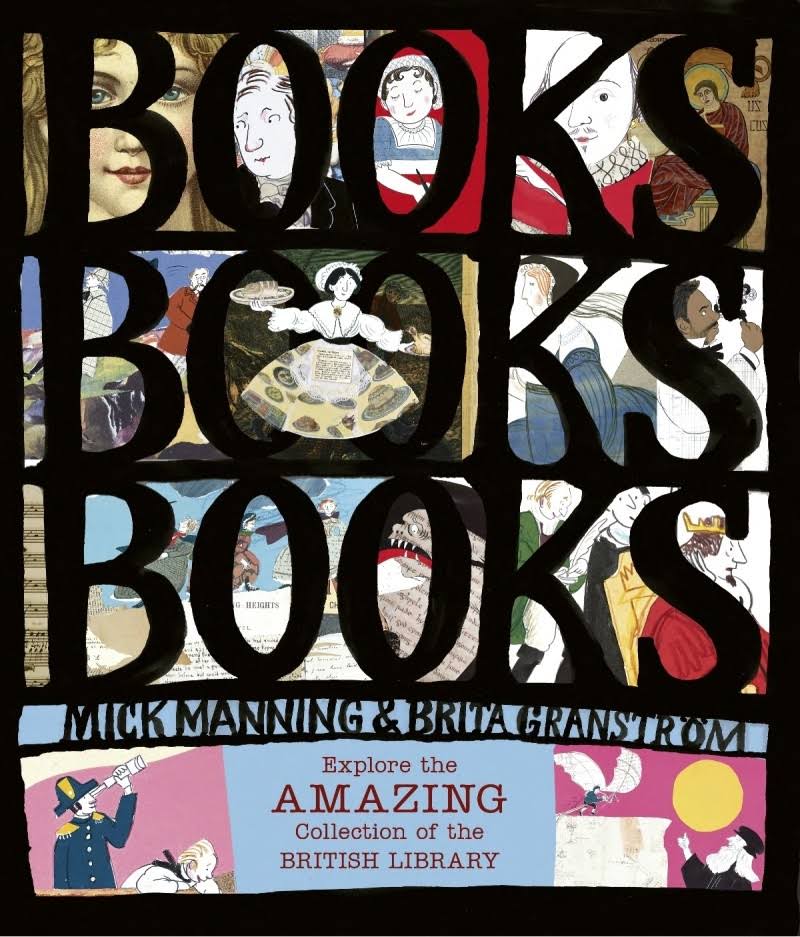

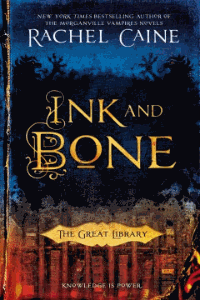
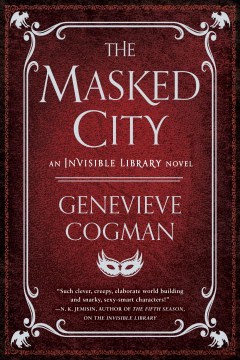
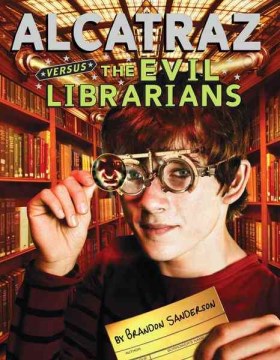
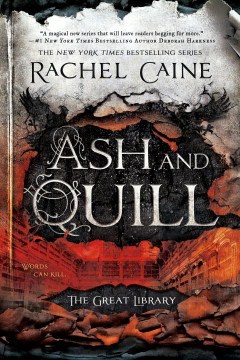
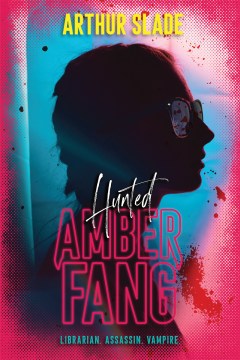

Monday, October 25 is BC School Library Day and is also the date for the BCTF/BCTLA’s annual DEAR Challenge: Drop Everything and Read. Mark it on the calendar and spread the word.
It can be tempting to think of the banning of books as something that happened in the past, only by extremely conservative types, or in authoritarian regimes. Sadly, book banning is alive and well here and now. Sure, it is not shocking that anti-democratic governments in places like China, Russia, Iran, Hungary or Venezuela strictly control the flow of information and literature. Yet in our society, where we make claims on being champions of democracy and freedom, book banning is on the rise.
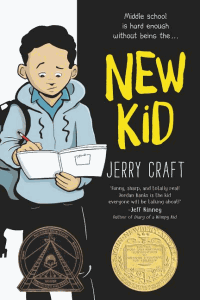
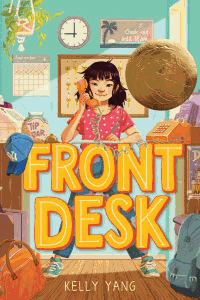
Kara Yorio writes in School Library Journal: “It has been a busy Banned Books Week, as the stepped-up challenges to books and their authors continue, with books by kid lit creators Jerry Craft and Kelly Yang added to the list of titles some parents claim are objectionable.” Read the rest of this article.

Meanwhile “Ruby Bridges Goes to School” has been targeted by book banners as well. Author Ruby Bridges recounts the true story of her experiences as a 6 year old girl who became the first black student to attend a formerly whites only public school. An organized group of parents wanted their local school board to ban this book, “for supposedly “explicit and implicit anti-American, anti-white” bias (source).” Read more in this Miami Herald article.
Here are four of the most challenged books from the last year, all available in our school library:

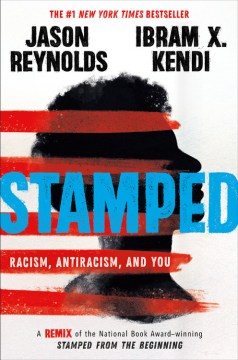

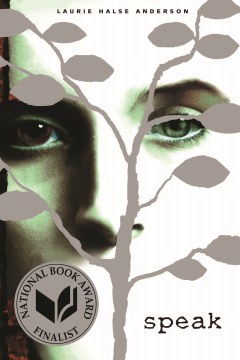
Read the rest of the “The Top 10 Challenged Books of 2020” from the American Library Association.
Celebrate Libraries in October
October is a big month for libraries.
October is International School Library Month.
October is Canadian Library Month.
October 15 is Canadian Library Workers’ Day
October 22 is the BCTLA Conference
October 25 is BC School Library Day and Canada School Library Day
October 25 is Drop Everything and Read
Check back here for more info, and visit us in person, as we party all month in the School Library.



Your Freedom to Read is protected by Canada’s Charter of Rights and Freedoms. Your Freedom to Read is also in the Universal Declaration of Human Rights.

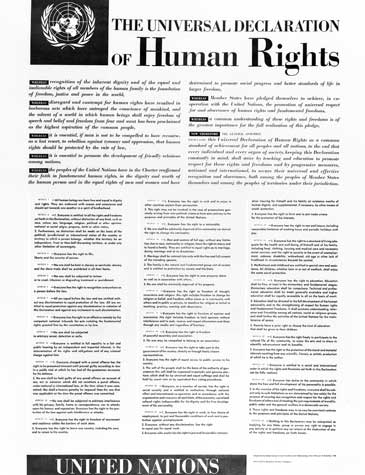

Find out more:
Canadian Charter of Rights and Freedoms
Universal Declaration of Human Rights

Should teachers set aside time during the school day for kids to read for pleasure?
Yes.
Should schools do more to encourage kids to become recreational readers?
Yes.
Will there be enough of a payoff for our education system even if it means less time spent on other things?
Yes.
The answer to all these questions is most certainly yes.
Reading for pleasure, recreational reading, free voluntary reading, personal reading– whatever you want to call it– is built upon the intrinsic goal of reading because it directly benefits the reader: Reading for the sake of reading. Yet there are myriad indirect benefits that come from recreational reading, many of which lead to profoundly positive educational outcomes.

A teacher should care that a student reads for pleasure, because reading brings pleasure to the student! However, more than that, a teacher can also point to so many other benefits that come from recreational reading that will pay off in terms of academic achievement, social learning and character education.
If teachers (or parents, or administrators) are worried that the kids are missing out on valuable educational lessons, please remember this: Students who read more for pleasure will do better in school. Recreational reading has many, many indirect educational benefits to students. Students who do more recreational reading will see improvements in vocabulary, writing skills, grammar, spelling, comprehension, critical thinking, concentration and so many other skills that are essential to one’s overall education.
Moreover, students who read more for pleasure will grow in social and emotional learning, as students can share in the experiences of different people, growing in empathy and understanding for people all backgrounds, ages, genders, orientations, beliefs and cultures.
As if those weren’t enough reasons for reading, here are some more. Reading books can help mitigate against the harmful effects of too much time spent on phones and in front of other screens. One simple and yet important example of this is that studies show that people who read from books or magazines before bed will sleep better than those who are looking at screens before trying to fall asleep.
There are so many reasons to read.
Schools need to do more to encourage kids to read for reading’s sake. In doing so, the school will reap the rewards of having kids who do better in school.
October is International School Library Month
and Canadian Library Month.
The Wicked Deep by Shea Ernshaw
Surrey Teens Read Nominee 2019-20
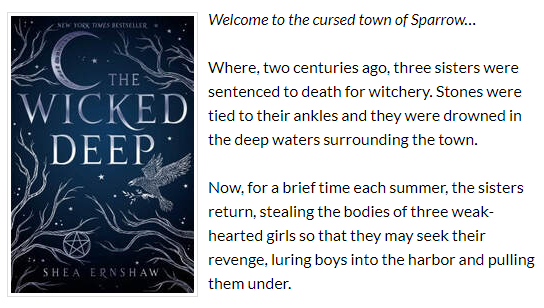
Check out this book and all 10 titles nominated for Surrey Teens Read. Come down to borrow one of our copies. You can also find out more about STR by clicking here: SurreyTeensRead
 Lord Tweedsmuir Secondary School Library